The short version
- Preferred Contractor is a status Owens Corning grants, not a logo a company can simply print.
- It requires proof of insurance, a track record and customer satisfaction scores that stay above a threshold.
- The practical benefit to you is warranty access: some extended warranties are only available through a credentialed installer.
- It says nothing about price. It is about who is allowed to register the warranty.
- Ask any roofer to show their current status rather than taking a decal at face value.
- DJJ Roofing holds the status and can register the warranties that come with it.
When you are choosing a roofer, you will see various badges and certifications, and one of the most meaningful is Owens Corning Preferred Contractor. But what does that status actually mean, and why should it matter to you as a homeowner? This guide explains what it takes to become a Preferred Contractor, the real benefits you get from hiring one, and how it protects your investment.
What Is an Owens Corning Preferred Contractor?
Owens Corning is one of the most respected roofing manufacturers in the country, and their Preferred Contractor program is a certification given to roofing companies that meet the manufacturer’s standards for reliability, professionalism, and quality. It is not something a contractor can simply buy. To earn and keep Owens Corning Preferred Contractor status, a company must demonstrate that it is properly insured, has a strong reputation, and stands behind its work. Only a limited share of roofers qualify.
What It Takes to Earn the Status
Becoming an Owens Corning Preferred roofer requires meeting the manufacturer’s qualifications, which typically include carrying proper liability insurance, maintaining a solid track record and reputation, and committing to quality installation standards. The contractor agrees to install roofing systems correctly so the products perform as designed. This vetting is exactly why the badge means something to homeowners: it signals the contractor has been screened by the manufacturer, not just self-promoted.
What It Means for You as a Homeowner
Hiring a Preferred Contractor status gives you several real advantages:
- Vetted quality. The contractor has met a respected manufacturer’s standards for insurance and reputation.
- Better warranty options. Preferred Contractors can offer stronger manufacturer warranty coverage than non-certified installers.
- Quality materials. You get access to Owens Corning’s full line of shingles and roofing systems.
- Accountability. The contractor’s standing with the manufacturer depends on doing good work.
In short, the status takes some of the guesswork out of choosing a roofer.
Why the Warranty Advantage Matters
One of the biggest practical benefits is warranty access. The strongest Owens Corning warranties are only available when the roof is installed by a Preferred Contractor, because the manufacturer trusts the installation will be done right. That means hiring an Owens Corning Preferred Contractor can give you longer, more complete coverage on both materials and installation than you would get from a standard roofer. Combined with the contractor’s own workmanship guarantee, you get layered protection on your investment.
How a Contractor Earns the Status
Becoming a Preferred Contractor is not a form you fill in. The manufacturer sets requirements that a company has to meet and then keep meeting, and the status can be withdrawn if standards slip.
The core requirements cover proof of current liability insurance, a verifiable trading history rather than a business registered last month, and customer satisfaction scores gathered independently rather than self-reported. Installers also complete product training so the crew knows how the system is designed to go together.
None of that guarantees a perfect job on every roof. What it does is filter out companies that cannot show insurance, cannot show a history, or cannot hold a satisfaction score. For a homeowner comparing quotes, that is a useful filter to have already applied.
What the Owens Corning Preferred Contractor Status Buys You
The practical benefit is warranty access. Owens Corning reserves its stronger warranty tiers for work installed and registered by a credentialed contractor, so the same shingle on the same house can carry very different coverage depending on who put it on.
Those upgraded warranties typically add labor coverage, extend the non-prorated period, and cover the whole roofing system rather than the shingle alone. A failure at the starter course or in a valley is not a shingle defect, and a system warranty is what closes that gap.
An Owens Corning Preferred roofer can register those terms. A company without the status cannot, regardless of how well they install the roof. That is worth understanding before you compare two prices that look similar.
You can read the current warranty tiers on the Owens Corning roofing site rather than taking anybody’s summary of them.
What the Status Does Not Decide
It is worth being clear about the limits. The credential says nothing about price. An Owens Corning Preferred Contractor can be more expensive or less expensive than a company without the status, and the badge is not a pricing signal.
It also does not cover materials from other manufacturers. If a roof is installed with a different brand of shingle, the Owens Corning warranty tiers do not apply to it, no matter who did the work.
And it is specific to one manufacturer. DJJ Roofing installs six brands, and the credential travels with Owens Corning products only. On a metal roofing job it is simply not part of the conversation.
How to Verify a Contractor Actually Holds It
A decal on a truck is not verification. The status is checkable, and any company that genuinely holds it will be comfortable being checked.
- Ask for the company’s contractor ID and look it up through Owens Corning’s own contractor locator.
- Ask which warranty tier they are approved to register, and get the answer in writing on the estimate.
- Ask when the status was last renewed, since it is maintained rather than granted permanently.
- Cross-check the company’s insurance separately, because current coverage is one of the underlying requirements.
If those questions produce hesitation, that itself is information. A contractor who registers these warranties routinely answers them without pausing.
Why the Warranty Registration Deadline Matters
Upgraded warranties usually have to be registered within a set window after installation, often sixty to ninety days. Miss it and the roof can quietly fall back to the basic limited coverage.
Registration is the contractor’s responsibility, and it is a fair thing to ask about before work begins: who files it, and will you send me the confirmation? The confirmation names the product, the date, the installer and the coverage tier.
Keep that document with your closing paperwork. If you ever file a claim, or sell the house, it is the piece that proves what you actually have. More detail on how the two warranty types interact is in our guide to manufacturer and workmanship warranties.
Ventilation, and Why Credentialed Installers Check It
Manufacturer warranties carry ventilation requirements, and an under-ventilated attic can put a roof outside its own coverage terms. That applies whether or not the installer holds a credential, but a trained crew is more likely to catch it before the shingles go down.
In a Northeast Texas summer, trapped attic heat ages asphalt from underneath. The shingle is not failing at its job; it is being asked to work in conditions it was never rated for. Correcting intake at the soffits and exhaust at the ridge during a replacement costs far less than doing it afterwards.
Our guide to attic ventilation and roof health covers how the intake and exhaust balance is supposed to work, and what happens when it is wrong.
What Good Installation Looks Like on the Roof
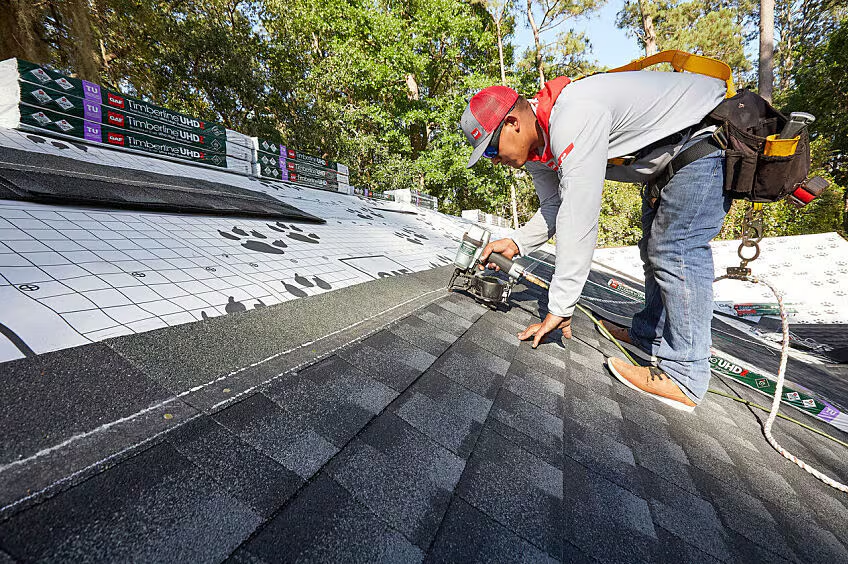
Training shows up in details a homeowner can actually see if they know to look. Nailing placement in the manufacturer’s specified zone, six nails rather than four in a high-wind area, starter course along the eaves and the rakes, and new flashing rather than reused flashing at every wall and chimney.
Valleys are another tell. There are several approved ways to detail a valley, and all of them take longer than the quick version. Ice and water membrane in the valleys and around penetrations is standard practice on a properly specified roof.
The National Roofing Contractors Association publishes installation guidance that is worth a look if you want to understand what you are paying for. A Preferred Contractor status is trained to the manufacturer’s version of the same standards.
Where This Fits When You Compare Quotes
Two estimates at similar prices can carry very different coverage, and the difference is rarely obvious on the page. The credential is one of the few things you can verify independently before signing anything.
Ask each company the same four questions: which manufacturer warranty comes with this roof, at which tier, who registers it, and what does your own workmanship warranty cover. Write the answers side by side.
DJJ Roofing has been a Preferred Contractor working out of Sulphur Springs since 2015, and carries a ten-year workmanship warranty on top of the manufacturer coverage. If you want the comparison made plainly, a free roof inspection includes the photographs and the written estimate whether you hire us or not.
Shingle Lines, and Which Ones the Credential Covers
The credential applies to Owens Corning roofing systems, and the warranty tier available depends on how much of the system comes from the same manufacturer. Shingles alone qualify for less than shingles installed with matching underlayment, starter, hip and ridge, and ventilation.
That is why an estimate from an Owens Corning Preferred Contractor often lists components rather than just a shingle name. Each line is part of what makes the upgraded warranty available, and dropping one to save money can quietly drop the coverage tier with it.
Impact-rated lines sit inside the same structure. Owens Corning’s Class 4 offerings can carry the same system coverage while also qualifying for an insurance discount in Texas, which our guide to Class 4 impact-resistant shingles covers in detail.
If a quote names a shingle but no other components, ask what underlayment, starter and ridge products are included. The answer tells you which warranty tier is actually on the table.
How the Status Is Maintained, Not Just Earned
The credential is reviewed rather than granted once. Insurance has to stay current, satisfaction scores have to stay above the threshold, and training has to be kept up as products change.
A company can lose the status. That is the part that gives it meaning, because a badge that could never be withdrawn would tell a homeowner nothing at all.
For you, the practical implication is to check that the status is current rather than historic. A contractor listed on the manufacturer’s own locator today is a different proposition from one who held the credential four years ago.
Comparing Credentials Across Manufacturers
Every major shingle manufacturer runs a contractor program, and they are not equivalent. Some are largely a purchasing relationship, some require training and insurance verification, and some tier their warranty access the way Owens Corning does.
What matters is not the name of the program but what it unlocks. Two questions cut through it: does this credential give you access to warranty terms I could not otherwise get, and can I verify it independently today?
DJJ Roofing installs six brands and holds one manufacturer credential, with Owens Corning. On a job using a different brand, we say so plainly rather than implying the credential travels. You can see the full range on our manufacturers page.
What It Means at Resale and for Insurance
A roof installed and registered by a credentialed contractor comes with paperwork, and paperwork is what buyers and adjusters respond to. A transferable system warranty is a genuine talking point on a house with a roof only a few years old.
For insurance, the credential itself does not change a premium. What can change it is the product: an impact-rated roof often qualifies for a discount in Texas, and the discount is tied to the shingle rating rather than to who installed it.
Where the installer matters for insurance is in documentation after a storm. A contractor who photographs the roof properly and writes a clear scope gives an adjuster something to work from, which our guide to filing a roof insurance claim in Texas goes through step by step.
Questions Worth Asking Before You Sign
The credential is one input among several. These five questions, asked of every company quoting your roof, will tell you more than any badge.
- Which manufacturer warranty comes with this roof, and at which tier?
- Are you approved to register that tier, and can I verify it today?
- What components are included beyond the shingle itself?
- Does my attic ventilation currently meet the manufacturer requirement?
- What does your own workmanship warranty cover, and for how long?
Write the answers down side by side. Two quotes at the same number can carry very different protection, and this is the conversation where that becomes visible.
An Owens Corning Preferred roofer should be able to answer all five without checking. If you want that walked through on your own roof, with photographs you keep either way, a free inspection is the simplest place to start.
What Working With an Owens Corning Preferred Contractor Looks Like
The credential shows up in process as much as in paperwork. An estimate should name the specific products going on the roof, not just a brand, because the warranty tier depends on the components.
Before the job, the attic ventilation gets checked against the manufacturer requirement. That is not an upsell; it is the condition the coverage is written around, and correcting it while the roof is open costs a fraction of doing it later.
During the job, the details that make a Preferred Contractor status worth hiring are the ones that are hidden a day later. Ice and water membrane in the valleys and around penetrations. Starter course along the eaves and the rakes. New flashing at every wall and chimney rather than reusing what was there. Nails placed in the specified zone and driven to the right depth.
Afterwards, the registration is filed inside the manufacturer’s window and the confirmation comes to you. That document names the product, the date, the installer and the coverage tier, and it is the piece that makes a future claim straightforward.
Cleanup is part of the standard too. Tarps down before the tear-off starts, magnets over the yard and driveway at the end, and debris hauled away rather than left for the weekend.
Is the Credential Worth Paying More For?
Not on its own. If two companies quote the same products at the same price and one is an Owens Corning Preferred Contractor, the credential is a free tiebreaker. If one is meaningfully more expensive, the question is what the extra buys.
Usually the honest answer is warranty tier and recourse. Upgraded coverage that includes labor and a longer non-prorated window has real value on a roof you intend to keep. So does a workmanship warranty from a company with a trading history you can check.
Where it is not worth paying more is when the products are being downgraded to hit a price. A basic shingle installed by a Preferred Contractor without the matching system components does not carry the upgraded warranty, and the credential is not doing anything for you in that case.
Read the components on the estimate. That is where the answer actually lives.
Badges, Decals and What to Trust
Manufacturer logos are easy to print and easy to display, which is exactly why the checkable version matters. An Owens Corning Preferred roofer appears on the manufacturer’s own contractor locator, and that listing is the thing worth looking at.
The same caution applies in reverse. A company without any manufacturer credential can still do excellent work, and plenty do. The credential narrows a field; it does not replace reading the estimate, checking insurance, and looking at reviews from your own county.
What it genuinely settles is warranty access. If the upgraded coverage matters to you, then whether the contractor can register it is not a matter of opinion, and it is answerable in about a minute.
If you are weighing two quotes right now, the fastest useful step is to ask each company for the component list and the warranty tier in writing. That single request usually separates the estimates more clearly than any badge on a truck, and it costs you nothing but the time it takes to ask.
DJJ Roofing Is an Owens Corning Preferred Contractor
DJJ Roofing holds Owens Corning Preferred Contractor status, which means Northeast Texas homeowners get vetted quality, access to premium materials, and stronger warranty options. We have served the area since 2015 and are also fully insured, a BBB Accredited Business, and Google Guaranteed, with a 4.9 star rating across 76 Google reviews, based at 124 Como St S in Sulphur Springs. Learn how we work on our roof replacement page, or call (903) 217-5431.
Frequently Asked Questions
What does Owens Corning Preferred Contractor mean?
It is a certification from roofing manufacturer Owens Corning given to companies that meet their standards for insurance, reputation, and quality installation. It signals a vetted, reliable contractor.
Is it hard to become an Owens Corning Preferred Contractor?
Yes, only a limited share of roofers qualify. Contractors must carry proper insurance, maintain a strong reputation, and commit to quality standards to earn and keep the status.
What is the benefit of hiring one?
You get a vetted contractor, access to premium materials, stronger manufacturer warranty options, and added accountability, which takes guesswork out of choosing a roofer.
Does it improve my roof warranty?
Yes. The strongest Owens Corning warranties are only available when a Preferred Contractor installs the roof, giving you longer, more complete coverage.
Is DJJ Roofing an Owens Corning Preferred Contractor?
Yes. DJJ Roofing holds Preferred Contractor status, along with being fully insured, BBB Accredited, and Google Guaranteed.
Want a vetted, credentialed roofer? Choose DJJ Roofing, a Preferred Contractor. Call (903) 217-5431 or contact us.