The right shingle for a Texas roof, installed the way the manufacturer intended.
Asphalt shingles from Owens Corning, GAF and CertainTeed, architectural and impact-rated, chosen for your roof and this climate. Free inspection, photographs of whatever we find, and a written written estimate you keep whether you hire us or not.
Asphalt shingles in plain terms
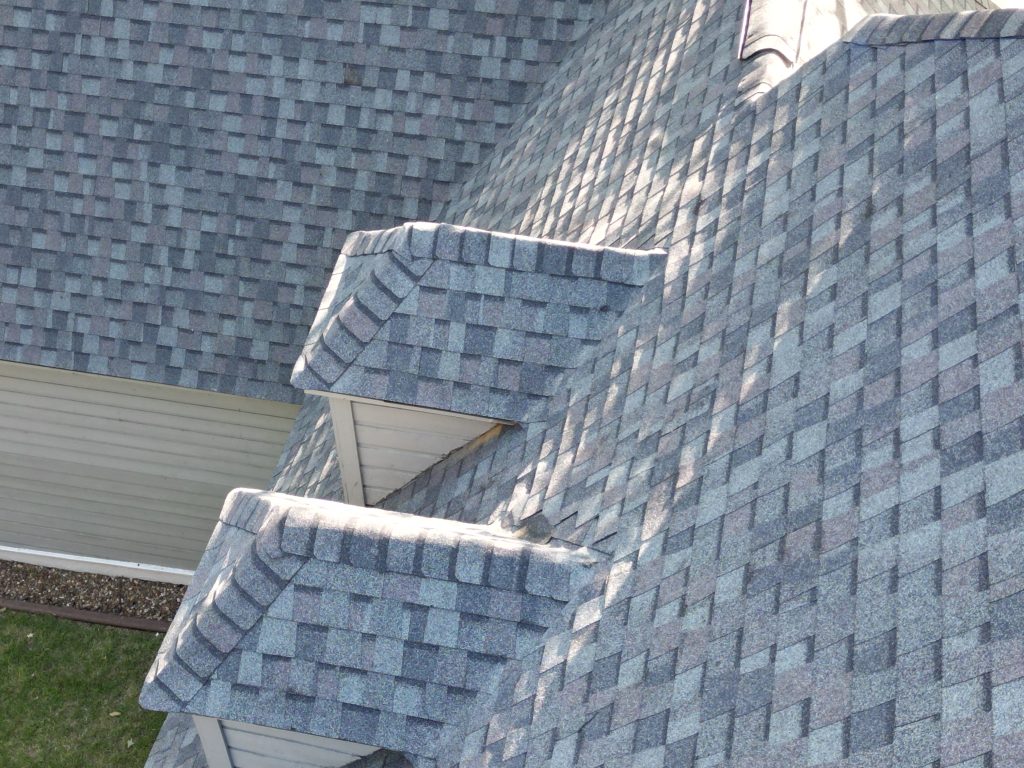
Asphalt shingles are on roughly four out of five houses in this part of Texas, and for good reason. They handle the temperature swing, they are repairable in isolation rather than by the panel, the color range suits almost any elevation, and the cost per square is lower than anything comparable. That makes them the sensible default, which is exactly why they are worth understanding properly rather than treating as a commodity.
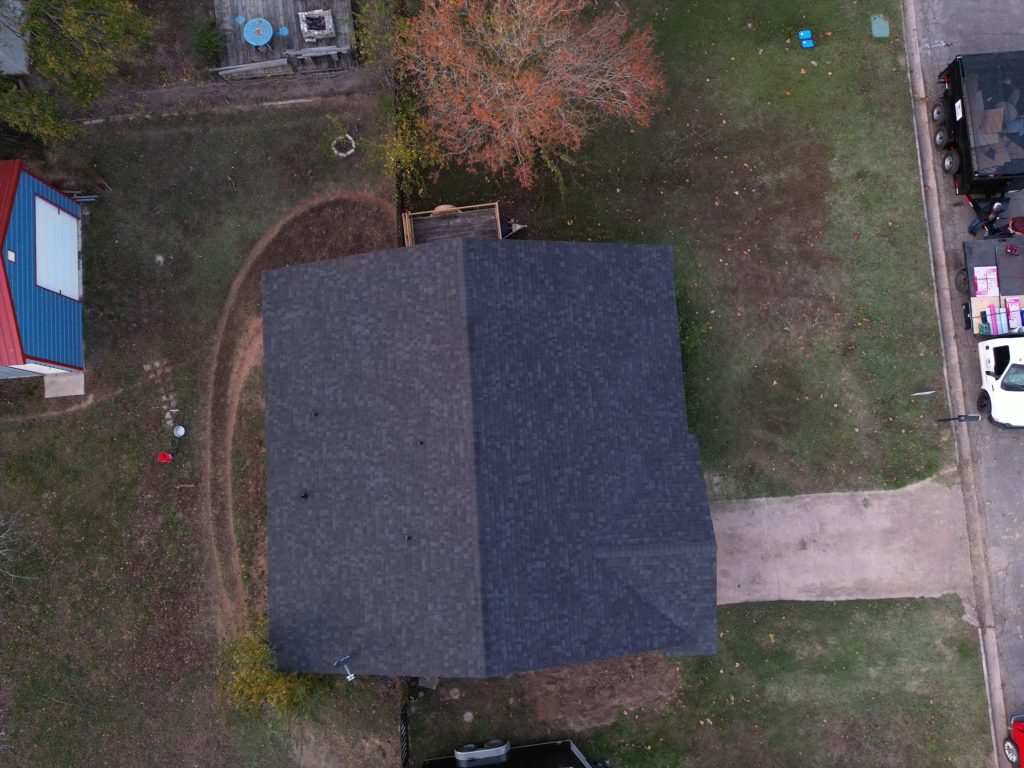
The thing homeowners are rarely told is how much variation sits inside the phrase. A builder-grade three-tab and a heavyweight impact-rated architectural shingle are both asphalt shingles, both nailed to the same deck, and separated by a factor of two or more in both price and expected service life. Where two quotes differ sharply, the material specification is usually where the difference lives, and an estimate that does not name the product cannot be compared to one that does.
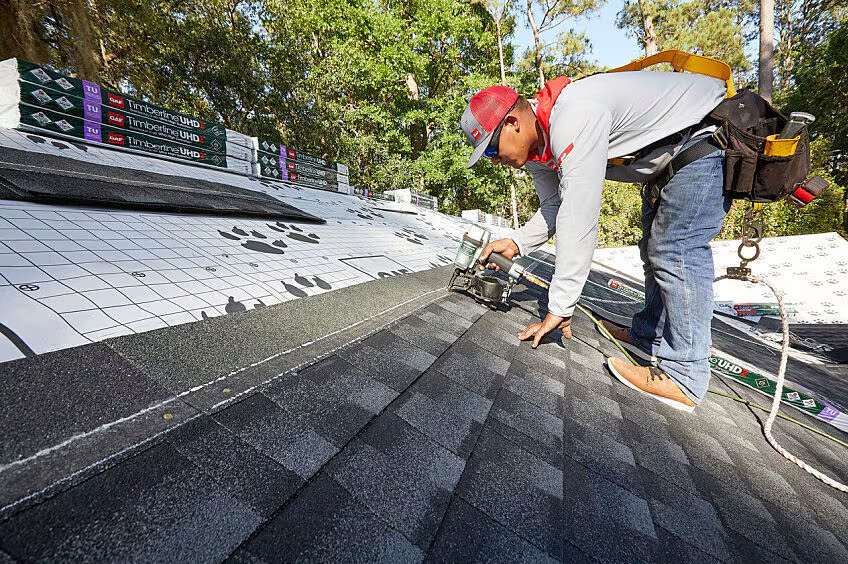
What matters at least as much as the shingle itself is everything underneath and around it: the underlayment across the field, the self-adhered membrane at valleys and details, the starter course at the eaves, the hip and ridge caps, the drip edge, and the flashing at every interruption. That assembly is what actually keeps water out. Manufacturers publish it as a system for a reason, and a premium shingle over felt and reused flashing is a premium roof in name only.
We are an Owens Corning Preferred Contractor and we also install GAF and CertainTeed. That is a deliberate position. It means the product recommendation comes from the roof, the exposure and your budget rather than from a single-brand commitment. If two systems would perform equivalently on your house and one is less expensive this month, we will tell you which.
One more piece of context that explains a lot about shingle quotes. Asphalt is a petroleum product, so pricing moves with material markets and with demand after a heavy storm season, and manufacturers push increases through with a few weeks of notice. That is why a quote carries a validity period, and why the quiet part of the year is straightforwardly less expensive for a roof that is aging rather than failing.
Everything below is in the asphalt shingles price we quote you
Product Specified By Name
The estimate says which shingle, which underlayment and which ridge system, not “architectural shingle” as a category.
Complete Tear-Off
Down to the deck so the sheathing can be inspected rather than covered up. We do not install over an existing layer.
Full Manufacturer System
Starter course, field underlayment, self-adhered membrane at valleys and details, hip and ridge caps: the assembly the warranty assumes.
New Flashing And Boots
Step, valley and counterflashing plus new pipe collars. Reused flashing is the most common reason a new roof leaks.
Ventilation Checked And Corrected
Intake and exhaust balanced while the roof is open, because heat from below is what ages asphalt shingles early in this climate.
Warranty Registered
Manufacturer coverage registered after completion where the system requires it, with written confirmation to you.
Start to finish, in order
Free Inspection
On the roof with a camera, plus the attic. We photograph the existing roof and confirm what it actually needs.
Product Walkthrough
Three-tab, architectural or impact-rated, with the trade-offs and the price difference stated plainly.
Color And Sample
Color is the part people worry about most. We bring samples and look at them against your brick and trim, in daylight.
Install Day
Protection down, tear-off, deck repair, underlayment, flashing, then the shingle system. Most homes are one day.
Walkthrough And Registration
We walk the property with you, hand over photographs and paperwork, and register the manufacturer warranty.
Four things we do on every single job
Photographs, Not Opinions
Every problem area is photographed and shown to you before anybody quotes a price. You keep the images whatever you decide.
In Writing
The estimate names the products going on your roof, so you can compare it against anybody else’s.
Cleaned Up Daily
Beds and shrubs covered before work starts, and a magnet over the yard and driveway at the end of every working day.
A Local Phone Number
Our shop is on Como St S in Sulphur Springs. The company that fits your roof is the one you call in year four.
“WOW! DJJ Roofing was here at the crack of dawn and before sunset our house had a brand new beautiful roof. The young men on Eliceo’s crew worked tirelessly and professionally under his watchful eye. We were very impressed. Good company, good management, and great price.”

Three-tab, architectural, or impact-rated
Three-tab is the flat, single-layer shingle that came on most houses built here through the 1990s and early 2000s. It is the least expensive option, and it is the reason so many roofs in the older subdivisions all needed replacing within a couple of years of each other. We will install it where a rental property or a budget genuinely requires it, and we will also say plainly that the money saved is usually borrowed from the roof service life.
Architectural, sometimes called dimensional or laminate, is two or more layers laminated together. It is heavier, has a meaningfully better wind rating, lasts materially longer in this heat, and has the shadow line that makes a roof look like a roof rather than a flat surface. For the overwhelming majority of houses we quote, this is the correct answer and the one we recommend.
Impact-rated, meaning Class 4 under the UL 2218 test, uses a heavier mat engineered specifically for hail. It resists the bruising and mat fracture that turns a hailstorm into a claim, though no shingle is immune to hail large enough. In a region that sees hail as regularly as this one it is worth pricing, and worth one call to your insurer first: many carriers offer a premium credit for a Class 4 roof, and the size of it is set by your policy rather than by us. Owens Corning publishes its full shingle range with the ratings stated product by product if you want to read the specifications from the source.
Signs your shingle roof is near the end
Any one of these is worth a free look, and each is a common reason asphalt shingles get replaced around here. None of them get less expensive by waiting.
Granules collecting in the gutters, at downspout outlets, or in the beds beneath the eaves.
Shingles that crack or crumble rather than flex when they are walked on.
Curling or cupping at the edges and corners, particularly on south and west-facing slopes.
Bald patches where the asphalt mat is visible through the granule surface.
Repeated repairs in different places on the same roof within a season or two.
A roof past about fifteen years that has been through several hail seasons.
The asphalt shingles we install and where each one fits
Four product tiers cover almost every quote we write. The right one depends on the roof, the exposure, how long you intend to own the house, and whether hail is part of the conversation.
Three-Tab
The single-layer budget option. Lowest cost per square, shortest service life, and the shortest wind rating. Occasionally the right answer on a rental.
Architectural
Laminated, heavier, better wind performance and a proper shadow line. The default recommendation for most homes in Northeast Texas.
Impact-Rated Class 4
A heavier mat built for hail, and the rating most Texas carriers look for when offering a premium credit. Worth pricing in this region.
Designer And Dimensional
Heavier profiles that imitate shake or slate. A cost and weight step up, chosen for appearance on the right house.
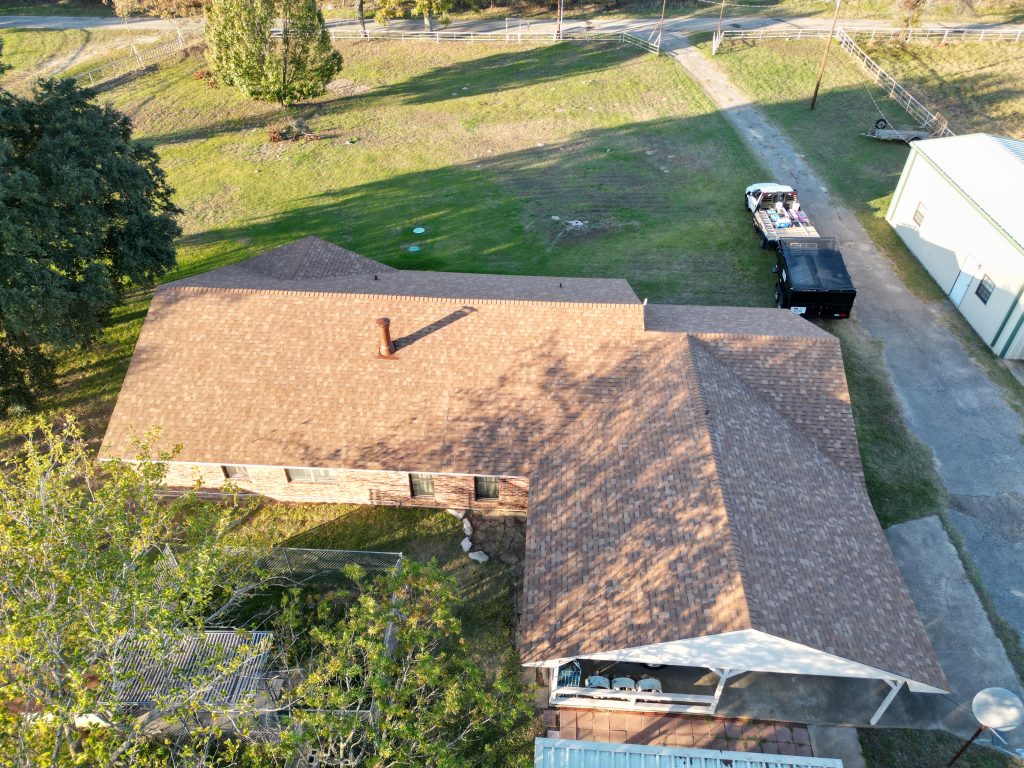
An estimate that says “architectural shingle” could be any of a dozen products at very different prices. One that names the shingle, the underlayment and the ridge system can be compared line for line against anybody else. Ours always names them.
Why ventilation decides how long your shingles last
A shingle roof is a system that includes the attic underneath it. Heat trapped in an under-ventilated attic ages asphalt shingles from the side the sun never touches, and in a Texas summer that side runs hotter for longer than the weather alone would explain. A roof with inadequate ventilation can lose years off its service life without a single storm.
Balanced ventilation means intake low at the soffit and exhaust high near the ridge, sized to each other so air actually moves. Plenty of houses have exhaust vents and no working intake because the soffits were closed up or the insulation slid down and blocked them, and a roof like that is being replaced with the same problem still in place unless somebody looks.
It is also a warranty matter people find out about late. Manufacturer coverage assumes the ventilation requirements published with the product were met, and the National Roofing Contractors Association publishes the same guidance. When we quote asphalt shingles we state the ventilation work as its own line rather than burying it in the total.
What a shingle roof estimate should actually contain
A comparable estimate names the product. Not the category, the product: which shingle line, which underlayment, which starter and which hip and ridge. Two quotes that both say “architectural shingles” can be a thousand dollars apart on material alone, and you cannot see that from the totals.
It should separate the work into lines. Tear-off and disposal, decking repair at an agreed rate per sheet, underlayment, flashing, ventilation and the shingle system each carry their own number. That is what lets you see where two companies actually differ rather than guessing at it, and it is what makes a supplement conversation straightforward if the deck turns out to be soft.
And it should say what happens with the unknowns. Decking condition cannot be known until the old roof is off, so the honest way to handle it is an agreed per-sheet rate written down before the job starts. An estimate that stays silent on decking is not less expensive, it is just less finished.
Straight answers, free of charge
The inspection, the photographs and the written estimate cost nothing and commit you to nothing. If the honest answer is that the work can wait, that is what the estimate will say.
What actually moves the price on an asphalt shingle roof
Square Footage
Roofing is priced by the square, which is one hundred square feet of roof surface rather than floor area. A complex roof has more surface than its footprint suggests.
Pitch And Complexity
Steep roofs are slower and need more safety equipment. Dormers, valleys and multiple planes add cutting, waste and time.
Layers Coming Off
One layer of shingle is a straightforward tear-off. Two or three is materially more labor and more disposal weight.
Decking Condition
Nobody knows this until the old roof is off, which is why it carries an agreed per-sheet rate rather than a guess.
The Shingle You Choose
Three-tab, architectural and impact-rated are separated by a factor of two or more per square, and the underlayment choice moves with them.
Flashing And Penetrations
Chimneys, skylights, wall intersections and every pipe collar are individual details, and each one is work.
Four ways a shingle roof goes wrong
Installing Over The Old Layer
Less expensive on the day, and it hides the decking so nobody knows what is under there. It also traps heat and shortens the life of the new shingles.
Reusing Tired Flashing
Flashing is where most leaks start, and it is the easiest thing to leave in place to save an hour. An estimate should name the flashing work explicitly.
Ignoring The Attic
A new roof over blocked soffits will run hot and age early, and the manufacturer warranty assumes ventilation that is actually working.
Nailing Outside The Zone
Shingles have a designated nailing strip. Fasteners placed high or low hold today and let go in the first serious wind.
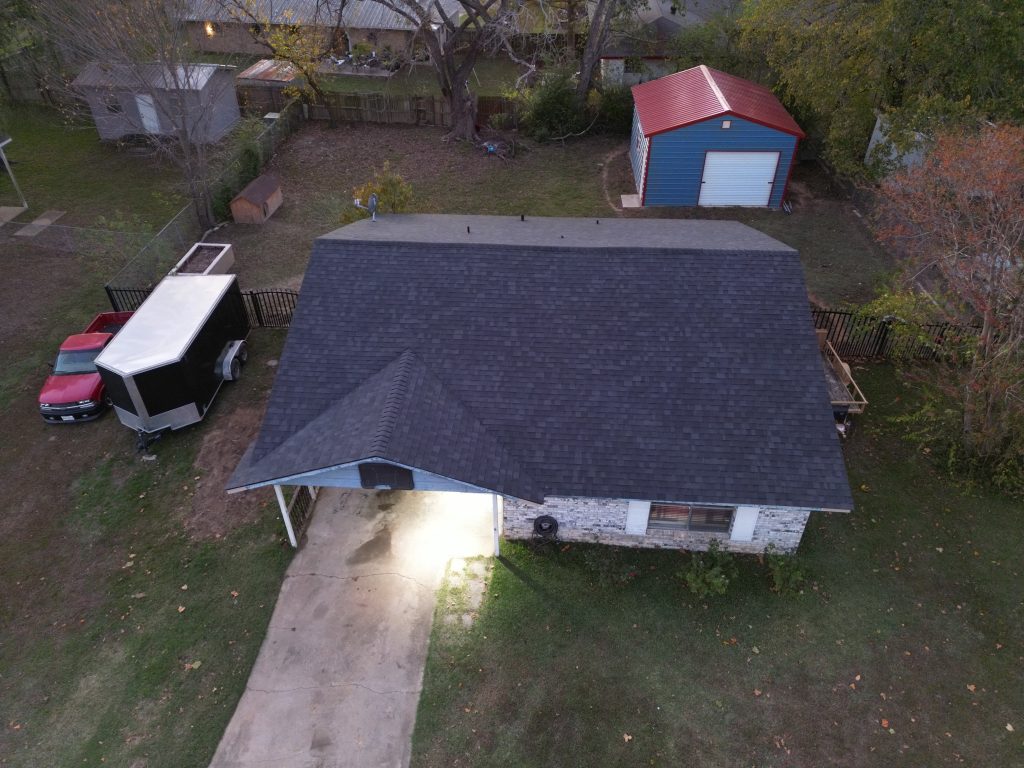
What this looks like in Hopkins County and around it
Most of the asphalt shingles we replace fall into a few patterns. In the older subdivisions around Sulphur Springs and Greenville a great many houses were roofed within a few years of each other with builder-grade three-tab, which is why whole streets reach the end of their service life at roughly the same time.
Out toward the lake and along the open ground north of the Sulphur River, wind exposure does more of the damage than age does. Ridges and rakes lose shingles, and an architectural product with a better wind rating is usually worth the step up on those sites.
And in the I-30 corridor through Greenville, Commerce and Caddo Mills, hail is the deciding factor often enough that impact-rated shingles come up in most conversations. Being an hour from all of it means we can look at a roof within days, come back if something is not right, and the reviews on this page were left by people who live close enough to run into us.

Questions about asphalt shingles
Architectural shingles are commonly rated for thirty years or more, and in this climate a well-ventilated roof installed as a full system realistically gets close to that. Heat is the limiting factor rather than rain: an under-ventilated attic can take years off. Three-tab is shorter, often fifteen to twenty. Hail can end any of them early regardless of the rating on the wrapper.
In a region that sees hail most years the case is stronger than in most places, for two reasons. They resist the mat fracture that turns a storm into a claim, and many Texas carriers offer a premium credit for a Class 4 roof. Call your agent for the credit figure before choosing, because it varies by carrier and by policy and nobody outside your insurer can quote it accurately.
We do not, and we would rather explain why than just decline. A layover hides the decking so nobody can inspect or repair it, adds weight to the structure, and traps heat that shortens the life of the new shingles. It is less expensive on the day and more expensive over the life of the roof.
Not exactly, which is why we bring physical samples and look at them against your brick, stone and trim in daylight rather than working from a printed chart. Roof color also reads differently by pitch and by time of day. This is the part homeowners most often underestimate and then care about most once it is on.
We show you the photographs and replace what needs replacing at the per-sheet rate agreed in your estimate before the job started. It is the one genuine unknown on a tear-off, which is exactly why it is priced up front rather than discovered as a surprise halfway through.
Other services
Flashing failures, lifted shingles and wind damage put right before water gets in.
Five and six inch seamless aluminum, fabricated on site to fit your roofline.
Let’s get somebody up there to look.
Fill out the form or pick up the phone. Either way you get straight answers about your roof and a written estimate you can keep.