Commercial roofing for shops, churches, warehouses and barns.
Commercial roofing for shops, churches, offices, warehouses and agricultural buildings. Low-slope membrane and metal systems installed and maintained around your operating hours rather than ours.
Commercial roofing in plain terms
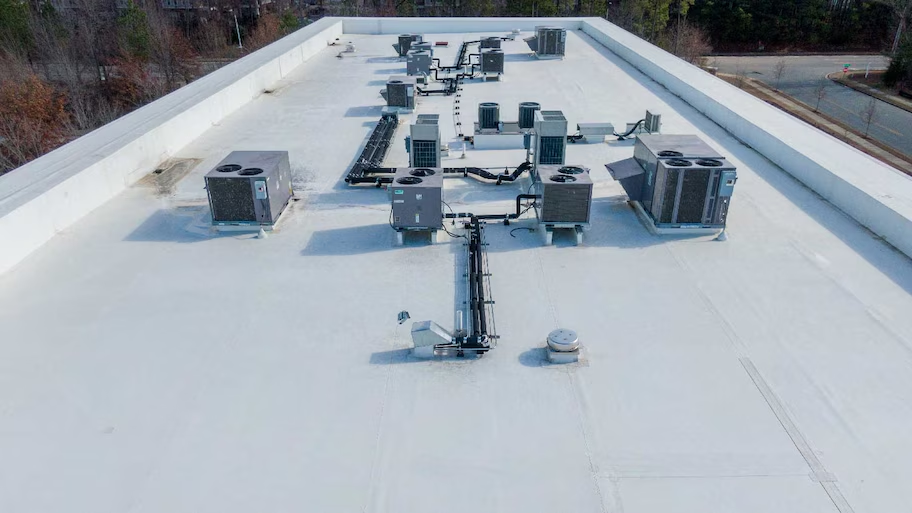
A commercial roof fails differently to a house roof, and that difference drives almost every decision on this page. A residential roof sheds water: it is steep, gravity does the work, and a small defect usually produces a visible leak reasonably soon. A low-slope commercial roof holds water for a while before it drains, which means a small defect produces ponding, then saturated insulation, then a leak somewhere entirely unrelated to the entry point, often months later.
The second difference is that the roof is rarely just a roof. It has rooftop HVAC units, curbs, exhaust fans, conduit, gas lines, drains, scuppers, and in a lot of cases a history of a new penetration cut in a hurry and sealed with whatever was in the van. Every one of those is a detail that has to be flashed properly, and collectively they are where the overwhelming majority of commercial roofing problems live. The field of the membrane is usually the healthiest part of the system.
The third is that the building has a job to do while we work. A church needs the sanctuary usable on Sunday, a shop cannot close for three days, a feed store has deliveries arriving, and a warehouse has stock underneath that cannot get wet. Planning around that is the substance of doing commercial work competently, and it is the first conversation we have rather than the last.
We work in TPO, modified bitumen and torch-applied systems, and metal, on buildings from a single-tenant storefront up to agricultural structures with very large roof areas. We also do a great deal of maintenance and repair work, which is frankly the better value for most building owners: the commercial roof that lasts longest is the one that gets looked at twice a year and never reaches the point of needing replacing early.
One thing worth understanding before any of the technical detail: on a commercial building the roof is a business asset with a depreciation schedule rather than a home improvement. That changes the right questions. Not what a new roof costs, but what it takes to get another eight years out of this one, and when you should budget for replacement. Sometimes the answer is a few thousand dollars of detail work and a maintenance interval. Sometimes it genuinely is a capital project, and knowing that two years ahead is worth more to you than a marginally lower price.
Quoting a commercial roof from a photograph or a square-footage figure is not something we can do honestly. Slope, drainage, existing layers, insulation condition, penetration count, deck type and access all move the number substantially, and any of them can turn a straightforward job into a complicated one. The survey is free, it produces a written scope, and that scope is the only sound basis for a price.
Everything below is in the commercial roofing price we quote you
Free Roof Survey
A full walk of the roof with photographs, a drainage assessment, a penetration-by-penetration check, and a written scope you keep.
Low-Slope Membrane Systems
TPO and modified bitumen: new installs, tear-off and replacement, and re-cover where the existing assembly permits it.
Commercial Metal
Standing seam and exposed-fastener panel systems, plus retrofit over failing low-slope where the structure allows.
Detail And Flashing Work
Curbs, penetrations, parapets, scuppers, drains and terminations, which is where commercial roofs actually fail.
Repairs And Leak Diagnosis
Tracing leaks on a roof where the entry point and the drip are rarely in the same place.
Maintenance Programs
Scheduled twice-yearly inspections with photographs and a written condition report, so problems get found on a schedule rather than by a tenant.
Start to finish, in order
Site Visit
We walk the roof, photograph everything, and talk to you about how the building is used and when work can happen.
Written Scope And Price
Written down by system, area and detail work, with the options laid out where more than one approach is viable.
Program Agreed
Sequencing, working hours, access, deliveries, and how we keep the building operating throughout.
Execution In Stages
Most commercial jobs are phased so that no area is left open overnight and the interior stays protected.
Sign-Off And Documentation
A final walk with you, photographs of every stage, warranty paperwork, and a maintenance schedule if you want one.
Four things we do on every single job
Photographs, Not Opinions
Every problem area is photographed and shown to you before anybody quotes a price. You keep the images whatever you decide.
In Writing
The estimate names the products going on your roof, so you can compare it against anybody else’s.
Cleaned Up Daily
Beds and shrubs covered before work starts, and a magnet over the yard and driveway at the end of every working day.
A Local Phone Number
Our shop is on Como St S in Sulphur Springs. The company that fits your roof is the one you call in year four.
“Excellent service! We were pleased with the work that was completed. Reliable and affordable. Highly recommend!”

Why commercial leaks are hard to find
On a low-slope roof water does not run off, it moves slowly toward drains, and if the slope is inadequate or a drain is blocked it sits. Once it finds a defect it enters the assembly and then travels laterally, between the membrane and the insulation or along the top of the deck, until it finds a path down. That path is frequently a deck seam, a fastener or a conduit penetration a long way from where it got in, which is why a wet ceiling tile is such an unreliable guide to the actual problem.
That is why diagnosing a commercial roofing leak properly starts with the penetrations rather than with the area above the drip. Curbs are the first suspect: the flashing at a rooftop unit takes constant thermal movement, and it also takes technicians walking on it and setting tools down. Then drains and scuppers, then parapet terminations, then seams, then any evidence of previous repair work.
The insulation is the part that turns an inexpensive repair into an expensive one. Once water is in the insulation it stays, it stops insulating, and it keeps the deck wet underneath. On a roof where that has been going on for a season or two, a surface patch puts new membrane over a saturated assembly. Finding out means cutting a test area and looking, and we would rather do that and show you the photographs than guess.

Signs a commercial roof needs attention
Any one of these is worth a free look, and each is a common reason a commercial roofing survey gets booked. None of them get less expensive by waiting.
Ponding water still standing on the roof two days after rain.
Stained or sagging ceiling tiles, particularly near interior columns or rooftop unit locations.
Blisters, ridges, or soft spots underfoot when walking the membrane.
Open or lifting seams, or visible shrinkage pulling the membrane away from terminations.
Patches of mastic or sealant left over from previous emergency repairs.
Blocked drains or scuppers, or debris accumulating at low points and against curbs.
The systems we work with
Four systems cover almost every commercial roofing job we quote around here. The right one depends on the slope, the traffic the roof takes, and what is underneath it.
TPO Single-Ply
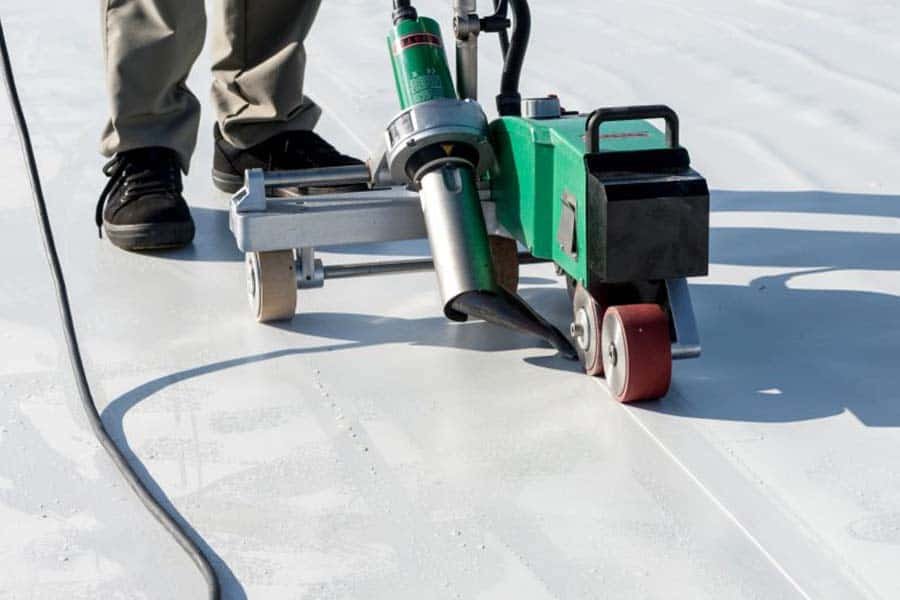
The most common new commercial roof we fit. Heat-welded seams, a reflective white surface that reduces cooling load, and a competitive installed cost, installed to the low-slope guidance from the National Roofing Contractors Association.
Modified Bitumen
Multi-ply asphalt-based sheet, torch or cold applied. Very durable underfoot, which suits roofs that take regular maintenance traffic.
Standing Seam Metal
For steeper commercial roofs and retrofits. The longest service life, concealed fasteners, and no membrane to puncture.
Exposed-Fastener Metal Panel
PBR and similar profiles for warehouses, shops and agricultural buildings, where cost per square foot over large areas is the driving factor.
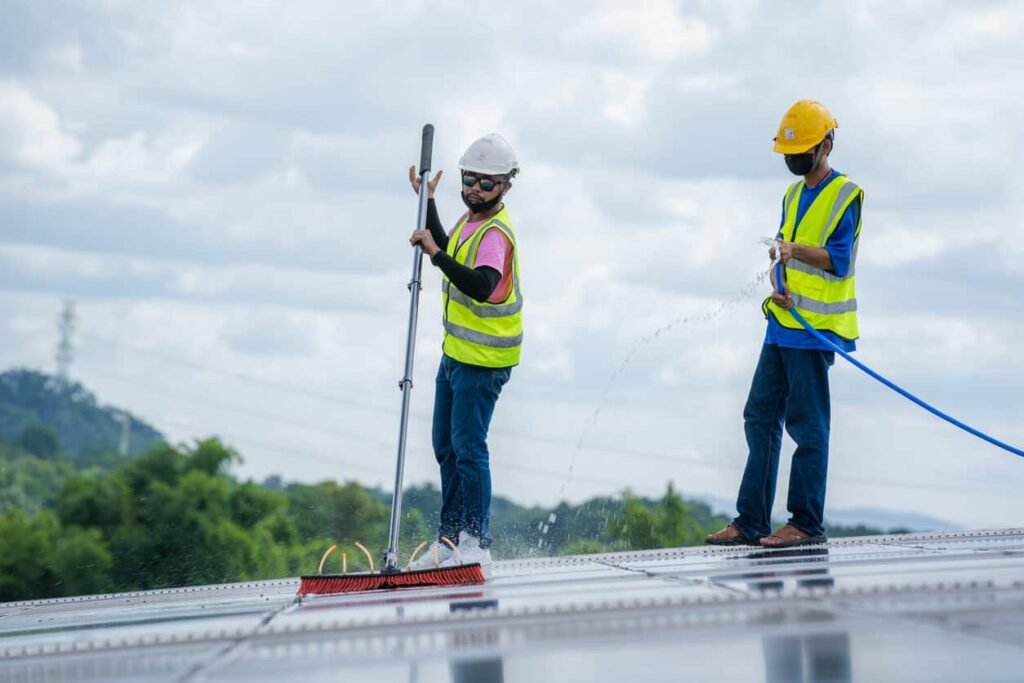
Two visits a year cost a fraction of any capital work and routinely add years to a commercial roof.
Replace, re-cover, or maintain
Every commercial roofing conversation eventually reduces to these three options, and the honest recommendation depends almost entirely on one thing nobody can see from the roof surface: whether the insulation underneath is wet. That is why test cuts exist. Cutting a few small test areas and looking costs very little, and it is the difference between advising you properly and guessing.
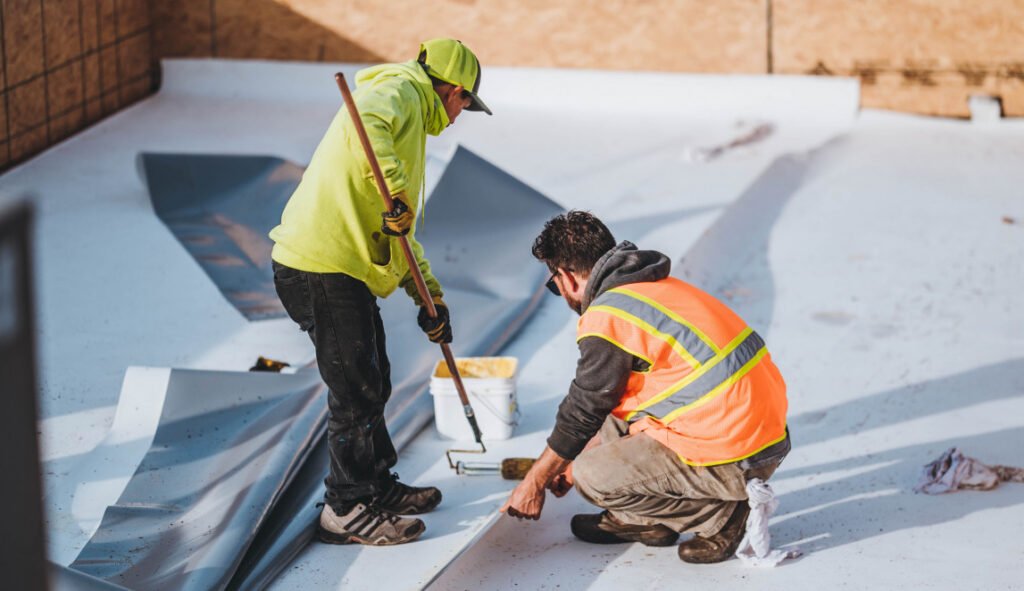
A full tear-off and replacement is warranted when the insulation is wet across significant areas or the deck has been compromised, because at that point anything installed over the top is inheriting a problem. It is the most expensive option and sometimes it is the only sound one. A re-cover, installing a new membrane over the existing assembly, is viable when the existing insulation is dry, the deck is sound, and the building code and structure permit the additional layer. It is substantially less expensive, because disposal and insulation are the bulk of a replacement cost.
Maintenance is the option most building owners under-use and the one with the best return by a wide margin, and it is what manufacturers assume when they publish a service life. Two visits a year, clearing drains, checking curbs and terminations, resealing where sealant has aged and photographing condition, costs a fraction of any capital work and routinely adds years to a roof. Most of the commercial roofs we see replaced early were not badly built, they were simply never looked at until a tenant complained.
Working around a building that has to stay open
Before anything gets scheduled we want to understand how the building runs, because on commercial roofing the program is usually the harder part. What are your busy hours, when are deliveries, who else has access to the roof, is there anything underneath that cannot be exposed to noise or vibration, and who needs to be told before crews arrive on site. Those answers determine the sequence.
The practical constraints are usually more interesting than the roofing. A church wants nothing happening on Sunday and no noise over a weekday funeral. A restaurant needs its kitchen exhaust operational through service. A shop wants the front entrance clear during trading hours. A warehouse needs the stock underneath protected, which sometimes means working in bays and covering racking rather than opening the largest area we can manage.
We plan sequencing around that, and it changes the program rather than the price: phasing a job into smaller sections takes more days but keeps the building working. Dry-in at the end of each shift is fixed practice on a commercial roof, because the consequence of being caught by weather is stock, equipment, or a congregation building rather than a damp ceiling.
Straight answers, free of charge
The inspection, the photographs and the written estimate cost nothing and commit you to nothing. If the honest answer is that the work can wait, that is what the estimate will say.
What drives a commercial roofing price
Roof Area And Layout
Square footage is the base, but a roof broken into levels and sections costs more per foot than one large plane.
System Specification
TPO, modified bitumen and metal differ materially in installed cost, service life, and what they need underneath.
Existing Layers
Tear-off and disposal of multiple existing layers, especially with wet insulation, is a substantial share of a replacement budget.
Penetration Count
Every curb, drain, vent and conduit is hand-detailed. A roof crowded with units costs more than its area suggests.
Drainage Correction
Where ponding is caused by inadequate slope, tapered insulation or additional drainage is real work and priced as its own line.
Access And Phasing
Crane or lift requirements, restricted working hours, and phasing around occupancy all affect the program and the cost.
Commercial roofing mistakes that get expensive
Re-Covering Over Wet Insulation
A new membrane over a saturated assembly hides the problem and guarantees the next roof is a full tear-off. Test cuts are inexpensive by comparison.
Mastic As A Repair Strategy
Sealant over a failed detail buys a season. A roof covered in patches is a roof where the underlying detail was never diagnosed.
Nobody Clearing The Drains
Blocked drains are the single most preventable cause of commercial roof failure, and clearing them costs almost nothing.
Penetrations Cut After The Fact
A new unit or conduit installed by another trade and sealed with caulk is a leak with a date on it. Any new penetration needs flashing properly.

Commercial work around Sulphur Springs
The commercial building stock here is not office towers. It is main-street storefronts, churches of every size, feed and farm supply buildings, light industrial units, shops, and a great many agricultural structures. Most have low-slope membrane or exposed-fastener metal, and a surprising number have never had a scheduled inspection in their lives.
That produces a specific opportunity for building owners, which is that maintenance here is dramatically less expensive than replacement. Two visits a year on a shop roof costs less than one emergency call-out, and it is the difference between a twenty-year roof reaching twenty and a twenty-year roof being replaced at fourteen.
Churches are their own category and worth mentioning specifically. They tend to have complicated rooflines assembled over decades, long spans, limited budgets, and an absolute constraint on when work can happen. They are also buildings where the congregation notices everything, which is a reasonable standard to be held to. We do a fair amount of that work and it is planned differently: quieter phasing, weekday scheduling, and a great deal more communication than a shop roof requires. Being local matters more on commercial than residential, because a membrane roof needs attention at intervals for its whole life.


Questions about commercial roofing
A commercial roofing system depends more on maintenance than on the specification. A properly installed TPO or modified bitumen roof that gets its drains cleared and its details checked twice a year should give you twenty years or more. The same roof left alone frequently fails in the mid-teens, and almost always at a detail rather than in the field.
Yes, and it is the first thing we plan rather than an afterthought. Phasing a job into smaller sections takes more days but keeps the building operating, and for churches, shops and restaurants that trade-off is usually worth making. Tell us the constraints at survey stage and the program gets built around them.
Yes: typically two visits a year with drains and scuppers cleared, curbs and terminations checked, aged sealant renewed, and a written photographic condition report each time. It is the best-value work we do for commercial clients.
Water still standing two days after rain is worth investigating. Sometimes it is a blocked drain, which is trivial. Sometimes it is inadequate slope, which needs tapered insulation or additional drainage to correct properly. Either way ponding accelerates membrane aging and adds load.
Where the existing insulation is dry, the deck is sound, and code and structure allow the extra layer, yes, and it is considerably less expensive. What it requires is evidence rather than assumption, which means test cuts to confirm the assembly is dry.
Other services
Flashing failures, lifted shingles and wind damage put right before water gets in.
Five and six inch seamless aluminum, fabricated on site to fit your roofline.
Let’s get somebody up there to look.
Fill out the form or pick up the phone. Either way you get straight answers about your roof and a written estimate you can keep.