No fasteners through the roof. That is the whole idea.
Concealed-clip standing seam panels, mechanically or snap-joined. It is the longest-lived residential roof we install and the cleanest-looking metal system there is. Free inspection, photographs of whatever we find, and a written written estimate you keep either way.
Standing seam in plain terms
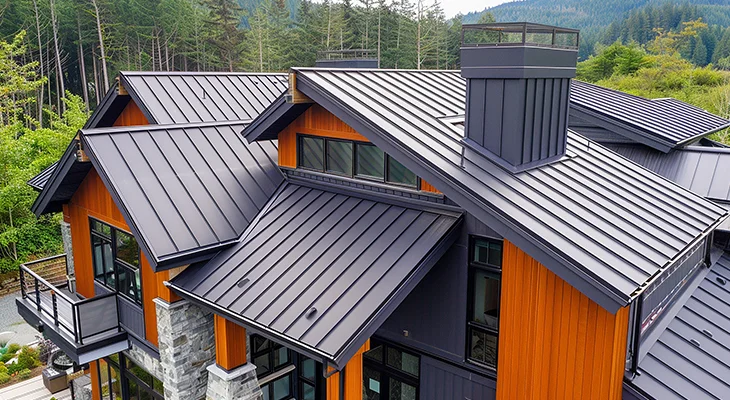
Standing seam is the premium end of metal roofing, and the reason comes down to a single design decision: the fasteners do not go through the weather surface. Panels are held by clips that sit hidden under the raised seams, and the seams themselves are either snapped together or mechanically crimped into a folded joint. There is no screw head in the field of the roof, no rubber washer aging in the sun, and nothing to back out over twenty years.
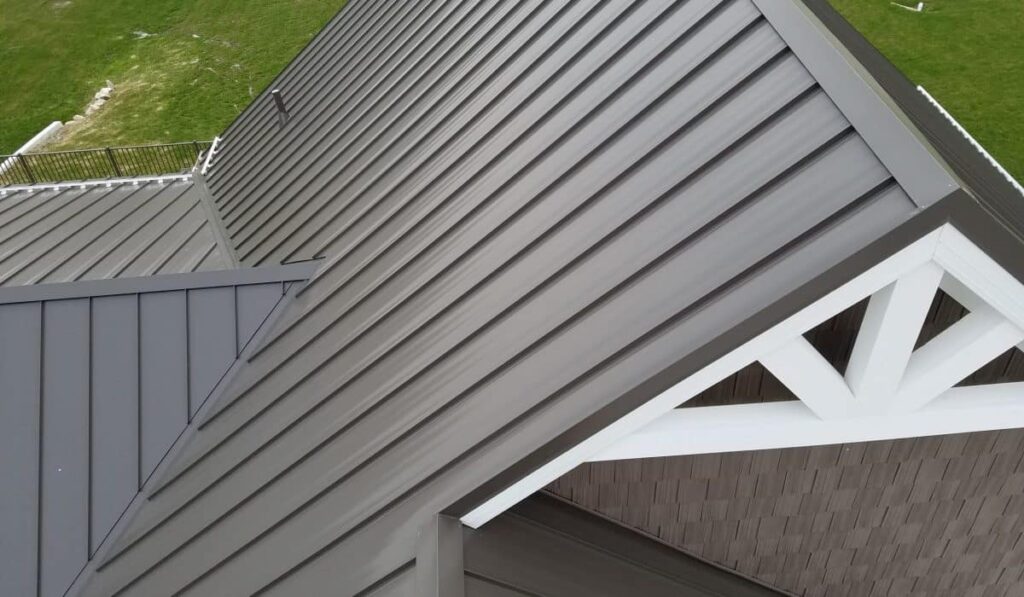
That removes the main maintenance item on every other metal system. On an exposed-fastener roof the washers under thousands of screws are a consumable, and going over them comprehensively somewhere in the fifteen to twenty-five year range is normal. On standing seam there is nothing equivalent, which is why it is the system we fit on houses where the owner wants a roof they can genuinely stop thinking about.
The second thing the clips do is allow movement. Metal expands and contracts along its length with temperature, and on a long panel that movement is measurable: a summer afternoon and a winter night are meaningfully different lengths. Clips let the panel slide rather than fight its fixing, which is why a properly detailed standing seam roof does not tear at its terminations the way a rigidly fastened metal roof eventually will.
Appearance is a legitimate reason to buy it, and most people who choose it say so. The clean vertical lines running to the ridge suit both modern and traditional elevations, the seams cast a shadow line that changes through the day, and there are no rows of screw heads across the surface. On the right house it is simply the best-looking roof available.
Worth understanding is that standing seam is a family of systems rather than one product. Seam type, panel width, gauge, clip design, and whether the panel is structural or needs continuous decking underneath all vary, and they are chosen for the roof rather than pulled off a shelf. That is why a proper estimate for this system reads like a specification, and why two quotes carrying the same headline description can describe quite different roofs.
The trade-off is cost and precision. It is the most expensive residential roof we install, and it is the least forgiving of approximate work: panels have to be set out accurately, terminations have to be formed properly, and every detail is hand-worked trim rather than something that comes out of a bag. Done carefully it is a fifty year roof, and the care is most of what you are paying for.
Everything below is in the standing seam price we quote you
Free Inspection
Roof and attic, photographed, plus an honest assessment of whether standing seam suits the roof geometry and your plans for the house.
Full Specification
Panel profile, seam type, width, gauge and coating system all named in the estimate rather than left implied.
Concealed Clip System
Clips sized and spaced for the panel and the exposure, allowing thermal movement along the panel length.
High-Temperature Underlayment
Self-adhered or synthetic underlayment rated for the temperatures under a metal roof, with ice-and-water membrane at details.
Hand-Formed Trim
Ridge, hip, valley, rake, eave and wall details formed in matching material rather than improvised on site.
Integrated Ventilation
Ridge ventilation built into the metal system, with intake checked so the attic actually breathes.
Start to finish, in order
Inspection And Measure
Roof walked and measured, attic checked, geometry assessed. Panel layout is planned rather than improvised on the day.
Specification And Color
Seam type, gauge, coating and color, with samples looked at in daylight against the house itself.
Written Estimate
Written down and naming the system, with deck repair rates and any structural work identified separately.
Install
Tear-off, deck inspection, high-temperature underlayment, clips, panels, then every trim and termination.
Walkthrough
Final walk with you, photographs of every stage, warranty documentation, and what little maintenance it needs.
Four things we do on every single job
Photographs, Not Opinions
Every problem area is photographed and shown to you before anybody quotes a price. You keep the images whatever you decide.
In Writing
The estimate names the products going on your roof, so you can compare it against anybody else’s.
Cleaned Up Daily
Beds and shrubs covered before work starts, and a magnet over the yard and driveway at the end of every working day.
A Local Phone Number
Our shop is on Como St S in Sulphur Springs. The company that fits your roof is the one you call in year four.
“DJJ Roofing did an amazing job on our roof. They were professional, on time, and the crew cleaned up everything before they left. The whole process was easy and the price was fair. Highly recommend DJJ Roofing LLC!”

Snap-lock or mechanically seamed
Snap-lock panels have a profiled male and female edge that click together under hand pressure as each panel is set. No seaming machine is needed, installation is quicker, and on the pitches most houses have it performs very well. It is the more common residential choice, and for a typical gable or hip roof with reasonable slope it is entirely appropriate.
Mechanically seamed panels are folded closed by a machine that runs the length of the seam, producing either a single or a double fold. The joint is tighter, the water resistance is higher, and it is what we specify on low-slope applications, exposed sites, or anywhere the roof will see driven rain and wind at the seam. It costs more in labor and it is the more robust system of the two.
The rule of thumb is slope and exposure. On a normal residential pitch in a sheltered setting, snap-lock. On lower slopes, on rural properties in open ground, or where wind-driven rain is a genuine consideration, mechanically seamed and usually double-locked. We tell you which we are proposing and why, because the two are not interchangeable and the price difference is real. The National Roofing Contractors Association publishes the guidance both systems are installed to.
When standing seam is the right choice
Any one of these is a good reason to have the conversation, and the inspection and estimate cost nothing either way.
You plan to stay in the house long enough for a forty to fifty year roof to make sense.
You want a metal roof with no exposed fasteners and no screw replacement in twenty years.
The elevation suits clean vertical lines. It is a visual choice as much as a technical one.
The property is exposed or rural, where wind performance is a real consideration.
A low-slope section keeps failing, and a mechanically seamed panel would settle it permanently.
You are already committed to metal and want the version that asks for the least attention.
The specification choices that decide the roof
Four decisions do most of the work on a standing seam estimate. All four go in ours by name.
Snap-Lock Seam
Clicked together by hand. Quicker, less costly, and appropriate on typical residential pitches in sheltered settings.
Mechanically Seamed
Machine-folded, single or double lock. A tighter joint, and the right call on low slopes and exposed sites.
Panel Gauge
Heavier gauge oil-cans less, dents less, and looks flatter across a wide plane. Worth specifying rather than accepting a default.
Coating System
The single biggest factor in how the roof looks at year twenty. A quality paint system fades slowly and evenly.

Panels running out of parallel, terminations that are not square, trim that has been cut rather than formed: all of it is visible on a metal roof in a way it simply is not on shingle. That is the argument for looking at finished metal work in person before hiring anybody, and we are happy to point you at roofs we have done nearby.
Oil-canning, and other things worth knowing before you buy
There are two things about this system that homeowners are most likely to be surprised by after installation, and both are entirely manageable if they are discussed beforehand. The first is oil-canning, which is a normal characteristic of the material rather than a fault. The second is how visibly precision shows on a metal roof compared with shingle.
Oil-canning is the slight waviness visible in the flat part of a panel under certain light. It is inherent to light-gauge formed metal, not a defect and not a workmanship failure, and it is more visible on wide flat panels, on thinner gauge, in glancing light and on dark colors. The Metal Construction Association treats it as an aesthetic characteristic of the product for exactly that reason.
It can be reduced, and the ways of reducing it are specification decisions made before anything is ordered: heavier gauge, narrower panels, and striations or minor ribs rolled into the pan to stiffen it. If a perfectly flat appearance matters a great deal to you, say so at estimate stage and we will specify accordingly. It costs a little more and it is an entirely reasonable thing to want.
Details, terminations, and where metal roofs actually leak
The part everybody looks at, the long clean runs of panel, is the part least likely to ever give trouble. All of the risk on this system sits at the edges and the interruptions, which is also where all of the skill sits. It is worth knowing that before comparing two quotes, because the difference between them is usually in exactly the places you cannot see from the driveway.
A standing seam roof almost never leaks in the field, because there is nothing there to leak through: no fasteners, and seams that are continuous folded metal. What can leak is every place the roof stops or meets something else. Valleys, headwalls and sidewalls, chimney and skylight surrounds, penetrations for plumbing and exhaust, and the eave and rake terminations. That is where the craft is.
Those details are hand-formed trim rather than components out of a box, and they have to accommodate the same thermal movement the panels do. A valley pan, a headwall flashing or a pipe boot fixed rigidly across a panel that needs to move is a detail with a countdown on it. Getting that right is what separates a metal roof that lasts fifty years from one that gives trouble at year eight, and none of it is visible from the ground.
Penetrations deserve particular mention, because they are usually added later by somebody else. A satellite dish, a new bathroom vent, a solar mount or a cable run drilled through the panel by a trade who does not work in metal is one of the few ways to genuinely damage this system. If something needs to go through the roof after it is finished, it is worth a call first. There are proper ways to do it and they are not expensive.
Straight answers, free of charge
The inspection, the photographs and the written estimate cost nothing and commit you to nothing. If the honest answer is that the work can wait, that is what the estimate will say.
What drives a standing seam price
Seam Type
Mechanically seamed costs more in labor than snap-lock, and on some roofs it is the necessary specification rather than an upgrade.
Gauge And Coating
The two items that most affect both the cost today and how the roof looks and performs in twenty years.
Roof Geometry
Simple planes are efficient. Every valley, dormer, hip and chimney is hand-formed trim and real hours.
Panel Length And Access
Long panels make better roofs and are harder to handle. Getting them up safely sometimes needs a machine.
Decking Condition
Assessed at tear-off and quoted per sheet up front, the same as on any other roof.
Appearance Specification
Narrower panels, heavier gauge or striated pans to minimize oil-canning cost more, and are worth it if flatness matters to you.
Four ways a standing seam roof goes wrong
Rigid Details On A Moving Roof
Panels expand and contract. A termination or penetration detail that does not allow for it will fail, usually within a few seasons.
Wrong Seam For The Slope
Snap-lock on a low slope or an exposed site where the roof needed a double-locked mechanical seam.
Standard Underlayment
It gets hot under metal. Underlayment has to be rated for it, or it degrades and the roof loses its second line of defense.
Penetrations Added Later
A dish or a vent drilled through the panel by somebody who does not work in metal. Inexpensive to do properly, expensive to put right.

Standing seam on houses around here
Something specific to this region: the temperature swing here is wide, and this is the metal system that handles it best. A panel on a Northeast Texas roof can go from freezing on a January night to well over a hundred and fifty degrees on an August afternoon, and it changes length measurably as it does. A clip system that lets the panel move is not a refinement in that climate. It is the reason the roof is still tight at year thirty.
It has become a genuinely common residential choice around here over the last decade, and the driver is usually hail fatigue. Homeowners on their second or third shingle roof after successive storms start asking what stops the cycle, and for anybody planning to stay in the house it is a reasonable answer.
On the rural and lakeside properties the argument is wind as much as hail. Buildings in open ground take loads a sheltered subdivision never sees, and a mechanically seamed roof on properly spaced clips is exceptionally good in those conditions. Those are also the houses where eave and rake details earn their keep, because that is where wind tries to get underneath a roof.
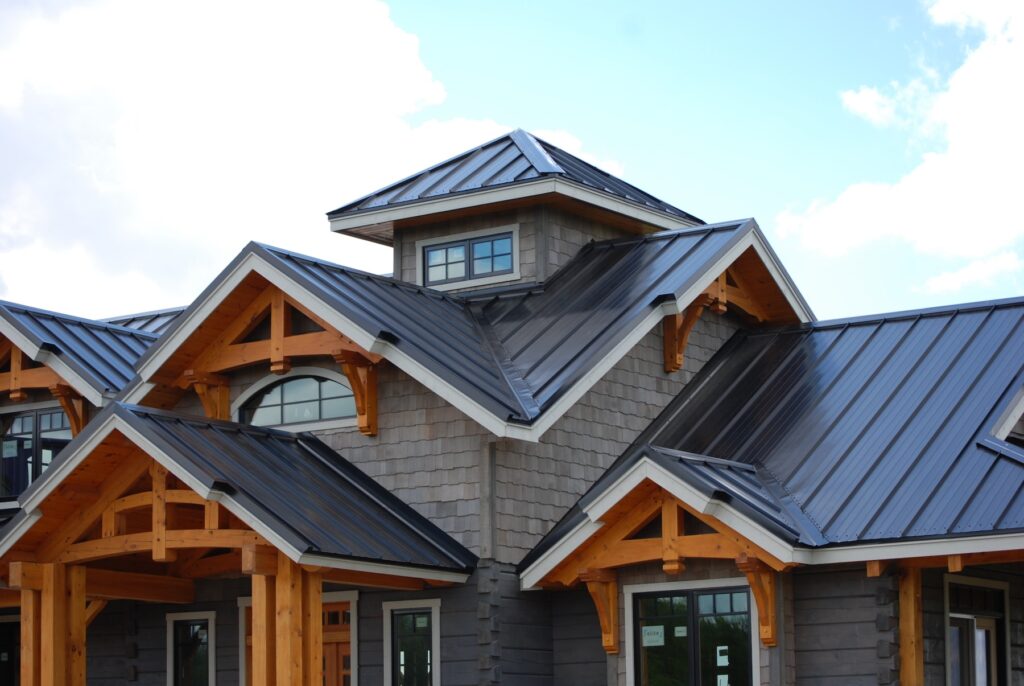
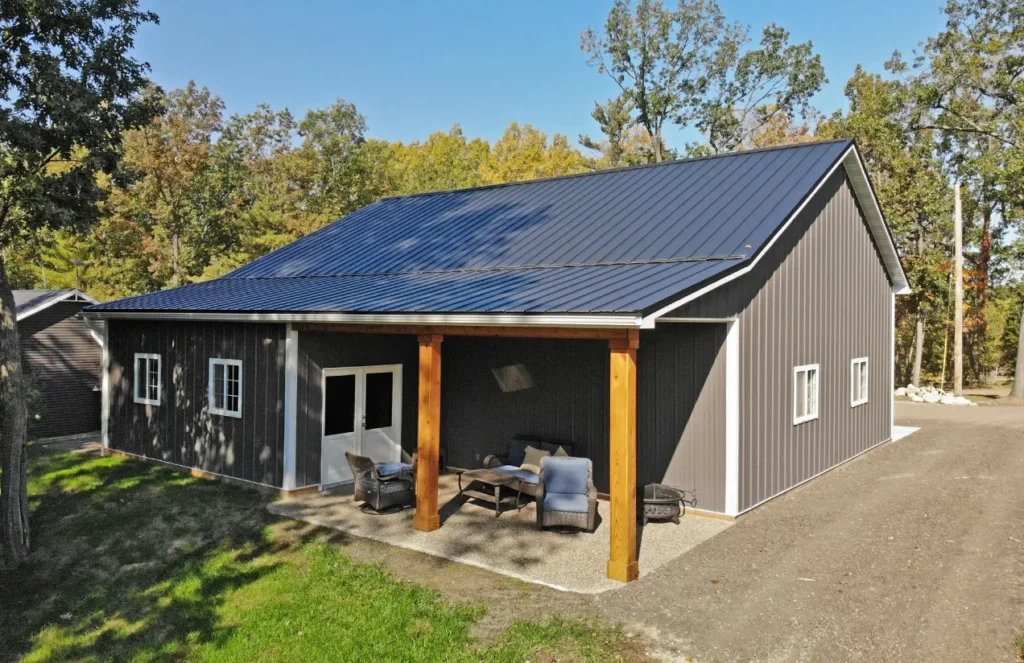
We fit a good number of partial jobs here too: a porch, a bay window roof, a rear addition, or a low-slope section that has failed repeatedly under shingle. Those are sensible contained projects, and they are often how people end up deciding they want it on the whole house next time round. The practical local advantage is that you can go and look at one. We can point you at roofs we have installed in most of the towns we serve, in different colors and different light, which tells you more about gauge, color and oil-canning in ten minutes than any brochure will.


Questions about standing seam
More material in the panel, a clip system rather than screws, hand-formed trim at every detail, and considerably more precision in the setting out. It is the most expensive residential roof we install, and it is also the one with the least to do to it afterwards.
It is the slight waviness visible in the flat part of a panel under certain light. It is an inherent characteristic of formed metal rather than a defect, and it is more noticeable on wide panels, thinner gauge and dark colors. If a flat appearance matters to you, heavier gauge, narrower panels or striated pans all reduce it, and those are decisions made before anything is ordered.
Carefully, in the right places, and not as a matter of routine. The flat pan between seams is the part that dents, and where the panel is over open framing rather than solid decking there is less support than it looks. If something needs doing up there, call us rather than going up.
Very little, which is most of the point. Keep the gutters clear, keep debris out of the valleys, and have the sealant at any penetrations or wall flashings looked at every few years, since sealant is the one component with a shorter life than the roof. There are no fasteners to check, which is the maintenance item on every other metal system.
Honestly, often not. The value of this roof is duration, and five years does not use much of it. It shows well and buyers like it, but you would not recover the difference over an architectural shingle roof in that time. If you intend to stay, the arithmetic changes completely, and that is a conversation we would rather have before quoting.
Other services
Flashing failures, lifted shingles and wind damage put right before water gets in.
Five and six inch seamless aluminum, fabricated on site to fit your roofline.
Let’s get somebody up there to look.
Fill out the form or pick up the phone. Either way you get straight answers about your roof and a written estimate you can keep.