Roofing contractor in Dike, TX
DJJ Roofing is a roofing contractor in Dike working from our own shop about fifteen minutes south in Sulphur Springs. Replacements, repairs, metal, gutters and storm work, with a free inspection and photographs of whatever we find.
Fifteen minutes south. Our yard is a short run down the road in Sulphur Springs, which makes coming up here routine rather than a special trip.
Schedule Your Free Inspection
No obligation. We will call to confirm the appointment time.
BEFORE THE STORM
See what is heading this way
Live rain and storm radar for Dike and the counties around it, updated roughly every ten minutes. Drag it, pinch or scroll to zoom, and scrub back through the last couple of hours.
If a storm has already been through, you do not have to guess what it did to the roof. A free inspection gets you photographs of whatever is up there, and a written report you can keep whether or not you ever file a claim.
Book a free inspectionRadar: RainViewer. Map: OpenStreetMap contributors. Warnings and official forecasts: National Weather Service.
Roofing services in Dike
A complete re-roof to manufacturer specification, with any decking replaced and quoted per sheet up front.
Most leaks come down to one detail rather than a whole roof. We find out which it is, put it right, and photograph the work before and after.
Contractor-observed damage documented properly while it is still fresh, at no cost and with nothing owed whatever you decide to do next.
Standing seam where it genuinely earns its keep and exposed-fastener panel where it does not, and we will tell you plainly which building is which.
Aluminum formed on the truck to the exact length of the run, with the fall set properly so water actually leaves the building rather than sitting.
Surface, penetrations, flashing, ventilation and drainage, with photographs of everything we look at whether or not there is a problem with it.
What roofs around Dike are up against
A roofing contractor in Dike spends most of the time on buildings scattered across rolling ground north of the county seat, where properties sit well apart and often a long way back from the road. Three things do nearly all the damage here.
Spring hail
It arrives in narrow bands, so one set of properties can take a beating while the next road over sees nothing. The damage bruises the shingle mat rather than holing it, which is exactly why it gets missed.
Wind on rising ground
A house on a rise takes wind a sheltered one never feels. Uplift works on the rakes and the ridge first, and a shingle whose seal has let go looks completely normal until somebody lifts it.
Tree litter in the valleys
Where oaks sit near a house the slower damage matters more: limbs taking granules off in every blow, and leaf litter holding damp in a valley between rains.
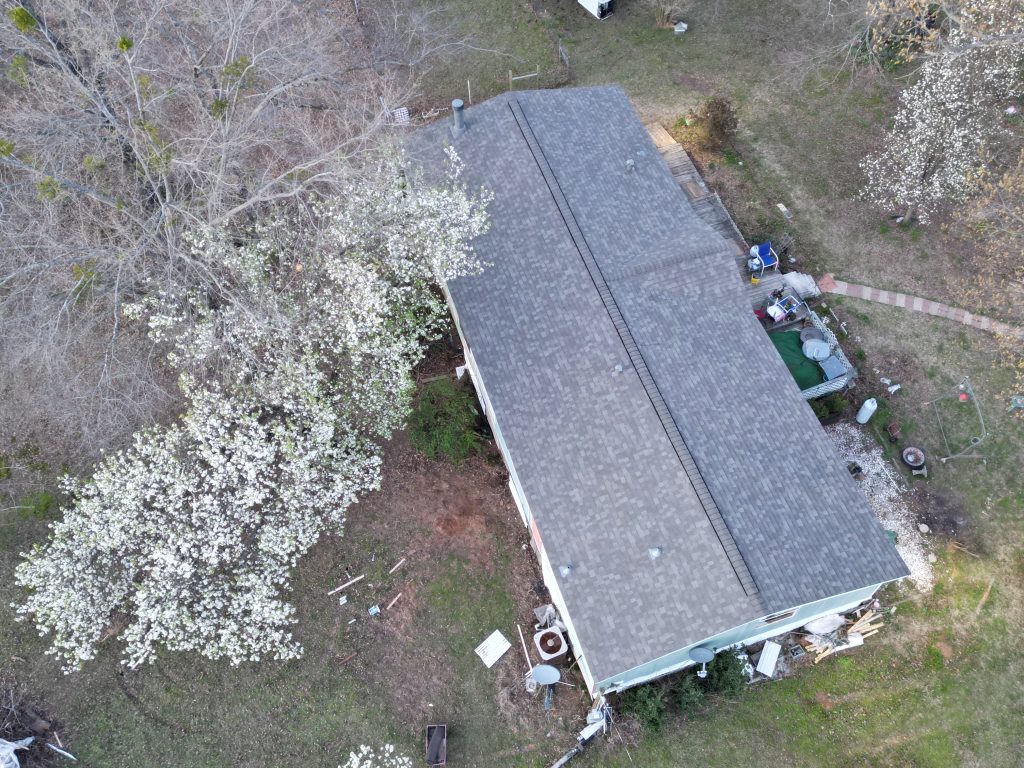
“Within just one hour of my request, they had a drone in the air and a full estimate with photos in my inbox. The pricing was very reasonable, the work was finished exactly on time and to a high standard.”
That is the point of using somebody nearby. They get on the roof, photograph what is actually there, and put it in writing before you have to decide anything.
 Verified on Google
A roofer who will still be here in year four
Out here a roof is usually the largest thing anybody spends money on in a given year, and it is bought on trust more than on paperwork. We would rather earn that slowly than talk anybody into anything.
We work out of our own shop on Como St S in Sulphur Springs, about fifteen minutes away. The crew that arrives is ours, and the company you ring about a warranty question in year four is the company that put the roof on. That is most of what a workmanship warranty is actually worth.
Where a repair will do, we say so. On these properties that is often the honest answer, because the structure is usually sound and what has actually failed is one detail: a vent boot gone brittle, a run of ridge cap, flashing at a chimney.
Being a roofing contractor in Dike that is genuinely close by also decides how quickly things happen. An inspection is a matter of days rather than weeks, and a call with water coming in gets looked at the same morning rather than slotted into next week.
It helps too that we know the building stock. Places built along the same road in the same few years carry the same details and fail in the same order, so a leak call on a road we have worked before usually starts with a reasonable idea of where to look.
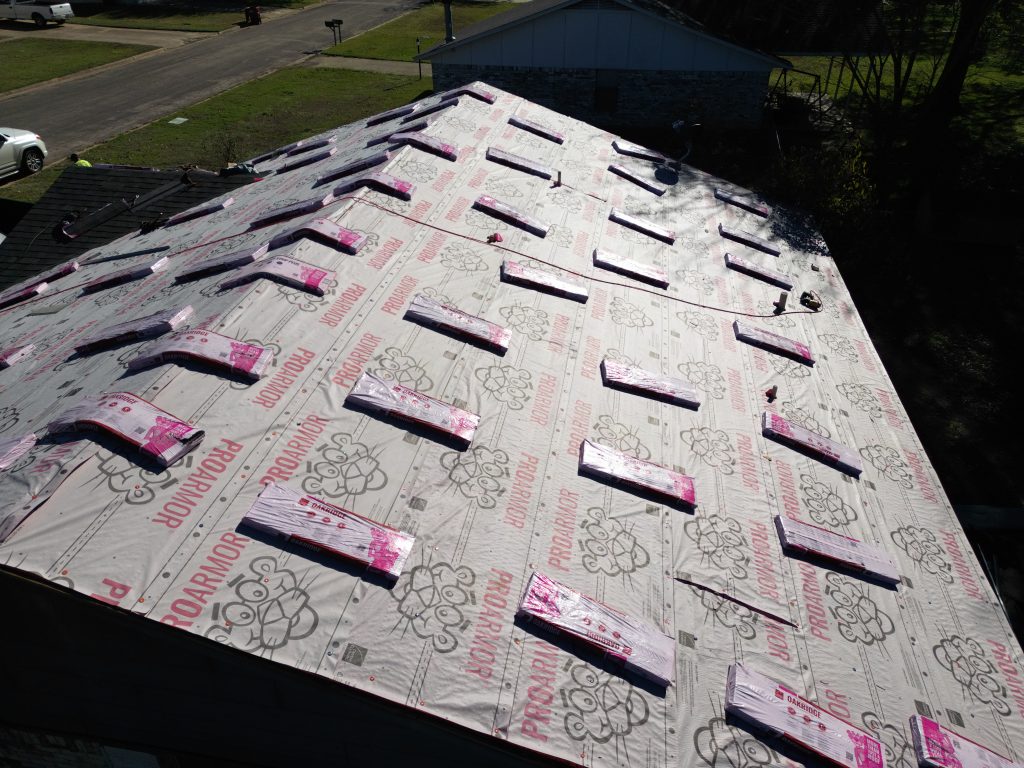
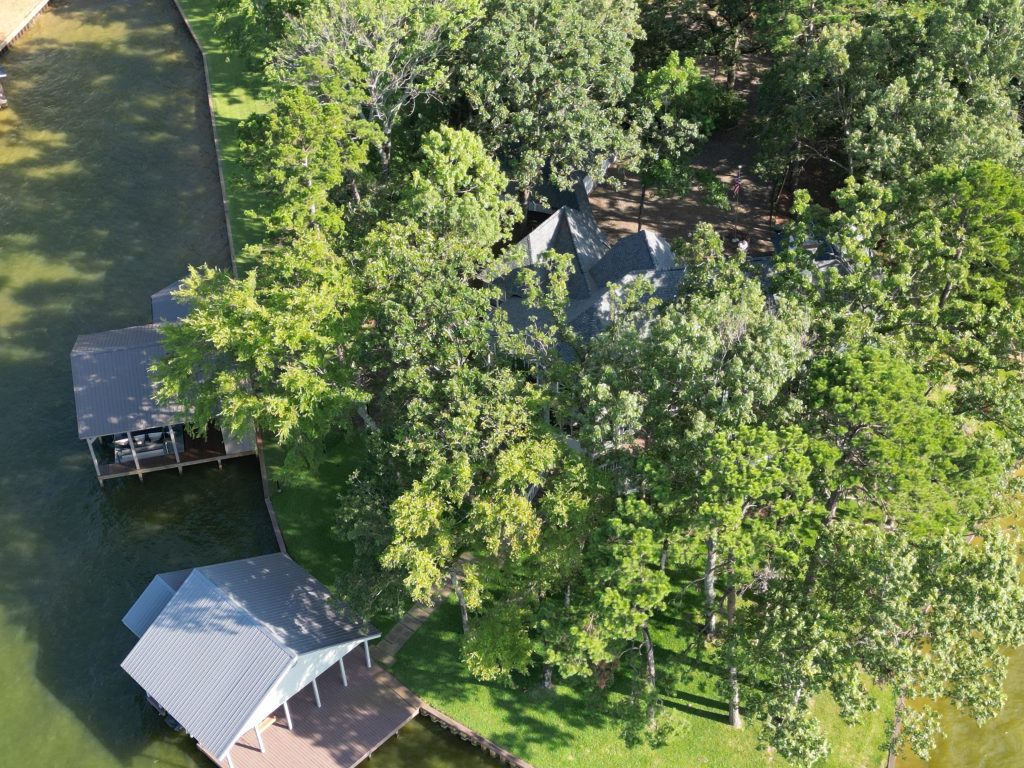
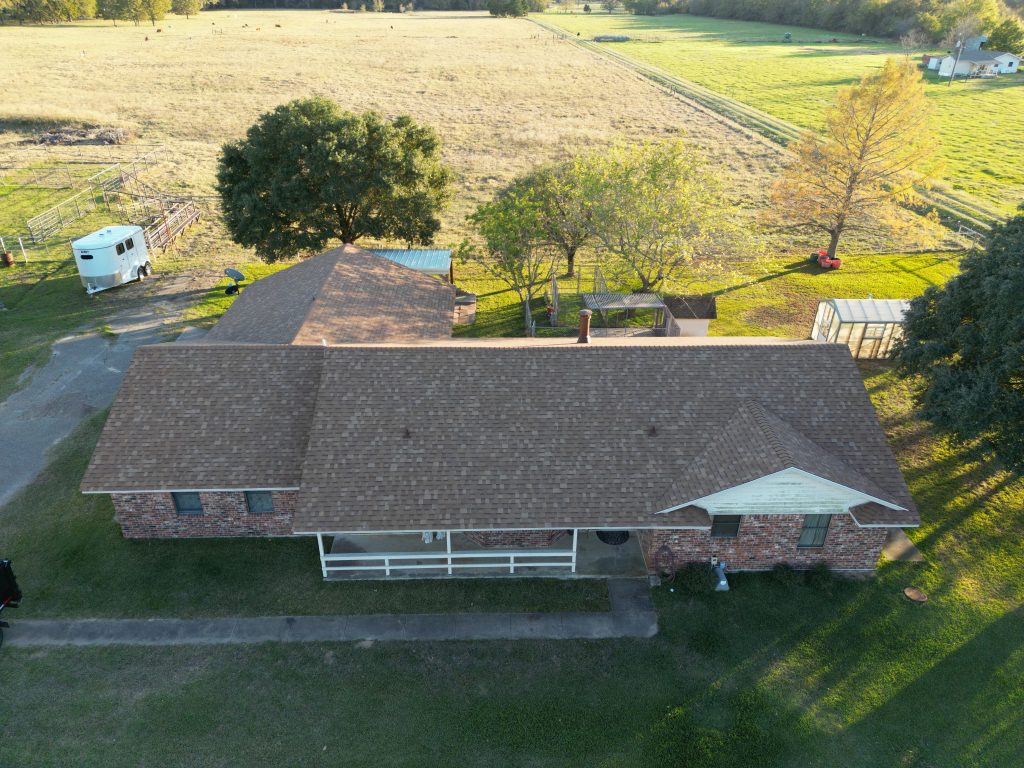
The roof and the attic both
Water leaves a record on the underside of a deck long before it shows on a ceiling. That is where it gets found.
Photographs, not opinions
You see the same thing we saw, at the same size, before anybody talks about money.
A written estimate you keep
It is yours to take away, think about, and compare against anything else you are quoted.
What people in these counties say
Every review below is from a customer in these counties. The full set is on our reviews page.
Very customer friendly and easy to work with from start to finish. DJJ Roofing made the whole process simple and stress-free.
GoogleHighly recommend DJJ Roofing LLC! They were professional, timely, and did an excellent job on our roof. The quality of work and customer service were top-notch. Will definitely use them again for any future roofing needs!
 Facebook
Within just one hour of my request, they had a drone in the air and a full estimate with photos in my inbox. The pricing was very reasonable, the work was finished exactly on time and to a high standard.
GoogleChoosing a roof for a Dike property
There is no single best roof for this part of Texas. A house on a rise wants something different from a shop behind it, and where properties sit in the open, wind performance carries more weight than it would in town. Any roofing contractor in Dike will fit all four of these, so the real question is which suits the building.
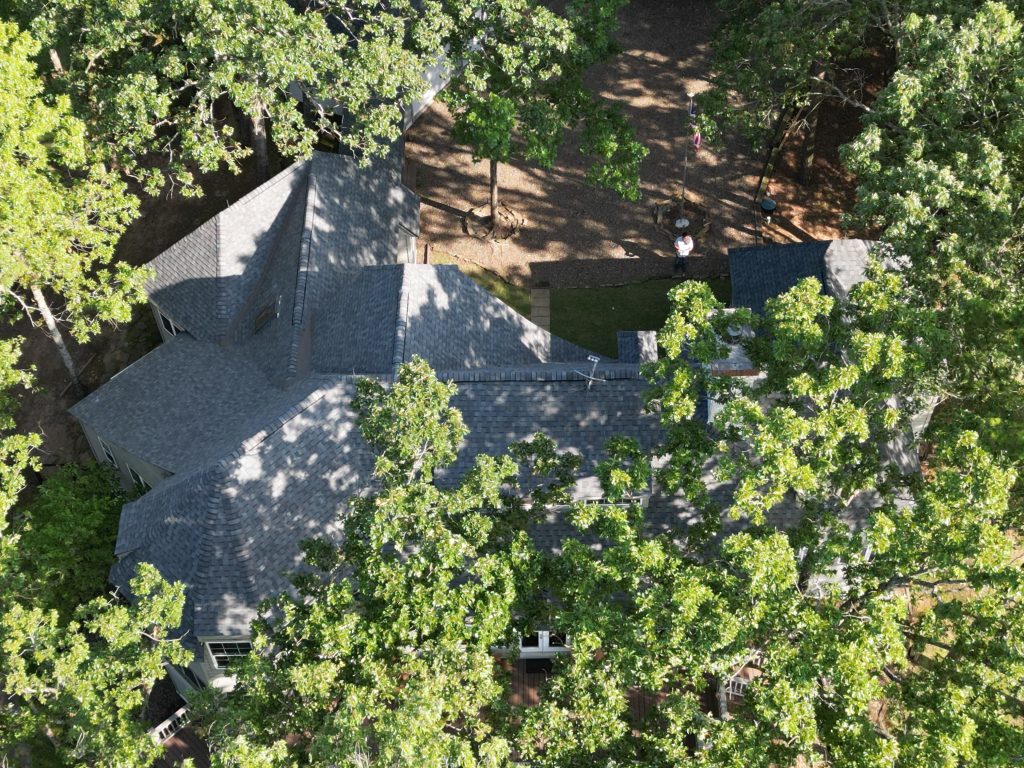
Architectural asphalt shingle
The most common covering around here and the easiest to live with. A Class 4 impact-rated grade costs more and stands up better to a hard spring, and some carriers apply a credit for it, so it is always worth pricing both.
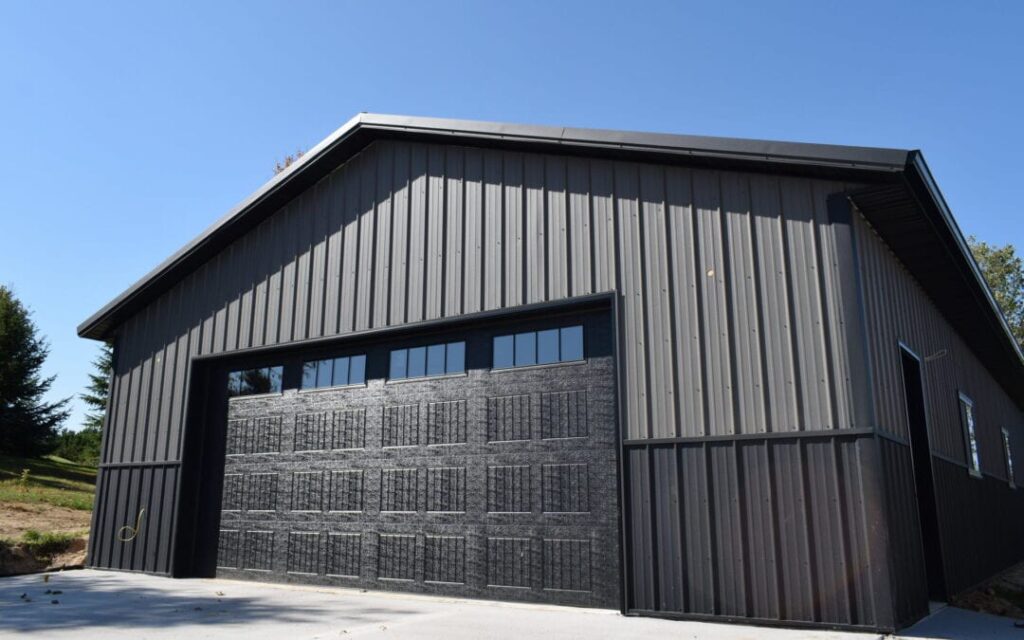
Standing seam metal
Concealed fasteners, nothing to back out, and a service life that often outlasts the owner. On exposed ground it is also the system that handles wind best, because there are no fastener heads for uplift to catch. Hail damage on it is usually cosmetic rather than a leak path, because nothing penetrates the weather surface.

PBR, PBU and corrugated panel
The workhorse systems on the shops, barns and equipment sheds around Dike. Economical over a large area and fast to fit. The trade-off is that the fastener washers are a maintenance item every decade or two rather than fit-and-forget.
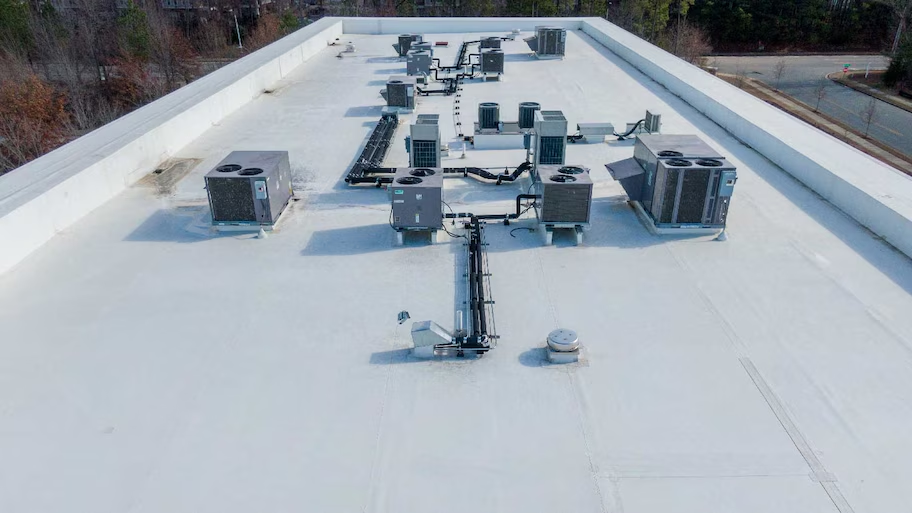
TPO and modified bitumen
Low-slope work is a different trade from shingle. The covering is the easy part; the parapets, terminations and drainage are where these roofs are actually won or lost.
Eight things worth a free look
Most of these you can check yourself without leaving the ground, and none of them get less expensive by waiting. If two or three sound familiar, book the inspection. Free genuinely means free, including the times a roofing contractor in Dike tells you the roof has years left in it.

Granule loss showing in the gutters
A steady layer of grit after every storm means the covering is shedding its protective layer faster than it should be, and what is underneath ages quickly once it is exposed.
Tabs that move under a hand
Wind damage rarely removes a shingle outright. It breaks the seal strip, and the shingle then sits there looking completely normal while no longer being part of a waterproof surface.
Dimpling on vents and gutter faces
Metal shows impact first and keeps the record. It is the most useful evidence there is that hail of a genuinely damaging size fell on this particular property.
Staining on a ceiling, however faint
Water travels along the framing before it drops, so the mark is frequently several feet from where it actually got in and sometimes in a completely different room.
Pinholes of daylight in the attic
Easiest to check in the middle of the day with the lights off, and one of the very few things a homeowner can confirm on their own without going anywhere near the roof.
Heat trapped above the ceiling
Poor ventilation cooks the covering from below through the whole summer. It is inexpensive to correct and it adds genuine years to the life of a roof.
Screws standing proud on a metal building
On exposed-fastener panel the washers are the consumable. When heads back out, each one is a small hole waiting for the next wet spell.
Sagging along a ridge or between rafters
A dip in the roof line usually means the decking has been wet long enough to lose strength. That is structural, not a shingle problem.
Getting storm damage on the record early
Hail bruising fractures the mat underneath the granules and the roof carries on shedding water exactly as before. Two seasons later, proving the storm did it becomes very difficult, which is why photographs taken while the damage is fresh matter more than almost anything else.
Our role here is deliberately limited. We are roofers, not adjusters: we inspect free, photograph the roof systematically, and write up contractor-observed damage as factual scope information. Whether any of it is covered, and for how much, is your insurer’s decision against your policy.
The deductible stays with you. Texas law does not permit a contractor to waive, absorb or rebate any part of it, so it belongs in your budget from the start. Storm dates for this part of the state are published by the National Weather Service in Fort Worth, and an established date makes a claim far easier to discuss.
The evidence has a shelf life
Fresh damage photographs well and is unambiguous. Two seasons on, establishing what a storm did becomes genuinely difficult.
A claim is not always the right move
Where the work is smaller than the deductible, or the damage is wear rather than storm, we would rather tell you than file anyway.

Severe weather confirmed near Dike since 2022
The National Weather Service has logged 30 severe weather reports in Hopkins County since 2022. These six are the ones nearest Dike. They are worth knowing because an insurance claim runs from the date the damage happened, not the date a ceiling stains, and that date is often months earlier than people think.
How much does a new roof cost in Dike?
Most homeowners ask a roofing contractor in Dike for a ballpark first, so here it is: replacing the roof on an average single-story home with asphalt shingles typically costs $6,000 to $14,000, including tear-off and haul-away, while metal runs about $12,000 to $30,000 or more and Class 4 impact-resistant shingles about $10,000 to $17,000. Those figures are typical for Northeast Texas, not a quote, and the inspection that turns them into a real number for your roof is free. Prices by home size and material are set out in our roof replacement cost guide.
No roofing contractor in Dike can give a real price sight unseen. These are the six things that decide it, and every one of them is visible in the written estimate you get afterwards.
Roof area and pitch
Everything is priced from the square, and steepness is the multiplier on top of it. It changes the labor, the safety setup and how fast the crew can work all day.
Layers coming off
Stripping one covering is straightforward enough. Stripping two or three means more labor on the roof, more weight to move and materially more disposal cost.
The condition of the deck
It is the only part of a roof that genuinely cannot be assessed in advance, so the rate is agreed before we start and you are shown photographs of anything replaced.
How complicated the roof is
Multiple planes, dormers and chimneys all add flashing and cutting, and every junction between them is somewhere water has to be handled properly or not at all.
What goes on it
The covering itself is only one part of the specification. Underlayment, starter course, ridge and ventilation all belong in the price and all belong in the estimate by name.
Where the building is
Access, ground conditions and the distance material has to travel across a property all show up as time on the day, and time is most of what any roof costs.
A price without a look is a guess. The inspection costs nothing, the photographs are yours, and the estimate sets out the work so it can be checked.
Louder than you expect, shorter than you fear
Most single-family replacements around Dike are a one-day job. The crew arrives early, protects the ground and the landscaping, and works through in order. It is noisy while it is happening and over faster than most people expect.
Worth doing beforehand: move vehicles off the drive, take fragile pictures off the walls, and plan any calls for somewhere other than directly under the roof deck. Pets are usually happier elsewhere for the day.
Long driveways are the norm out here, so we agree where the truck and the dumpster will sit before the morning rather than working it out on the day. On soft ground that is the difference between a tidy job and ruts across a yard.
What can extend a job is whatever turns up once the old covering is off. Decking is the one part nobody can assess in advance, so the estimate carries a per-sheet rate and we photograph anything we replace. You will know the number before we carry on rather than after.
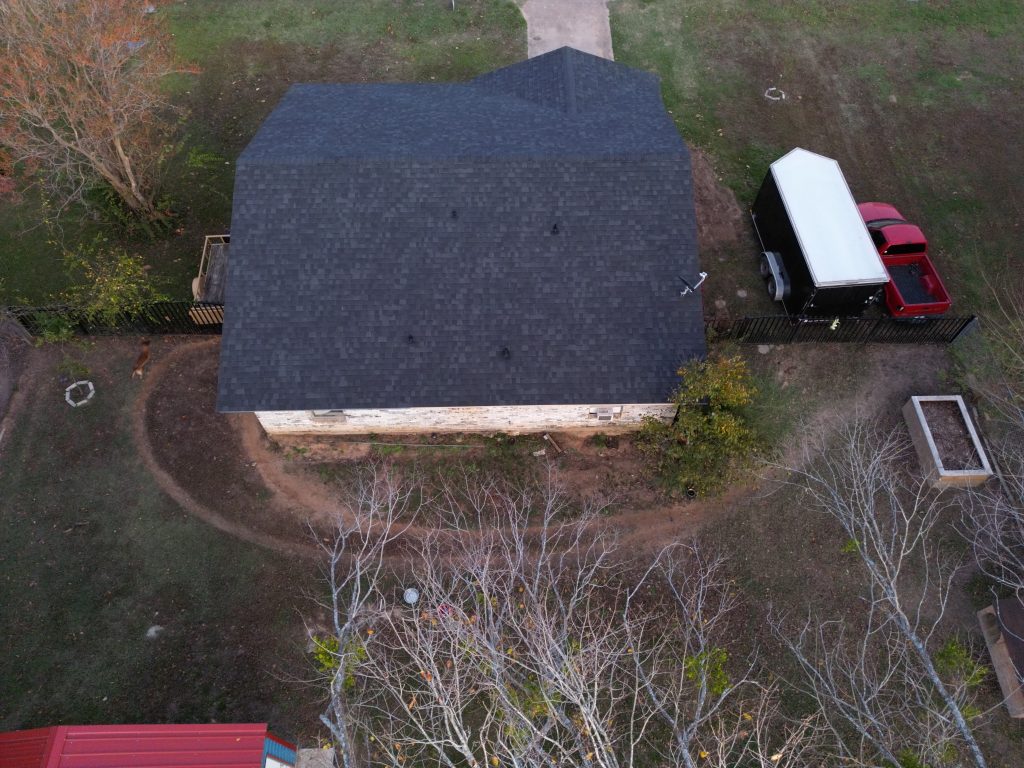
Set up and remove
Ground protection goes down first, then a controlled strip so that nothing comes off the roof faster than it can be cleared away below.
Deck work and weatherproofing
Decking checked sheet by sheet and replaced wherever it is needed, then the whole roof dried in before the working day ends.
Fit the new roof
Every layer fitted to the manufacturer’s written instructions, because that is precisely what the material warranty depends on holding up later.
Final sweep and handover
Magnets over the whole property, all debris away, photographs of each stage handed over, and the workmanship warranty issued in writing.
Barns, shops and outbuildings
Nearly every property up this way has more roof on its outbuildings than on the house. Hay barns, equipment sheds, workshops and the odd metal unit, most of them on exposed-fastener panel that went on decades ago.
The most common job on those is not a new roof. It is comprehensive fastener replacement, because the panel and its coating routinely outlive the washers under thousands of screws. Where the panel is sound that work buys another decade for a fraction of what re-roofing costs.
The consequence of a leak is also different from a house. What is stored underneath is usually worth more than the repair, and hay in particular does not forgive a wet winter, so those calls are treated as urgent rather than scheduled around the residential work.
A survey on a metal building looks at the closures at ridge and eave, the laps, and where water leaves the structure, as much as at the panel itself. Those edges are where the trouble starts on a long low roof, and they are the simplest thing up there to put right.


Questions we get asked around here
Yes, regularly. We are the roofing contractor in Dike for a good many houses and outbuildings on these roads, and it is about fifteen minutes from the shop in Sulphur Springs. Inspections are usually scheduled within a few days, and storm calls with an active leak come first.
The roofing material and the labor to install it are the two biggest parts of the bill, and both grow with the size of the roof, measured in squares of 100 sq ft. The cost homeowners rarely see coming is decking: rotten or soft plywood only shows once the old roof is off, and it has to be replaced before the new roof goes on. We price decking per sheet, so you know the rate before any work starts.
Usually, and we look at it before the day rather than on the morning. Where the ground is soft or the turn is tight we will say so and plan around it, because the last thing anybody wants is a rutted yard on top of a new roof.
That is your carrier’s decision against your policy. We inspect for free, photograph what is there, and write it up factually so the claim gets decided on evidence.
Very unlikely. On panel roofs a single wet patch almost always traces back to a fastener, a lap or a missing closure, none of which need the covering replaced. The survey will show you which it is, with photographs.
We are out this way most weeks
Dike sits north of the county seat with several small communities around it, and a roofing contractor in Dike is usually passing at least one of them the same day. Each has its own page.
Pick your town
We cover five counties from one shop in Sulphur Springs: Hopkins, Hunt, Franklin, Delta and Wood. If your town is on this list, an inspection is a normal week rather than a special trip.
The communities around Dike
Not every address near Dike has a town name on it. These are the named communities closest to it, with the distance from Dike itself. We work all of them, and a roof on open ground out here takes wind differently than one in a built-up street.
Get Your Free Roof Quote
Tell us about your roof and we will get back to you quickly with real numbers, not a computer guess. If it is easier to talk it through, the phone is answered by somebody here.
Get Your Free Quote
Enter your details below and we will get back to you with a real number.
Let us get somebody up there to look.
Fill out the form or pick up the phone and you are talking to a roofing contractor in Dike, not a call center. Either way you get straight answers about your roof and a written estimate you can keep.