Storm damage: get it on the record while it is still fresh.
Free storm damage inspections across Northeast Texas. We document what can be observed from the roof, explain the repair options, and prepare factual scope information. Your carrier decides coverage and payment; our job is making sure nothing gets missed.

Storm damage in plain terms
Most of what a storm does to a roof is wind, and wind damage is progressive rather than dramatic. A gust does not usually take a roof off. It breaks the seal between courses, creases shingles that then sit there looking fine, and lifts details at the edges where the roof is most exposed. The roof keeps working, and the next storm finishes what the first one started.
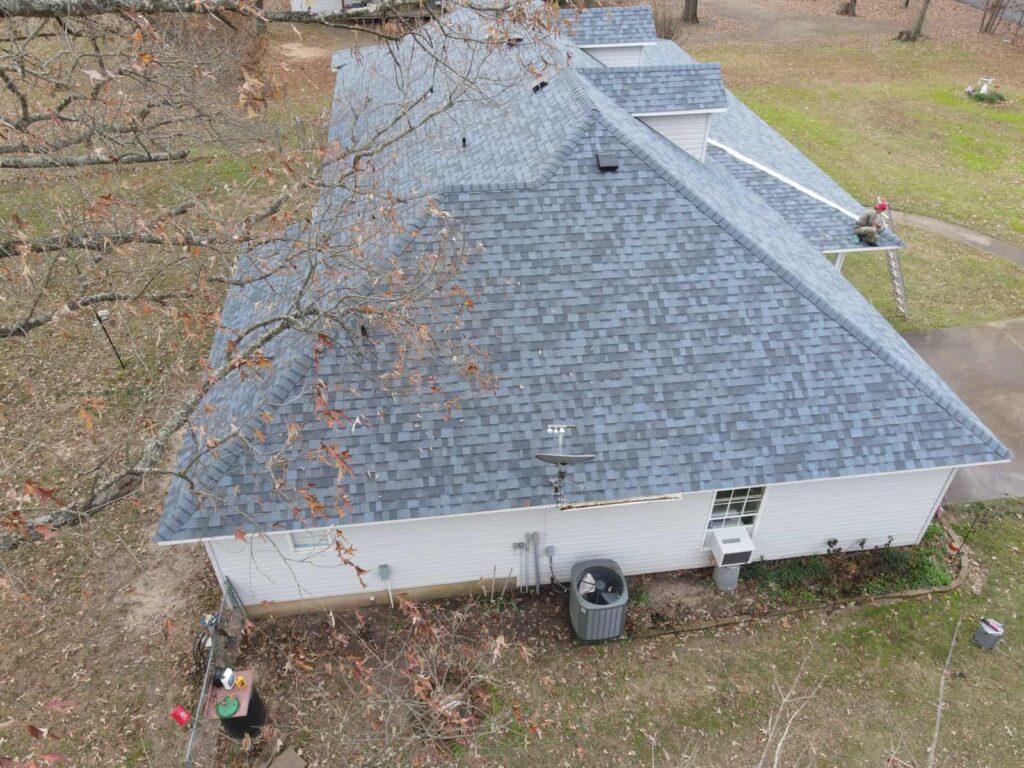
The seal strip is the part most people have never heard of and the part that matters most. Every asphalt shingle has a strip of adhesive that bonds it to the course below once the sun has warmed it, and that bond is what makes a roof a continuous surface rather than a stack of loose tabs. Wind breaks it from underneath. Once broken it does not reliably re-seal, because the surfaces no longer sit flat against one another and the adhesive has already been used.
That is why a roof can lose no shingles at all and still have taken real storm damage. A creased shingle has a fracture line through the mat where it was folded back and dropped. It looks normal from the ground, it is still shedding water, and it is now the weakest point on the slope. Finding those is a matter of being on the roof and lifting tabs, which is exactly what an inspection from the driveway cannot do.
Edges and details take the load first. Wind pressure concentrates at rakes, eaves, ridges and hips, and around anything that interrupts the plane. Ridge caps lift, drip edge works loose, step flashing at a wall pulls away, and pipe boots that were already aging get finished off. Those are also the simplest things on a roof to put right, and the most expensive to ignore, because every one of them is a direct path into the decking.
Then there is what the storm threw at the roof. Limbs, fence panels, and debris from somewhere else all leave impact marks or punctures, and a limb that came down and rolled off can scrape a whole slope of granules without leaving anything visible in the yard. Gutters and fascia take a share of it too, and a gutter pulled off its hangers stops draining long before it looks broken.
Our role is bounded and we would rather say so plainly. We are roofers, not adjusters. We inspect at no cost, photograph systematically, write up what can be observed as factual scope information, and stay reachable while the claim runs. Whether something is covered, and for how much, is your carrier’s decision against your policy and never ours.
Everything below is in the storm damage inspection we do for you
Free Storm Inspection
On the roof and in the attic, with the whole roof photographed whether damaged or not, usually within days of the call.
Seal And Crease Check
Tabs lifted across the exposed slopes to find broken seals and creased shingles, which is the damage that never shows from the ground.
Details And Edges
Ridge, hip, rake, drip edge, valleys, step flashing and pipe boots all checked and photographed individually.
Gutters And Fascia
Hangers, pitch and fixings checked, since wind pulls guttering off long before it looks damaged.
Emergency Covering
If something is genuinely open, we can get it covered the same visit to stop water doing more damage.
Written Documentation
Contractor-observed storm damage set out factually with the photographs attached, in a form an adjuster can work from.
Start to finish, in order
Call Or Book Online
Reach out and we schedule the free inspection at a time that suits you. Active leaks go to the front of the queue.
Free Inspection
We get on the roof and document everything we find with photographs and notes, damaged or not.
Documentation
Contractor-observed damage written up as factual scope information for your adjuster, with the images attached.
Claim Support
We stay reachable through the claim and can answer scope questions when they are asked of us.
The Repair
Once it is approved, our own crew does the work, photographs it, and leaves the site clean.
Four things we do on every single job
Photographs, Not Opinions
Every problem area is photographed and shown to you before anybody quotes a price. You keep the images whatever you decide.
In Writing
The estimate names the products going on your roof, so you can compare it against anybody else’s.
Cleaned Up Daily
Beds and shrubs covered before work starts, and a magnet over the yard and driveway at the end of every working day.
A Local Phone Number
Our shop is on Como St S in Sulphur Springs. The company that fits your roof is the one you call in year four.
“Within just one hour of my request, they had a drone in the air and a full estimate with photos in my inbox. The pricing was very reasonable, the work was finished exactly on time and to a high standard.”

What wind actually does to a roof
Wind does not push on a roof so much as pull at it. Air moving across a slope creates lift on the upper surface, the same way it does over a wing, and the pressure difference tries to peel the covering upward from the deck. That is why damage starts at edges and corners, where the airflow separates and the suction is strongest, rather than in the middle of a slope.
On asphalt shingle the sequence is consistent. The seal strip lets go first, then the tab flexes in the gusts, then the mat creases along the fold. If the wind keeps up, the tab tears at the nail line and goes. Most roofs we look at after a spring line are somewhere in the middle of that sequence rather than at the end of it, which is precisely why the damage is easy to miss and worth documenting.
Design wind speeds and the uplift ratings on shingles are published for a reason, and the National Weather Service office in Fort Worth keeps the storm reports for this part of Texas. Those records matter, because a claim is far easier to discuss when the date of the event is established rather than recalled.
On metal the mechanism differs but the principle holds. Uplift finds the fixings, so an exposed-fastener panel loses washers and eventually screws, and trim at ridge and rake lifts before anything in the field of the roof moves. On standing seam the clips and the terminations are what take the load, which is why those details are worth checking after a hard blow even when the panels look untouched.

Signs a storm did more than make noise
Any one of these is worth a free look. The inspection and the written findings cost nothing whatever the outcome.
Shingles missing, lifted, or curled at the edges after a windy night.
Granules collecting in the gutters or at the downspout outlets.
Dents or bruising on soft metal: vents, flashing, gutters and downspouts.
New water stains on ceilings, or daylight and damp decking in the attic.
Debris in the yard from a neighbor’s roof, or limbs that came down across yours.
Ridge caps out of line, drip edge lifted, or guttering hanging away from the fascia.
What happens after a storm damage inspection
There are four honest outcomes. We will tell you plainly which one your roof is in, and one of them is that nothing needs doing.
No Significant Damage
It happens often, and the report says so in writing. You keep a dated record of the roof’s condition either way.
A Repair
Broken seals on one slope, a section of ridge, lifted flashing or a failed pipe boot. Small work, done properly, and we will say when that is the honest answer.
Replacement
Where damage is across planes and the roof will not make its remaining years, documented with photographs for your carrier to assess.
Emergency Work First
If something is open, covering it comes before any of the above. Water does more damage in a week than the storm did in an hour.
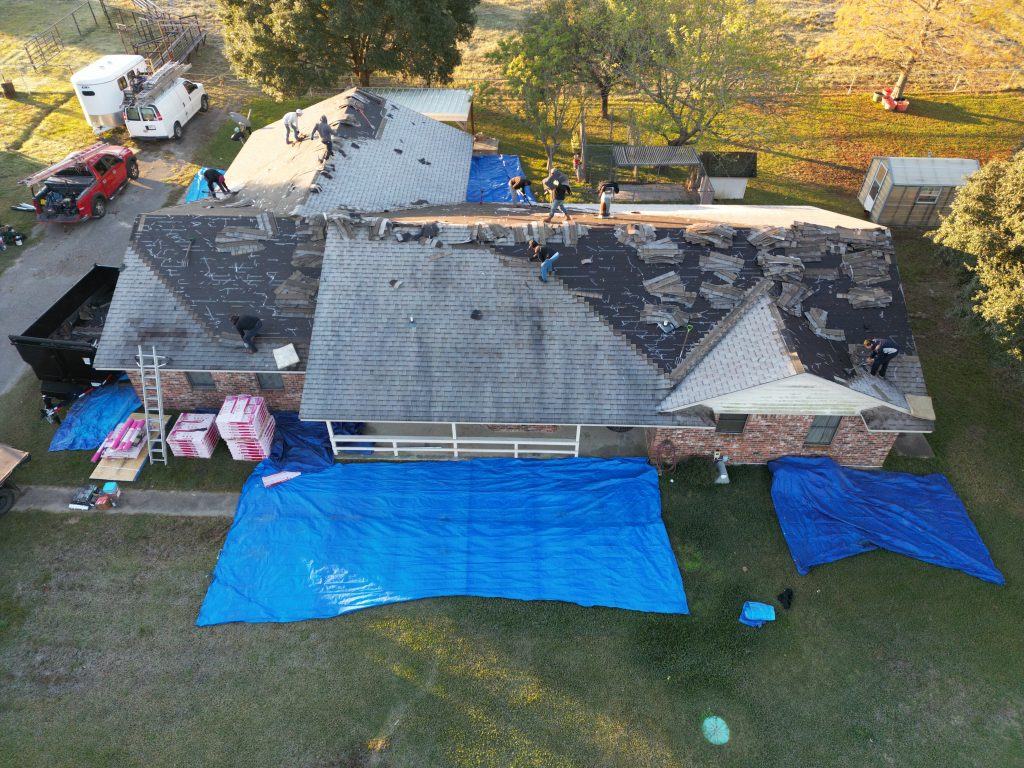
We are roofers, not adjusters. We record what can be observed from the roof and prepare factual scope information. The decision on coverage and payment is always your carrier’s, and we will not tell you an outcome that is not ours to promise.
What to do in the first forty-eight hours
Stay on the ground. A wet roof with lifted shingles is genuinely dangerous, and nothing you can see from up there is worth a fall. Photograph what you can see from the yard, from a window, and from the attic, and note the date and rough time of the storm while it is fresh in your mind.
Deal with water inside before anything else. Move what can be moved, put something under an active drip, and if a ceiling is holding water it is safer to relieve it deliberately than to let it come down on its own. None of that fixes the roof, but it limits what the water costs you while the roof is being sorted out.
Then get it looked at. A free inspection in the days after a storm is worth an hour, because storm damage photographs well while it is fresh and because policy reporting deadlines run from the date of the event rather than the day you noticed. Keeping the record on your terms is the whole point of moving early.
Repair or replace after storm damage
The question after a storm is rarely whether something needs doing. It is whether the roof needs a repair or a replacement, and the honest answer depends on three things: how much of the roof is affected, how old the covering already was, and whether the damage is confined to details that can be renewed in isolation.
A repair is the right answer more often than people expect. Broken seals on one exposed slope, a run of ridge cap, lifted step flashing at a wall, a failed pipe boot: all of that is contained work on a roof that otherwise has years left, and replacing the whole covering because one slope took a beating is not something we would recommend.
Replacement becomes the sensible answer when creasing and broken seals are spread across planes, when the covering was already well into its life before the storm, or when matching is going to look worse than doing the roof. Weathered shingle never matches new shingle exactly, and on a front elevation that is a real consideration rather than a technicality.
What we will do is show you the photographs and set out both options with prices next to each other, so the decision is made on evidence. If the roof genuinely has life left in it, the estimate will say so, and a written record of storm damage on a roof you decided to keep is still worth having.
Straight answers, free of charge
The inspection, the photographs and the written estimate cost nothing and commit you to nothing. If the honest answer is that the work can wait, that is what the estimate will say.
What drives the price of storm damage work
The inspection is free, and covering an opening the same day is usually a modest charge. After storm damage, most repairs run about $300 to $1,500, larger ones involving decking or several areas about $1,500 to $5,000 or more, and a full asphalt replacement on an average single-story home typically $6,000 to $14,000. On an approved claim, your share starts with your deductible, and the carrier decides coverage and payment. These are typical Northeast Texas ranges, not a quote: the price for your roof is set after a free on-site inspection and a written estimate.
The Inspection Is Free
No charge and no obligation, whatever the outcome, including when the answer is that the roof is sound.
Extent Across Planes
Damage confined to one slope is contained work. Damage spread across planes changes the conversation to replacement.
Emergency Covering
Getting something open covered the same day is separate from the permanent repair, and it is usually modest.
Decking Condition
What the water reached is only established once the covering is off, so deck repairs are quoted per sheet up front.
Matching
Weathered shingle never matches new exactly. On a visible elevation that sometimes decides repair against replacement.
Deductibles Stay With You
We do not waive, absorb or discount a deductible. Texas law does not allow a contractor to.
Four ways storm damage gets expensive
Assuming No Missing Shingles Means No Damage
Broken seals and creased tabs are the common outcome, and neither shows from the ground. The roof is weaker and looks identical.
Leaving Water To Find Its Own Way Out
A day of water through a ceiling costs more than the covering did. Getting something open covered comes before deciding on scope.
Missing The Reporting Deadline
Policy deadlines run from the storm date rather than from the day the stain appeared on the ceiling.
Repairing Details One At A Time
Four separate call-outs over two years for four failed details usually costs more than dealing with the slope once.
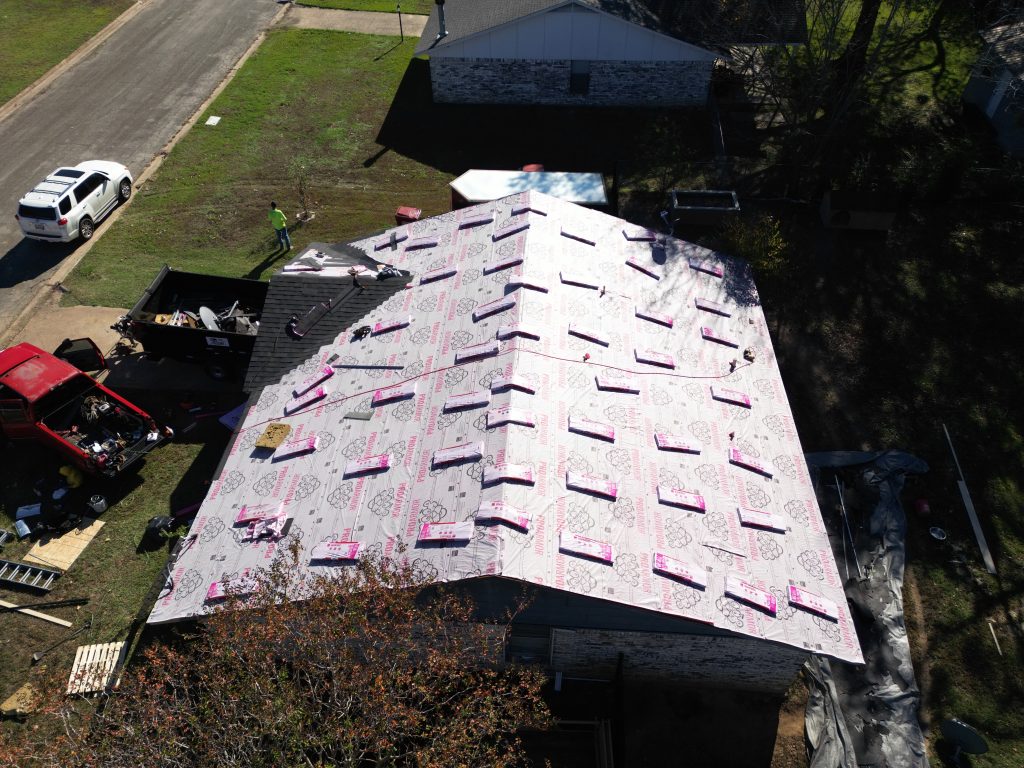
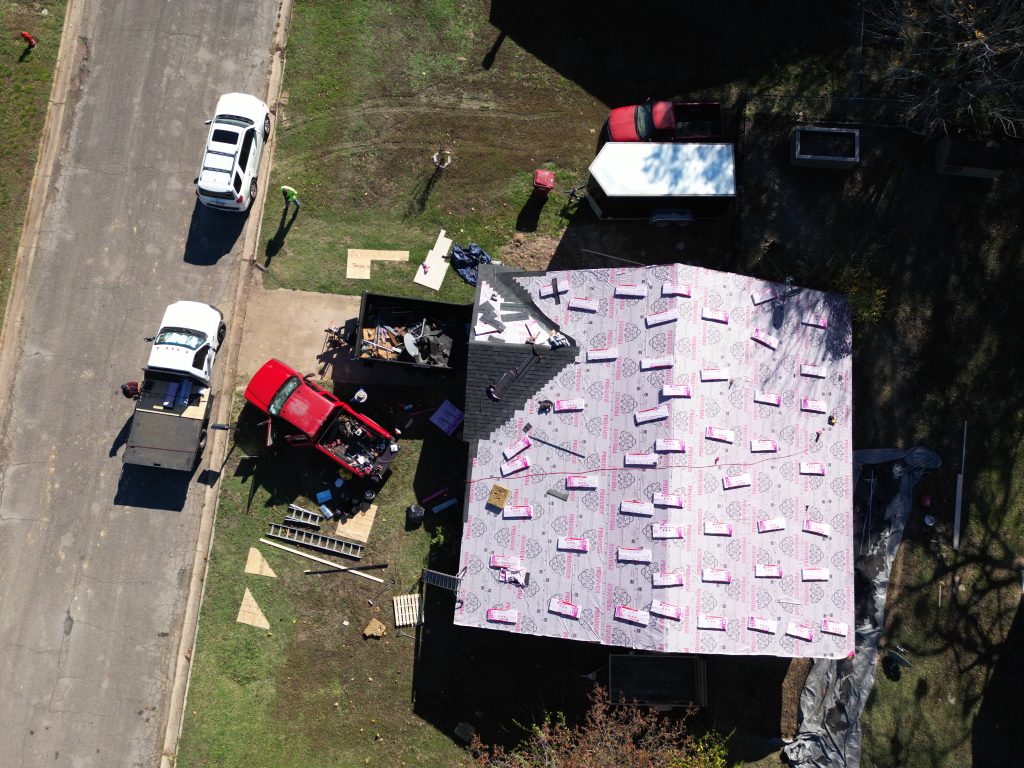
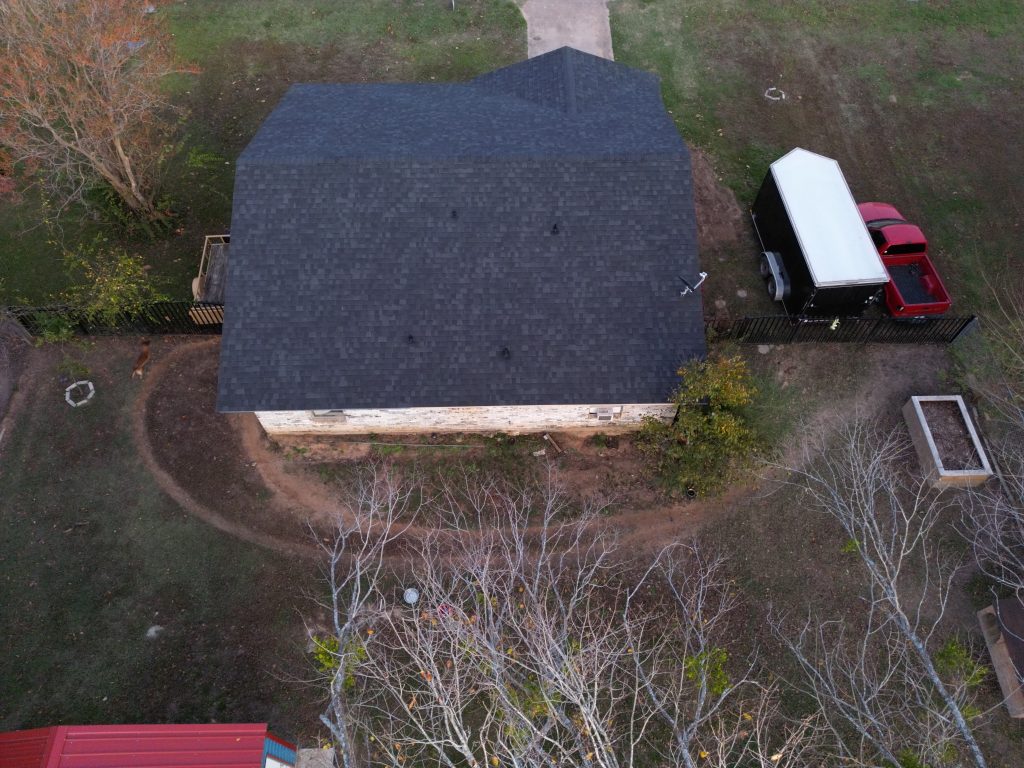
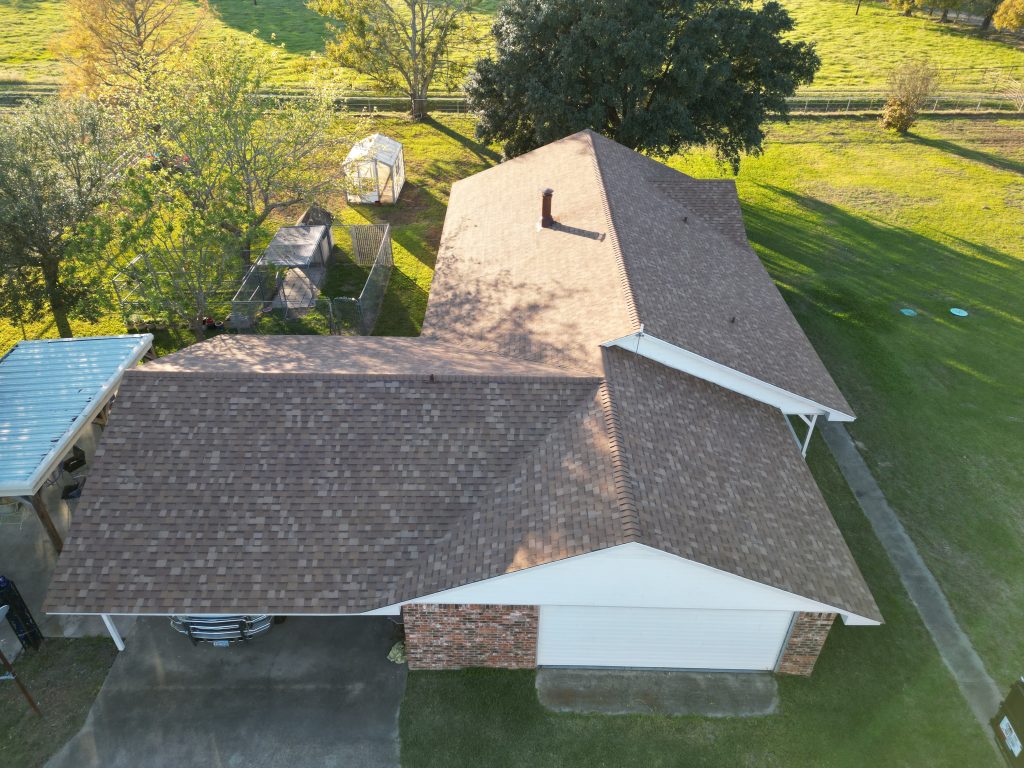
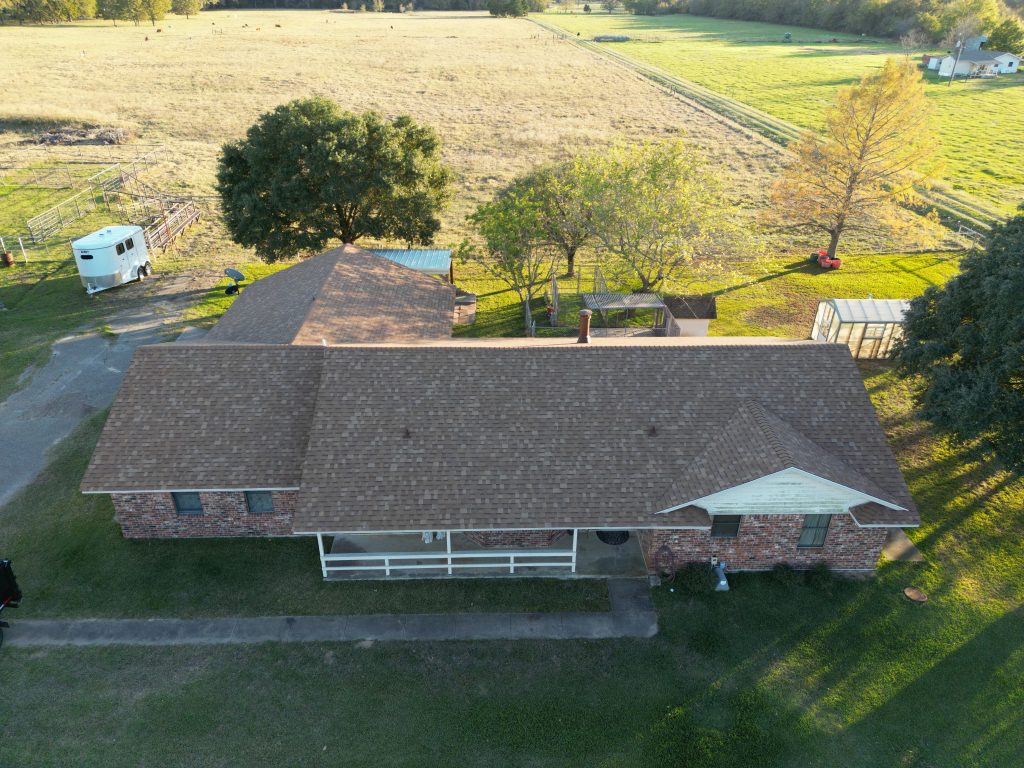
Storm damage in Hopkins County and around it
Spring lines come through this part of Texas most years, and they bring wind before they bring anything else. The roofs that take it worst are the exposed ones: property in open pasture, houses on a rise, and anything with a long unbroken slope facing the prevailing weather. Those are also the roofs where edge details earn their keep, because that is where the uplift concentrates.
Being an hour from all of it is the practical advantage. We can get to a roof in Sulphur Springs, Winnsboro, Quitman or Mount Vernon within days of a storm rather than weeks, while the damage is fresh and photographs cleanly, and we are still on Como Street in year four when the workmanship warranty means something.
The other local pattern is the roof that took wind three years ago, lost its seal across a slope, and has been quietly shedding tabs ever since in ordinary weather. By the time anybody connects the two, the storm date is long past. One free hour and a set of photographs at the time is what prevents that, and it is the single most useful habit a homeowner here can have.
Where hail was involved as well as wind, the impact side of it is covered on our hail damage page, and the claims process itself is set out on our insurance claims page. The Texas Department of Insurance publishes plain-language guidance on what to expect from a carrier after a storm.
Questions about storm damage
Yes, and it is the usual outcome. Wind breaks the seal between courses and creases shingles without removing them, so the roof looks unchanged from the ground while being materially weaker. Finding it means being on the roof and lifting tabs, which is exactly what an inspection from the driveway cannot do.
Within days if you can. Fresh damage photographs cleanly and the record is unambiguous, and policy reporting deadlines generally run from the date of the storm rather than the date you noticed a problem. The inspection is free, so there is no cost to moving early.
If something is genuinely open, yes, we can get it covered on the visit to stop water doing further damage. That is separate from the permanent repair and it is usually modest. Water does more damage in a week than most storms do in an hour.
We document and we stay reachable, and that is the honest description of our role. We photograph the roof systematically, write up what can be observed as factual scope information, and answer an adjuster’s questions about scope when they are asked. Coverage and payment are decided by your carrier against your policy.
Yes, in writing, and that happens often. A dated report showing the roof was sound after a particular storm is a genuinely useful document to own, and it costs you nothing. We would rather write that than sell you work you do not need.
Other services
Flashing failures, lifted shingles and wind damage put right before water gets in.
Five and six inch seamless aluminum, fabricated on site to fit your roofline.
Let’s get somebody up there to look.
Fill out the form or pick up the phone. Either way you get straight answers about your roof and a written estimate you can keep.