Corrugated panel: the oldest metal roof there is, and still the right answer sometimes.
A corrugated panel is the traditional wavy-profile sheet used on barns, sheds, porches and buildings where the look matters. It is simple, economical, and repairable a sheet at a time. Free survey, photographs of whatever we find, and a written estimate you keep either way.

Corrugated panel in plain terms
Corrugated is the original metal roof: a continuous wavy profile rolled from sheet, screwed or historically nailed through the crowns into purlins. It has been going on barns and sheds in this part of Texas for a century, and it is still made, still specified, and still the sensible choice on a certain kind of building.
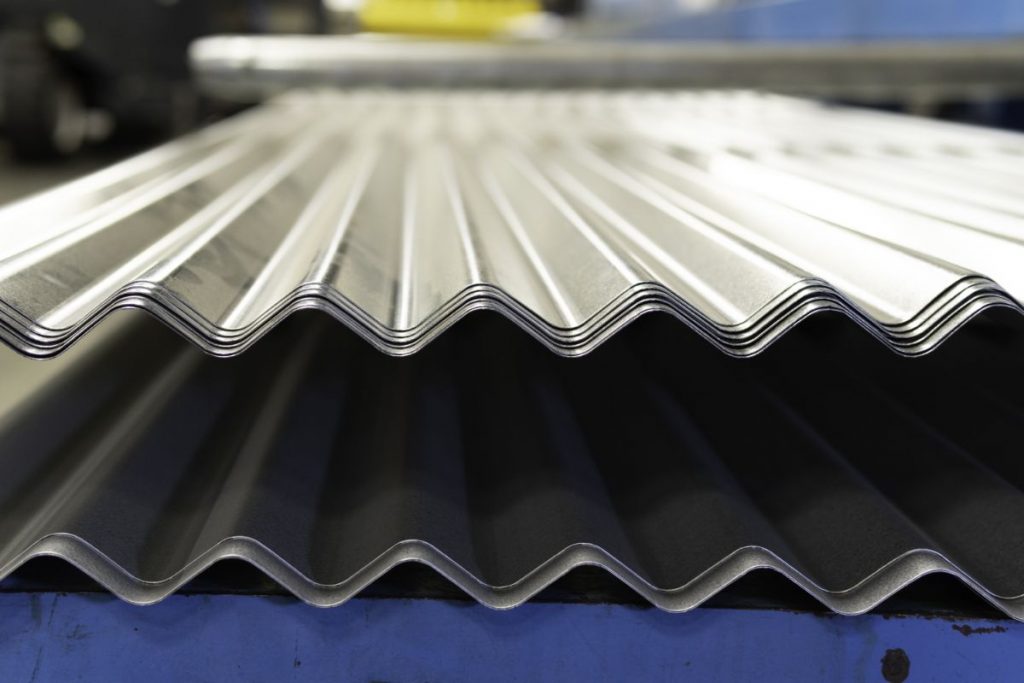
Its virtues are simplicity and economy. There is no complicated edge geometry, panels are easy to handle and cut, a single damaged sheet can be swapped without disturbing much around it, and the material cost sits at the bottom of the metal range. On a small shed, a porch roof, a lean-to, or an outbuilding where you want the traditional look, a corrugated panel is entirely appropriate and less expensive than anything else that will last.
Its limitation is the lap. Unlike PBR there is no bearing leg supporting the overlap at the purlin, and unlike standing seam the fasteners go through the weather surface. That combination means the profile needs adequate pitch to work properly, because water backing up under a lap on too shallow a roof is its classic failure, and it means the washers under the screws are a consumable, the same as on any exposed-fastener system.
The other consideration is aesthetic, and it is a real one. Corrugated has a look that suits agricultural buildings, porches, sheds and certain residential designs where a rustic or traditional character is wanted. People choose it for that reason knowingly, and on the right building it looks considerably better than a modern structural panel would.
There is a practical reason the profile has survived a century of better-engineered competitors, and it is repairability by anybody. A sheet can be carried by one person, cut with hand tools, and fixed with a driver and a box of screws. On a working farm, where a shed roof taking damage in a storm needs to be usable again before the weather turns, that matters enormously. It means the roof can be maintained incrementally, indefinitely, without specialist equipment, which is why so much of it out here has quietly outlasted its expected life.
We install corrugated new, replace individual sheets on existing roofs, do fastener replacement, and repair the details at ridge, eave, verge and wall junctions where these roofs generally give trouble. We will also tell you when a building would be better served by PBR, particularly where the pitch is marginal for an unsupported lap.
Everything below is in the corrugated panel price we quote you
Free Survey
Roof walked and photographed, pitch measured, laps and fasteners assessed, purlin condition checked, and a written scope provided.
Honest Pitch Advice
This profile needs adequate slope. If yours is marginal we will say so and recommend a profile that suits it.
Specification Named
Gauge, coating, corrugation profile and color or finish written into the estimate rather than left generic.
Correct Fastening
Screws through the crowns with proper washers at the correct spacing, never through the valleys where the water runs.
Ridge, Verge And Eave Detail
Formed trim and closures in matching material at every edge and junction.
Sheet Replacement And Repairs
Individual panels swapped, laps re-sealed, and fastener replacement across whole roofs where the washers have aged out.
Start to finish, in order
Survey
Pitch, profile, fastener and lap condition, and purlin spacing all checked and photographed.
Written Scope
Repair, sheet replacement or re-roof, priced side by side with an honest recommendation on profile.
Program
Access, handling, and protection of anything stored underneath, which on farm buildings is usually the main constraint.
Install
Fastening through the crowns to schedule, laps set for prevailing weather, and details and closures formed as we go.
Walk And Paperwork
Final walk with you, photographs of every stage, and the workmanship warranty in writing.
Four things we do on every single job
Photographs, Not Opinions
Every problem area is photographed and shown to you before anybody quotes a price. You keep the images whatever you decide.
In Writing
The estimate names the products going on your roof, so you can compare it against anybody else’s.
Cleaned Up Daily
Beds and shrubs covered before work starts, and a magnet over the yard and driveway at the end of every working day.
A Local Phone Number
Our shop is on Como St S in Sulphur Springs. The company that fits your roof is the one you call in year four.
“Highly recommend DJJ Roofing LLC! They were professional, timely, and did an excellent job on our roof. The quality of work and customer service were top-notch. Will definitely use them again for any future roofing needs!”

Pitch, laps, and the classic corrugated failure
Every roofing profile has a minimum slope, and this one is higher than most, because its laps are unsupported and rely on gravity plus overlap to keep water out. On a decent pitch that works well and has done for a hundred years. On a shallow roof, driving rain and wind push water up under the side and end laps faster than gravity moves it down, and the roof leaks along lap lines regardless of how carefully it was installed.
That is the single most common reason we find these roofs failing on buildings here: a corrugated panel on a roof whose pitch does not suit an unsupported lap. The remedy is not more sealant. It is either the right profile, meaning PBR with a supported lap, or in genuinely low-slope cases a mechanically seamed standing seam, which can go considerably lower than anything with an exposed lap.
Where the pitch is adequate, the details that matter are lap length, orientation relative to prevailing weather, and sealant tape at end laps where the specification calls for it. Get those right and a corrugated roof on a barn will run for decades with nothing needed beyond eventual fastener replacement. The Metal Construction Association publishes minimum slope guidance for each profile family.
Signs a corrugated panel roof needs work
Any one of these is worth a free look, and every one of them is less expensive to deal with before the next wet season rather than after it.
Leaks along lap lines rather than at isolated points, especially in wind-driven rain.
Screws standing proud, missing, or driven through the valleys rather than the crowns.
Rust along cut edges, at the eave line, and around fastener heads.
Sheets rattling or lifting at the edges in wind, which indicates lost or loose fixings.
Ridge cap or verge trim loose, corroded or missing, with the closures gone.
Daylight visible through laps or fastener holes from underneath.
What we do with a corrugated panel roof
Four routes cover almost everything we quote on these roofs, and the survey establishes which one the building is actually in.
Fastener Replacement
Whole-roof screws and washers to a larger diameter, fastened correctly through the crowns.
Sheet Replacement
Individual panels swapped where damage or corrosion is localized, which is straightforward on this profile.
Re-Roof In Corrugated
Like for like where the pitch suits it and the look is wanted, with the details done properly.
Change Of Profile
PBR or standing seam where the pitch is marginal and an unsupported lap was never right for the roof.
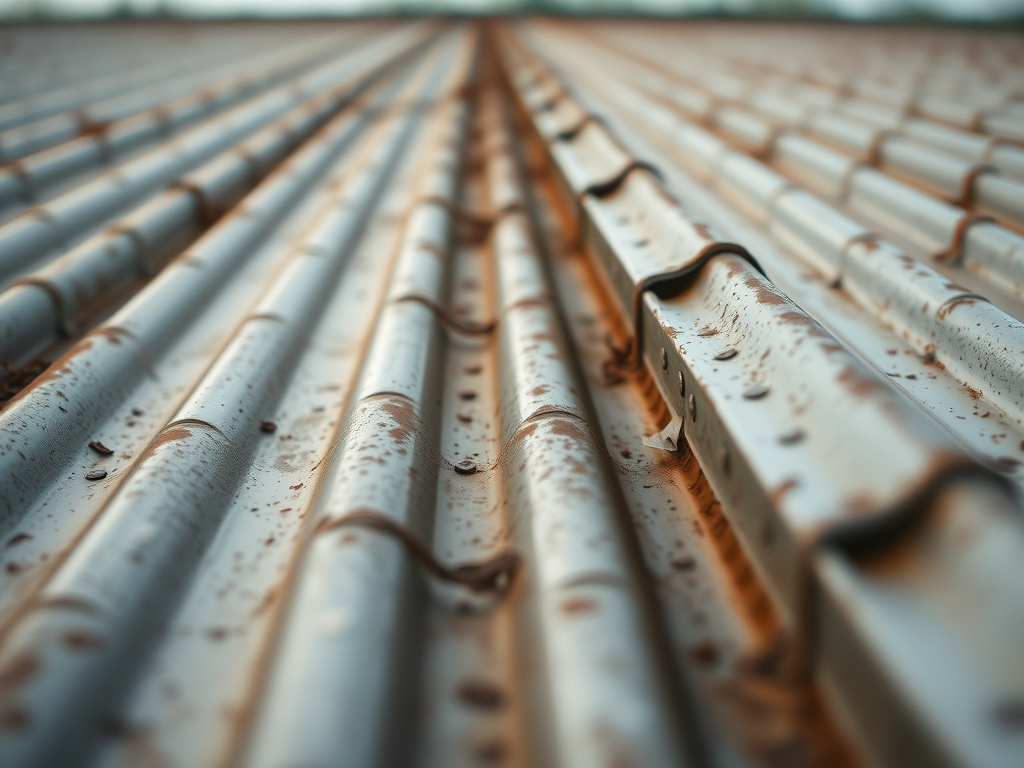
Where screws have gone through the troughs, the repair is new fastenings through the crowns and the abandoned holes sealed properly. It is fiddly work rather than difficult work, and it turns a roof that leaks in ordinary rain back into one that does not.
Fasteners through the crown, not the valley
If there is one thing to know about this profile, whether you are hiring somebody or fixing a shed yourself, it is where the screws go. It is a small detail, it is completely visible from the ground once you know to look for it, and getting it wrong guarantees leaks in ordinary rain rather than only in storms.
On a corrugated roof the screws go through the crests of the corrugations, not the troughs. The reason is obvious once stated: water runs in the troughs, so a fastener there sits in the path of everything the roof is shedding, and its washer is the only thing between that water and the inside of the building. On the crown, the fastener sits above the flow.
The other fastening error is overdriving. A screw driven too hard crushes its washer and dimples the panel, pulling the crown down into a shallow depression that then holds water around the fastener, which is the exact situation crown-fixing exists to avoid. It looks tight on the day and it has already failed. Correct depth is a matter of feel and a properly set driver.
Old corrugated, galvanized, and knowing when to stop repairing
A great deal of the corrugated panel in this county is far older than anybody currently responsible for it, and the honest question on those buildings is rarely how to make the roof perfect. It is whether the roof is worth another ten years, and what that would cost. Answering it properly means understanding how old sheet deteriorates, which is different from how a modern painted panel does.
A lot of it is old galvanized sheet with no paint system at all, and it has often lasted a remarkably long time. Galvanizing sacrifices itself to protect the steel, and once it has been consumed, typically first at cut edges, the eave line, and anywhere water sits, the steel starts going. Surface rust is not the end of a roof. Perforation along the eave and the laps generally is.
The judgment call is whether a roof is worth continuing to repair. On a hay barn with sound purlins and localized corrosion, sheet replacement and fastener work is good value and can go on for years. Once corrosion is general, once several sheets are perforated, and once cut edges are failing across the roof, money spent on repairs stops making sense and a re-roof is the honest recommendation.
We will tell you which side of that line a building is on, with photographs. Farm buildings in particular get repaired well past the point of sense, because each individual repair looks inexpensive and the cumulative spend over five years frequently exceeds what a re-roof would have cost at the start. That is a conversation worth having early rather than after the fourth patch.
Straight answers, free of charge
The inspection, the photographs and the written estimate cost nothing and commit you to nothing. If the honest answer is that the work can wait, that is what the estimate will say.
What drives a corrugated panel price
On a house, an exposed-fastener metal roof such as corrugated panel typically runs about $12,000 to $18,000 installed. On a shop, barn or warehouse the price follows the roof area, the scope of work and the condition of the framing, so it is set once we have measured the building. These are typical Northeast Texas ranges, not a quote: the price for your roof is set after a free on-site inspection and a written estimate.
Area And Pitch
Straightforward per square foot on simple roofs, and the pitch determines whether the profile is appropriate at all.
Gauge And Finish
Galvanized, galvalume or painted, in various gauges. Material cost and lifespan both follow from it.
Scope
Fastener replacement, sheet swaps and a full re-roof are very different numbers, and we price them separately.
Purlin Condition
Rotten timber or corroded steel purlins have to be dealt with before any new sheet goes on them.
Access
Farm buildings vary enormously. Some are simple, and some need machine access and careful handling.
Detail Work
Ridge, verge, eave and wall junctions in matching material, plus closures where the profile needs them.
Four corrugated panel mistakes
Screws Through The Valleys
Fasteners in the water path instead of on the crowns. It leaks sooner, more, and in ordinary rain.
Too Shallow A Roof
The classic failure. Water backs up under unsupported laps and no amount of sealant fixes the geometry.
Overdriven Fasteners
A crushed washer, a dimpled crown, and a depression that now holds water around the screw.
Repairing Past The Point Of Sense
Five years of small patches on a generally corroded roof commonly costs more than the re-roof would have.

Corrugated panel across the counties
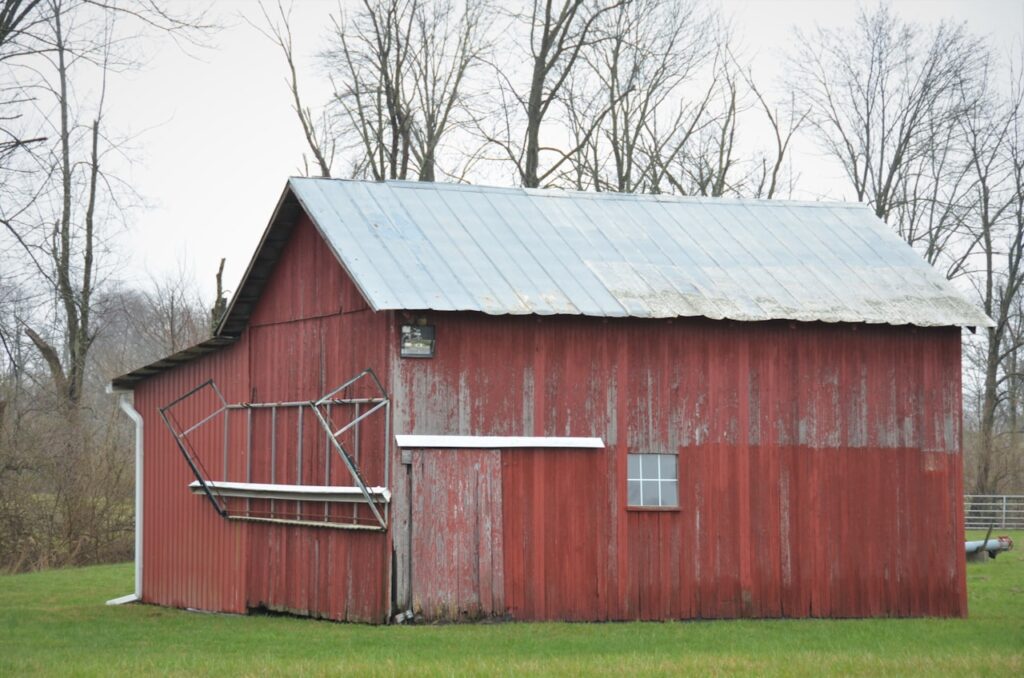
Corrugated is part of the landscape out here: hay barns, equipment sheds, lean-tos, chicken houses, porch roofs and outbuildings on nearly every rural property in Hopkins, Delta, Wood and Franklin counties. A lot of it is old galvanized sheet that has outlived expectations, and a lot of it is worth keeping going rather than replacing.
The two problems we find most often are pitch and fasteners. Panels on roofs too shallow for an unsupported lap, leaking along the laps in every storm, and screws either driven through the valleys or with washers that finished a decade ago. Both are diagnosable in an hour with a camera, and neither requires a new roof to establish.
Storm damage is the other thing that brings us out to these roofs. Corrugated sheets are light, and in a real wind an inadequately fixed panel becomes a hazard as well as a hole, so we get called after most significant storms to re-secure and replace sheets on outbuildings. Where a roof has lost panels repeatedly, that is usually a fixing schedule that needs correcting rather than bad luck. The National Roofing Contractors Association publishes the fastening guidance these repairs are carried out to.
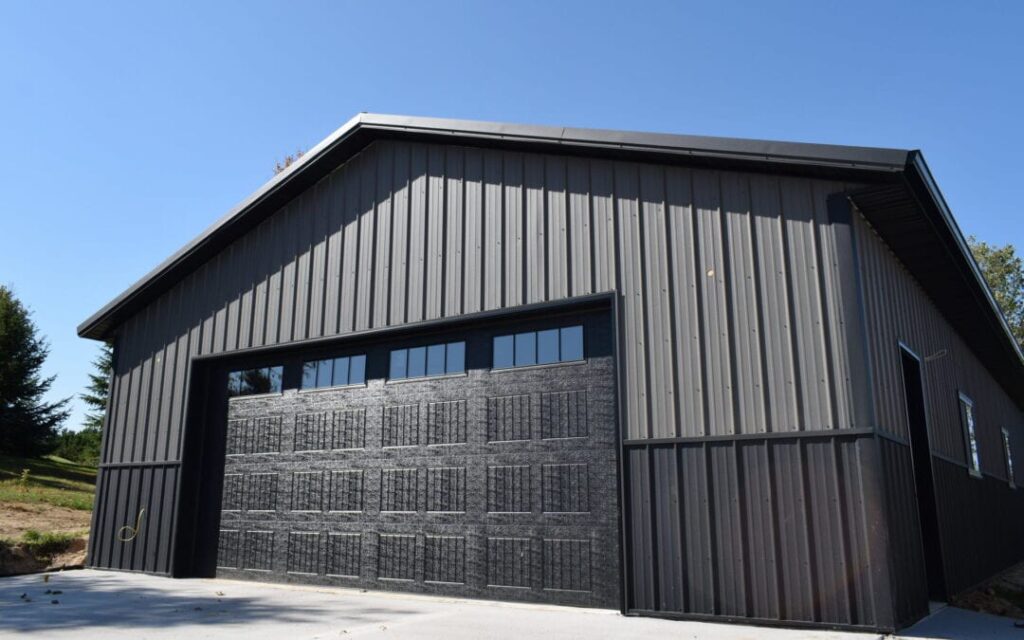
It is also chosen deliberately on residential work here, for porch roofs, additions and outbuildings on properties where the traditional look matters and a modern structural panel would look wrong. On those we will fit it happily, provided the pitch supports it, and we will say so plainly if it does not.


Questions about corrugated panel
Slightly, on material. The gap is small enough that on a building roof PBR is usually the better value because of the supported lap. Where corrugated wins is on small structures, porches, and anywhere the traditional appearance is specifically wanted.
More than most profiles, because the laps are unsupported and rely on overlap and gravity. On an adequate slope it performs well and has done for a century. Where the pitch is marginal we will recommend PBR instead, or on genuinely low slopes a mechanically seamed standing seam, which can go considerably lower.
The ridges, meaning the crests of the corrugations. Water runs in the troughs, so a fastener there sits in the path of everything the roof is shedding and its washer is the only thing keeping the water out. Valley-fixed screws leak sooner, leak more, and leak in ordinary rain rather than only in a storm.
Not necessarily. Surface rust on old galvanized sheet is normal and not the end of a roof. What ends it is perforation, usually along the eave, the cut edges and the laps. If the purlins are sound and the corrosion is localized, sheet replacement and fastener work is good value. Once it is general across the roof, a re-roof is the honest answer, and we will show you photographs either way.
Yes, and it is one of the real advantages of this profile. A single damaged panel can be swapped without disturbing much around it, which is why so many farm buildings out here have been maintained incrementally for decades. Matching an old galvanized sheet exactly is not always possible, and we will tell you how close the match will be before you commit.
Other services
Flashing failures, lifted shingles and wind damage put right before water gets in.
Five and six inch seamless aluminum, fabricated on site to fit your roofline.
Let’s get somebody up there to look.
Fill out the form or pick up the phone. Either way you get straight answers about your roof and a written estimate you can keep.