Torch down roofing, for low-slope roofs that take a beating.
Torch down roofing and modified bitumen for flat and low-slope buildings across Northeast Texas. Multi-ply asphalt sheet, torch or cold applied, and the toughest surface we install underfoot. Free survey, photographs, and a written scope you keep either way.

Torch down roofing in plain terms
Modified bitumen is the modern descendant of the old built-up tar-and-gravel roof, and it is still the right answer on a particular kind of building. It is an asphalt-based sheet reinforced with polyester or fiberglass, installed in multiple plies, with the top layer usually granulated for UV protection. What sets it apart from a single-ply membrane is toughness: it is thicker, heavier, and considerably harder to damage with a dropped tool or a technician boot.

That toughness is the reason we specify it. On a roof with rooftop kitchen equipment being serviced monthly, or an HVAC-crowded roof where people are up there constantly, or a building where a maintenance man walks the same route with a bag of tools twice a week, a granulated cap sheet takes that treatment better than any single-ply. On a roof nobody visits the calculation is different and TPO often wins, and we will say so.
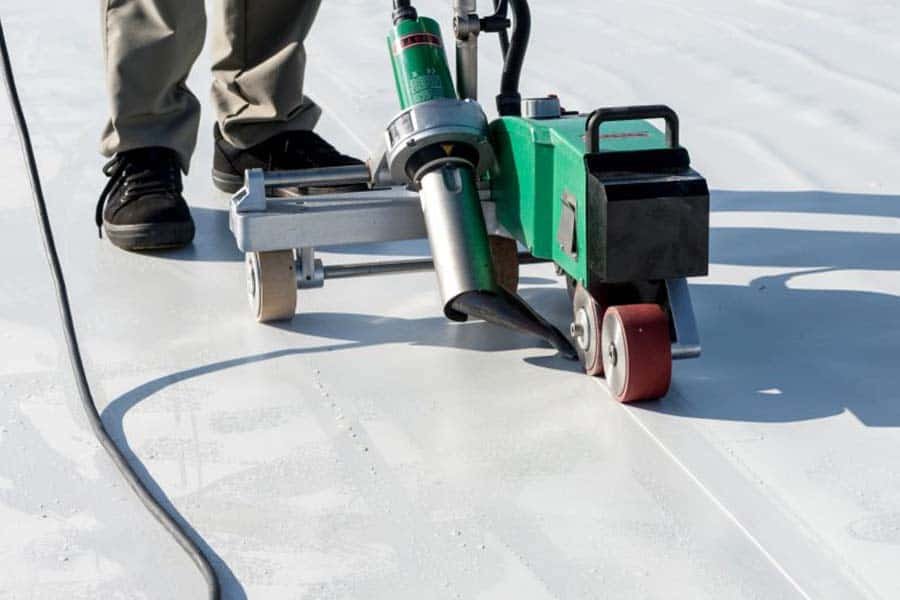
Torch down refers to the application method. The underside of the sheet is melted with a propane torch as it is rolled out, which fuses each ply to the one below and creates a genuinely monolithic assembly. It is a proven method and it produces an extremely durable roof. It also involves open flame on a building, which is a serious matter and the reason torch down roofing is not the right choice everywhere.
Where flame is unacceptable, whether because the building is occupied with sensitive contents, the deck is combustible, the insurer says no, or the risk simply is not worth it, the same membranes are installed with cold adhesive or as self-adhered sheets. The finished roof performs comparably. We tell you which method we intend to use and why, and if a building is not a candidate for torch application we say so at survey stage rather than turning up with a torch.
There is one more reason modified bitumen persists in a market that has largely moved to single-ply, which is repairability by hand. It can be cut, patched and re-detailed with a torch or a roll of self-adhered sheet by anybody competent, using material available locally, without specialist welding equipment. On an older building with a complicated roof, small areas and parapets everywhere, that practicality is worth a great deal. It means the roof can be maintained in small increments rather than needing a capital project every time something fails.
Everything below is in the torch down roofing price we quote you
Free Roof Survey
A full walk with photographs, drainage assessment, and test cuts where a re-cover is being considered.
Multi-Ply System
Base sheet, ply sheets and granulated cap specified by name, with the number of plies stated rather than left vague.
Application Method Stated
Torch, cold adhesive or self-adhered, chosen for the building and the risk and written into the scope.
Fire Safety Protocol
Where torch application is used: extinguishers on the roof, a fire watch during and after work, and no flame near combustible details.
Detail And Flashing Work
Curbs, penetrations, parapets, drains and scuppers detailed with compatible flashing rather than improvised.
Drainage Correction
Tapered insulation or additional drainage where ponding is caused by inadequate slope rather than by blocked outlets.
Start to finish, in order
Survey
We walk the roof, photograph everything, assess drainage, and establish whether the building is a candidate for torch application at all.
Written Scope
Plies, sheets, application method, detail treatment and any drainage work, set out rather than given as a single figure.
Program And Safety Plan
Phasing around occupancy, plus the fire safety arrangements in writing where torch work is involved.
Install In Plies
Base, ply and cap installed in sequence, dried in at the end of every shift, details worked as we go.
Final Walk And Sign-Off
Details checked, drains tested, a walk of the finished roof with you, and the photographs and paperwork handed over.
Four things we do on every single job
Photographs, Not Opinions
Every problem area is photographed and shown to you before anybody quotes a price. You keep the images whatever you decide.
In Writing
The estimate names the products going on your roof, so you can compare it against anybody else’s.
Cleaned Up Daily
Beds and shrubs covered before work starts, and a magnet over the yard and driveway at the end of every working day.
A Local Phone Number
Our shop is on Como St S in Sulphur Springs. The company that fits your roof is the one you call in year four.
“Very customer friendly and easy to work with from start to finish. DJJ Roofing made the whole process simple and stress-free.”

Torch applied, cold applied, or self-adhered
Torch application melts the underside of the sheet with a propane torch as it is rolled, fusing each ply to the one below. It produces the most monolithic assembly of the three and it is what most people mean by torch down roofing. It also puts open flame on a building, which is why the decision is made at survey rather than on the day.
Cold adhesive uses a solvent or asphalt-based adhesive rather than heat. It is slower, it has an odor while it cures, and it produces a comparable finished roof without flame. On an occupied building, over a combustible deck, or where the insurer has ruled torch work out, this is usually the answer.
Self-adhered sheets have a factory-applied adhesive backing activated by pressure and ambient heat. In a Texas summer they perform well and go down quickly. They are the safest of the three and the most weather-dependent, because a cold morning slows the bond considerably. The National Roofing Contractors Association publishes the low-slope guidance all three follow.

Signs a modified bitumen roof needs attention
Any one of these is worth a free survey, and each is a common reason torch down roofing work gets scheduled around here. None of them get less expensive by waiting.
Ponding water still standing on the roof more than two days after rain has stopped.
Granule loss across the cap sheet, leaving the asphalt beneath exposed to UV.
Blisters or ridging in the surface where plies have separated from one another.
Seams or laps that have opened, particularly on the sunniest elevation.
Flashing at a curb, parapet or scupper that has cracked or pulled away.
Interior staining on ceiling tiles, most often near a penetration or a wall line.
The modified bitumen work we do on Northeast Texas buildings
Four kinds of job cover almost everything we are called out for. Which one applies depends on the condition of the existing assembly and on whether the building can take flame at all.
New Multi-Ply Installation
Base, ply and granulated cap over a new or stripped deck, with every detail flashed in compatible material.
Tear-Off And Replacement
The existing assembly removed to the deck where it is wet or failed, so the new roof is not built over a problem.
Re-Cover
New plies over a sound, dry existing assembly where code and the deck allow it, confirmed with test cuts rather than assumed.
Repair And Maintenance
Patching, re-detailing, drain clearing and scheduled inspection on torch down roofing, including systems we did not install.
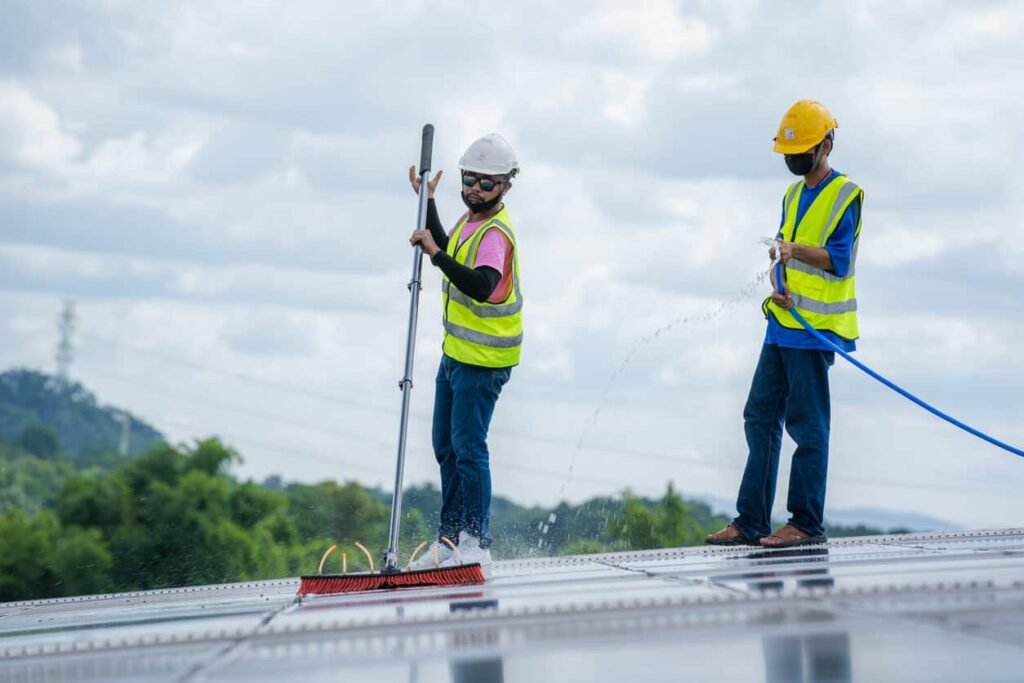
Torch application is not suitable on every building. Occupied premises with sensitive contents, combustible decks and some insurance conditions all rule it out, and in those cases cold adhesive or self-adhered sheet gives a comparable roof. That call is made at survey.
Ponding water is the thing that ends these roofs
Modified bitumen tolerates standing water better than most systems, but tolerating is not the same as being unaffected. Water that sits for days grows debris, holds heat, and works at every lap and detail it touches. On a low-slope roof the difference between a twenty-year assembly and a twelve-year one is very often drainage rather than specification.
Some ponding is a blocked drain or a scupper dammed with debris, and clearing it is a maintenance visit. Some of it is inadequate slope built into the structure, and no amount of clearing fixes that. The honest answer there is tapered insulation to create fall toward the outlets, which costs real money and is quoted as its own line so you can decide.
What we will avoid is quoting a new roof over a drainage problem and letting you discover it again in year three. If the survey finds ponding caused by slope rather than by blockage, it goes in the report with photographs and a price to correct it, and you can weigh that against doing the membrane alone.
Modified bitumen against single-ply, in practice
The honest comparison starts with foot traffic. Modified bitumen is thicker, heavier and granulated, and it takes boots, ladders and dropped tools far better than a thin thermoplastic sheet. If your roof carries kitchen extract, a lot of HVAC, or anything serviced monthly, that difference is the whole argument.
Single-ply wins on weight, on speed of installation, and on reflectivity. A white TPO roof sends a large share of the solar load back off the building, which matters on a metal structure in a Texas July in a way it does not further north. On a roof nobody walks, that is usually the better buy, and we will tell you so rather than steering you to the more expensive system.
Repairability is the quiet third factor. Modified bitumen can be cut and patched by hand with material from a local supplier. Single-ply needs welding equipment and a compatible membrane. On an older building with a complicated roof and a small maintenance budget, being able to fix things incrementally is worth more than it looks on a spec sheet.
Straight answers, free of charge
The inspection, the photographs and the written estimate cost nothing and commit you to nothing. If the honest answer is that the work can wait, that is what the estimate will say.
What actually moves the price on a modified bitumen roof
Square Footage
Low-slope work is priced by the square, and a cut-up roof with multiple levels costs more per square than a simple rectangle.
Number Of Plies
A two-ply system and a three-ply system are materially different in both material and labor, and the scope should say which you are getting.
Application Method
Torch, cold adhesive and self-adhered carry different labor and material costs, and the safety provision for torch work is real time.
Tear-Off Or Re-Cover
Removing a saturated assembly to the deck is far more work and far more disposal weight than re-covering a dry one.
Drainage Correction
Tapered insulation to create fall is its own scope, and it is the difference between fixing ponding and living with it.
Penetrations And Details
Every curb, pipe, drain, scupper and parapet is an individual detail, and a crowded roof costs more than its area suggests.
Four ways a low-slope roof goes wrong
Roofing Over Wet Insulation
Covering an assembly that is already holding water traps the problem and shortens the life of everything installed above it.
Ignoring The Slope
Clearing drains fixes blockage. It does nothing about ponding caused by inadequate fall, and the water keeps working at the laps.
Improvised Details
Curbs and penetrations flashed with whatever was on the truck, in material that is not compatible with the cap sheet, fail first.
No Fire Watch
Torch work without extinguishers on the roof and a proper watch after the crew leaves is a risk nobody should be taking on an occupied building.

What this looks like in Hopkins County and around it
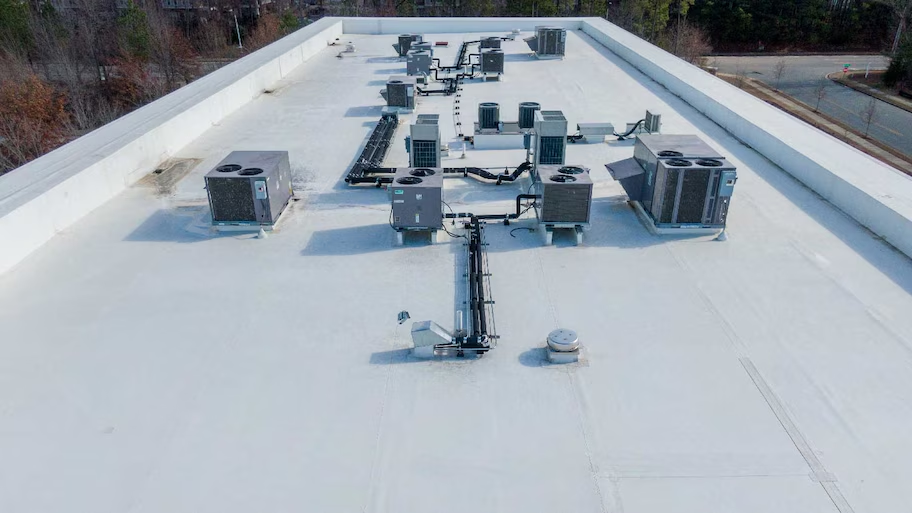
Most of the modified bitumen we work on around Sulphur Springs, Greenville and Mount Pleasant is on older commercial buildings in town centers: small footprints, parapets on every side, and roofs that have been patched by several different people over thirty years. That kind of roof is exactly where hand repairability earns its keep.
Restaurants and buildings with rooftop kitchen equipment are the other recurring case. Grease, heat and constant service traffic are hard on any membrane, and a granulated cap sheet handles that combination better than a thin single-ply does.
Storm exposure applies here as it does everywhere in this region. Hail and wind reach these roofs the same way they reach houses, and damage needs documenting properly if insurance is going to be involved. The Texas Department of Insurance publishes a plain-language storm resource page worth reading before filing on a commercial building. Being an hour from all of it means a survey happens within days rather than weeks.



Questions about torch down roofing
Twenty years and more is realistic for a well-installed multi-ply system that gets inspected twice a year and drains properly. What shortens it is almost always standing water and neglected details rather than the membrane wearing out. A granulated cap that keeps its granules is doing its job.
It can be, with proper precautions: extinguishers on the roof, no flame near combustible details, and a fire watch that continues after the crew has left. But it is not right everywhere. Where the deck is combustible, the contents are sensitive, or the insurer objects, we use cold adhesive or self-adhered sheet instead and say so at survey.
Foot traffic is usually the deciding factor. If people are on your roof regularly servicing equipment, modified bitumen takes that treatment better. If the roof is rarely visited and cooling load matters, a reflective TPO membrane is often the better buy. We will tell you which way your building points rather than defaulting to one.
Yes, including roofs we did not install. One of the practical strengths of this system is that it can be cut, patched and re-detailed by hand with locally available material. That makes incremental maintenance realistic on an older building rather than requiring a capital project every time something fails.
Either a blocked drain or scupper, which is a maintenance job, or inadequate slope built into the structure, which is not. Modified bitumen tolerates standing water better than most systems, but water sitting for days works at every lap and detail it touches. If the survey finds slope-related ponding we photograph it and price tapered insulation separately.
Other services
Flashing failures, lifted shingles and wind damage put right before water gets in.
Five and six inch seamless aluminum, fabricated on site to fit your roofline.
Let’s get somebody up there to look.
Fill out the form or pick up the phone. Either way you get straight answers about your roof and a written estimate you can keep.