Roofing services, from one flashing repair to a whole new roof.
Residential and commercial roofing services across Northeast Texas, using Owens Corning, GAF and CertainTeed systems installed to manufacturer spec.
The roofing services we provide
Nine roofing services, all handled by the same crews out of Sulphur Springs. Every one of them starts with somebody getting on the roof and photographing what is actually there.
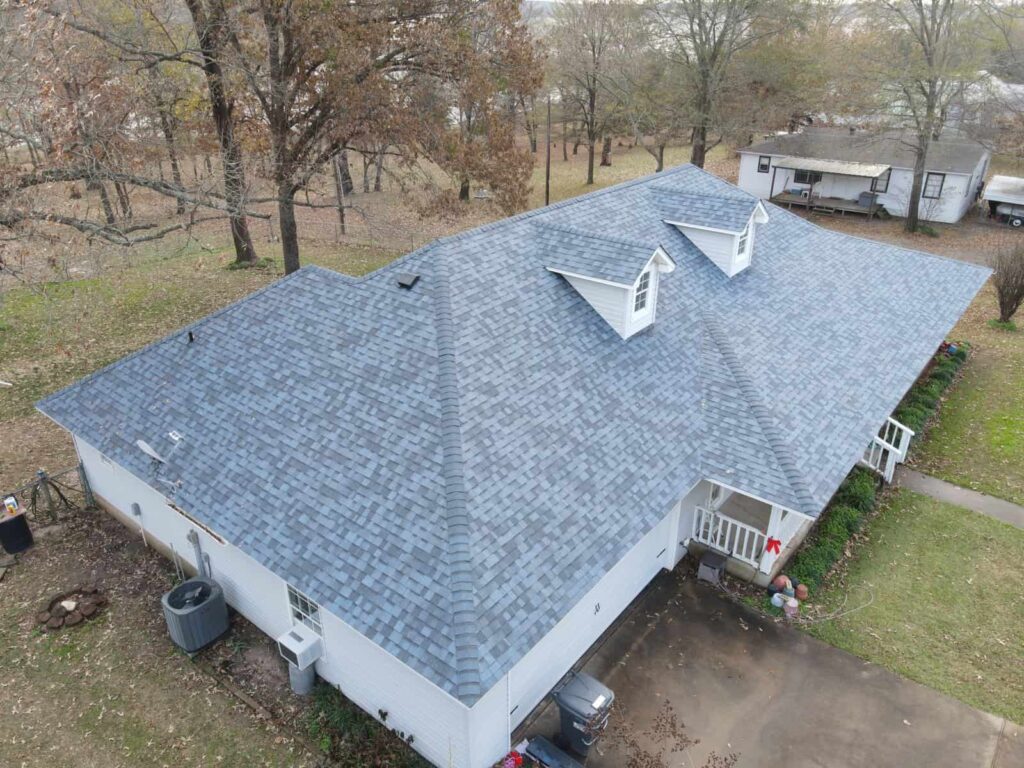
Residential Roofing
New roofs, replacements and repairs for houses across the region, matched to what local weather puts a roof through.

Commercial Roofing
Commercial roofing services for shops, churches, offices and agricultural buildings, installed and maintained, with plans available.
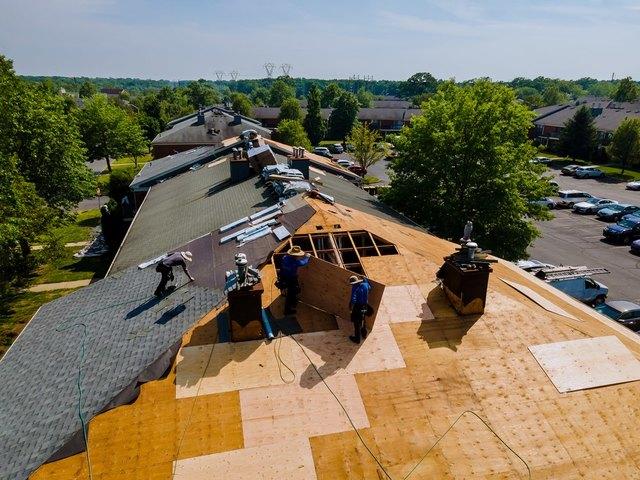
Roof Replacement
Complete tear-off and replacement finished to code, with clean-up and a nail sweep at the end of every working day.
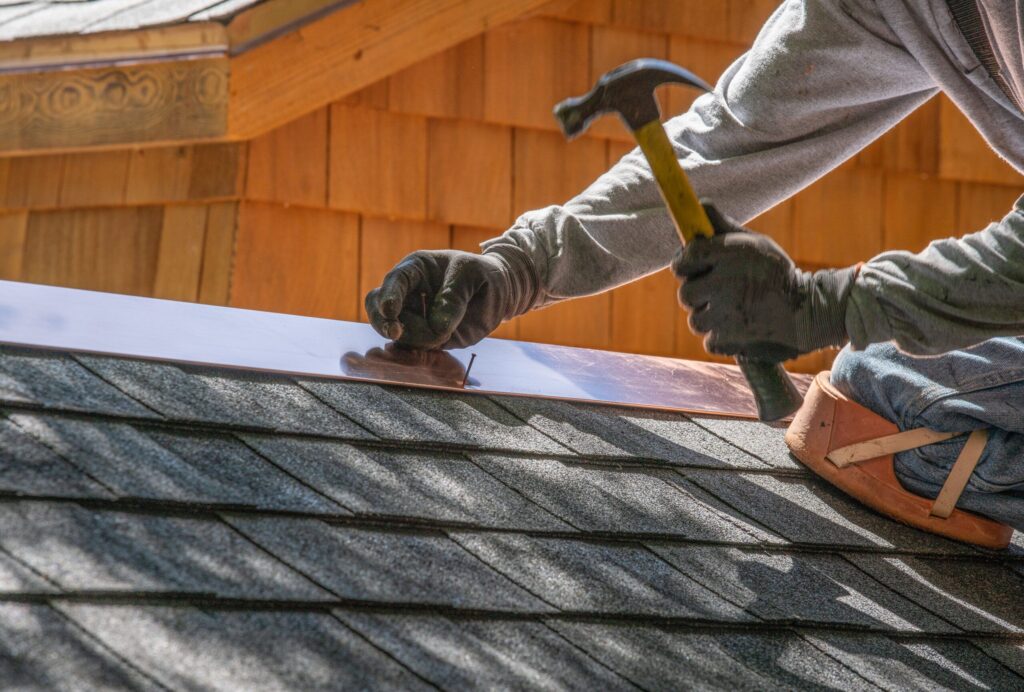
Roof Repairs
Leaks, missing shingles and flashing failures put right before a small problem turns into a whole new roof.

Metal Roofing
Panel systems for houses, shops and barns, in the profiles and colors that suit the building.
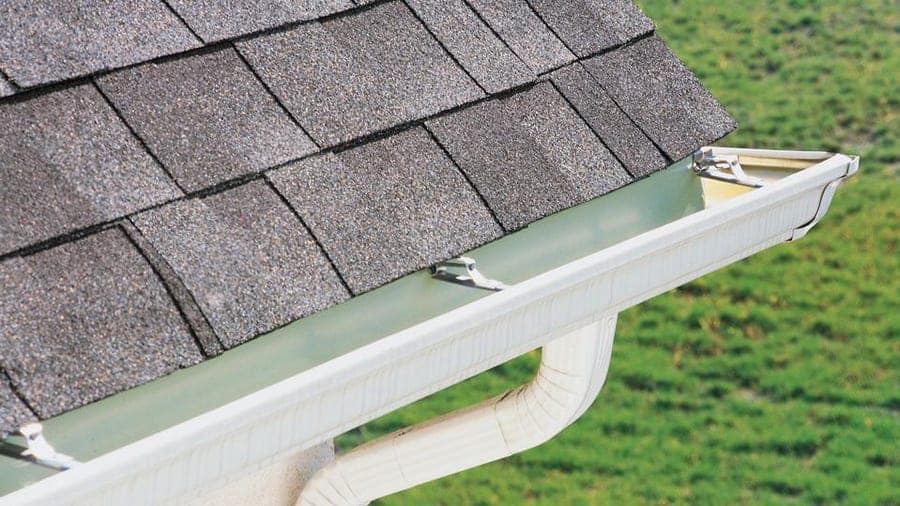
Seamless Gutters
Fabricated on site to fit your roofline, sized to handle the rain this part of Texas actually gets.
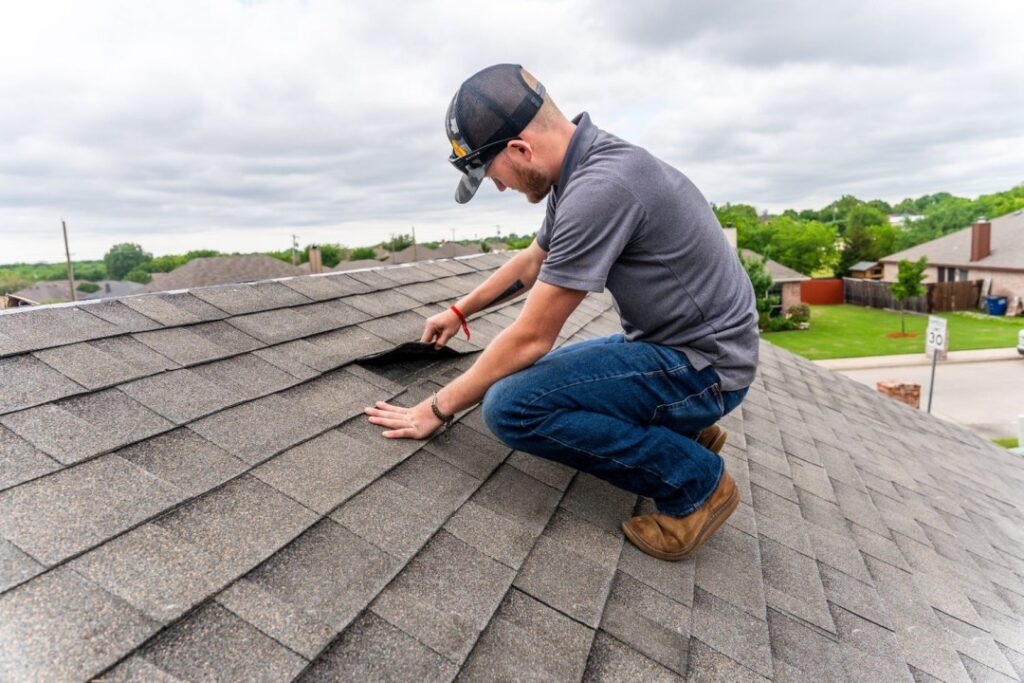
Roof Inspections
A thorough look at shingles, flashing, valleys, ventilation and drainage, with photographs and a written summary before any roofing services are quoted.

Storm & Hail Damage
Free post-storm inspection with photo documentation prepared for your adjuster, then the repair itself.

Maintenance & Gutter Cleaning
Scheduled upkeep that catches the small things early, which is the best-spent money on any roof.
We install the systems that hold up out here.
Northeast Texas throws hail, wind and long stretches of heat at a roof. Our roofing services start by going through the options with you and matching the system to your roof rather than to whatever is on the truck.




The question worth answering before you spend anything
Almost everybody who calls has already decided they need a new roof. Maybe a third of them do not. A roof with fifteen years of life left and one failed chimney flashing is a repair, and it should be quoted as one.
The honest answer depends on four things: how old the roof is, whether the damage is in one place or spread across every slope, whether the decking underneath is still sound, and whether the shingle line is still available to match. Two of those can only be assessed from up on the roof.
So that is where we start, before anybody talks money. If it is a repair, we price the repair. If the roof is genuinely finished, we show you the photographs that prove it.
- Damage confined to one slope or one detail
- Roof under fifteen years old
- Flashing failure at a chimney or wall
- A handful of wind-lifted shingles
- Vent boot cracked and leaking
- Granule loss across every slope
- Roof past twenty years
- Decking soft or delaminated in places
- Hail bruising spread over the whole field
- Third or fourth repair in as many years
Age
Most asphalt roofs here run 20 to 30 years. Past that, repairs stop being economical because the surrounding shingles are already brittle.
Spread
Damage in one spot is a repair. The same damage on all four slopes usually means the whole roof took the same hit.
Decking
If the substrate has been wet long enough to soften, patching the surface just hides a structural problem for another season.
Matching
Discontinued shingle lines and sun-faded color mean a repair can be watertight and still look like a patch from the street.
Seven layers, and you can only see one of them from the ground
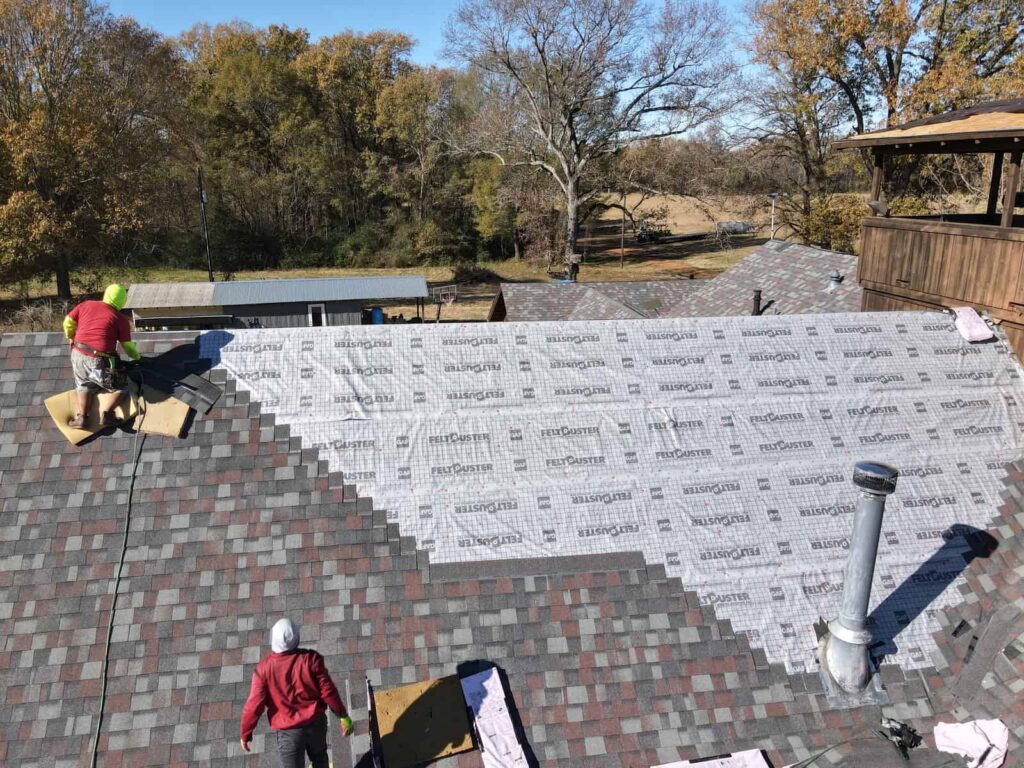
When two estimates are thousands apart, the difference is usually in these layers rather than in the shingle. A roof is a system, and the parts you cannot see from the ground are the ones that decide whether it lasts.
Decking
The plywood or OSB the whole roof is fastened to. If it has been wet it gets replaced, because a new roof cannot be nailed reliably into soft substrate, and nobody can price this before the old roof comes off.
Ice And Water Shield
A self-adhering membrane in the valleys, around penetrations and along the eaves. It seals around the nail rather than just sitting under it, which is what stops wind-driven rain at the details.
Synthetic Underlayment
The second line of defense over the rest of the deck. Synthetic rather than felt: it does not tear at the fasteners, it does not wrinkle when it gets damp, and it keeps the house dry between tear-off and dry-in.
Drip Edge And Starter
Metal at the eaves and rakes to carry water off the edge instead of behind it, plus a proper starter course sealed along the perimeter, which is where wind uplift begins.
Flashing
Step flashing at walls, counterflashing at chimneys and new boots at every pipe. Caulk is not flashing, and new flashing goes on with a new roof so the details are as young as the shingles above them.
The Field Shingle
The part everybody chooses and the only part most quotes discuss. Architectural, impact-resistant or metal panel, fastened to the manufacturer nailing pattern, which is what keeps the wind warranty valid.
Ridge And Ventilation
Ridge cap over a continuous vent, balanced against intake at the soffit. This is the layer that decides whether the shingles above it reach their rated life or fall five years short of it.
The smallest part on a roof, and the most often ignored
A shingle is rated for the weather above it, not for an attic sitting at 140 degrees below it. Without balanced intake at the soffit and exhaust at the ridge, heat and moisture work on the roof from underneath and take years off its life.
It also shows up on the power bill. Half the roofs we tear off around here have blocked soffit vents, a bathroom fan venting straight into the attic, or exhaust with no intake to feed it. Correcting that is a small estimate item on an estimate and one of the few upgrades that pays back twice.
Intake At The Soffit
Cool air has to get in low. Painted-over or insulation-blocked soffit vents are the most common fault we find.
Exhaust At The Ridge
Hot air leaves high. Ridge vent, box vents or powered, matched to the intake rather than guessed at.
It is almost never the shingles
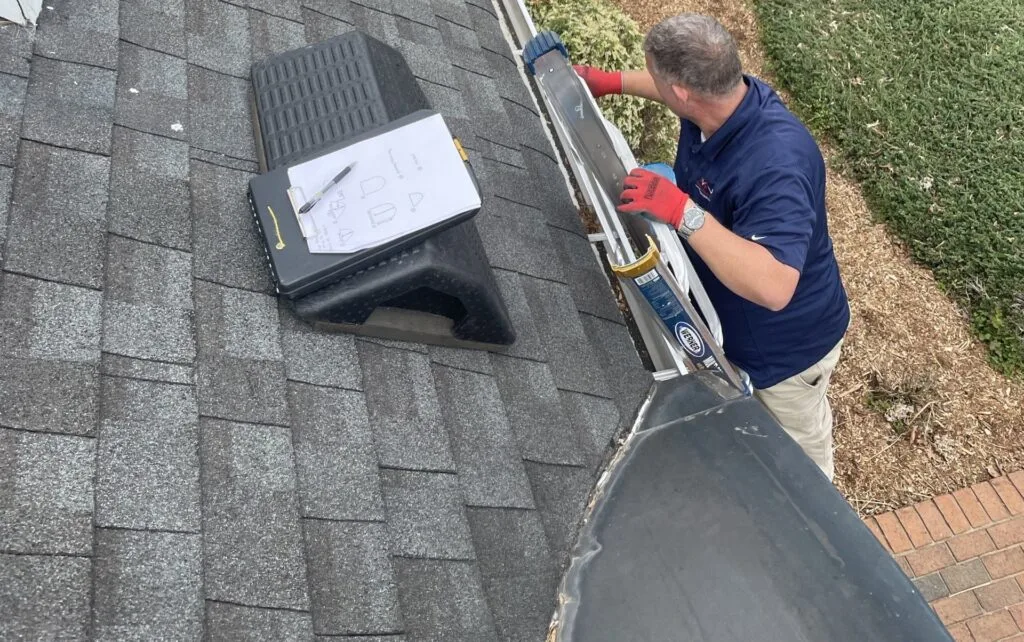
Water gets in where two things meet. Nine times out of ten a leak is a detail problem rather than a field problem, which is why our repair roofing services start at the details instead of in the middle of the field.
Chimney counterflashing
The most common leak on any house with a chimney. Mortar joints let go, the flashing pulls away, and water runs down inside the chase.
Valleys
Two slopes meeting means twice the water in one channel. Debris holds moisture there, and a poorly detailed valley leaks under wind-driven rain.
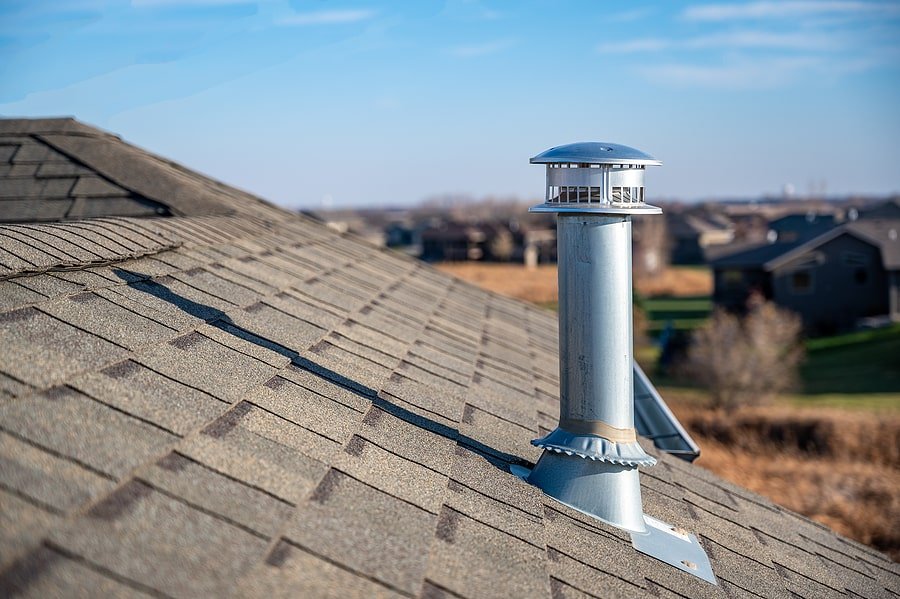
Vent boots
The rubber collar around a plumbing vent cracks in the sun long before the shingles wear out. Inexpensive to replace, and a very frequent culprit.
Wall step flashing
Where a roof runs into a vertical wall, at dormers, additions and second stories. Done with caulk instead of stepped metal, it fails within a few years.
Skylights
Every skylight is a hole in the roof with a frame around it. The curb flashing and the seal are both wear items, and both are fixable.
Nail pops
A fastener that has backed out lifts the shingle above it and leaves a hole underneath. Common on roofs installed into decking that was already old.
Debris at the eaves
Blocked gutters and heavy leaf pack push water back up under the shingle edge, where it soaks the fascia and works into the soffit.
Condensation, not a leak
Sometimes the water is not coming from outside at all. A bathroom fan venting into the attic will stain a ceiling exactly like a roof leak does.
Low-slope roofs fail at the edges first
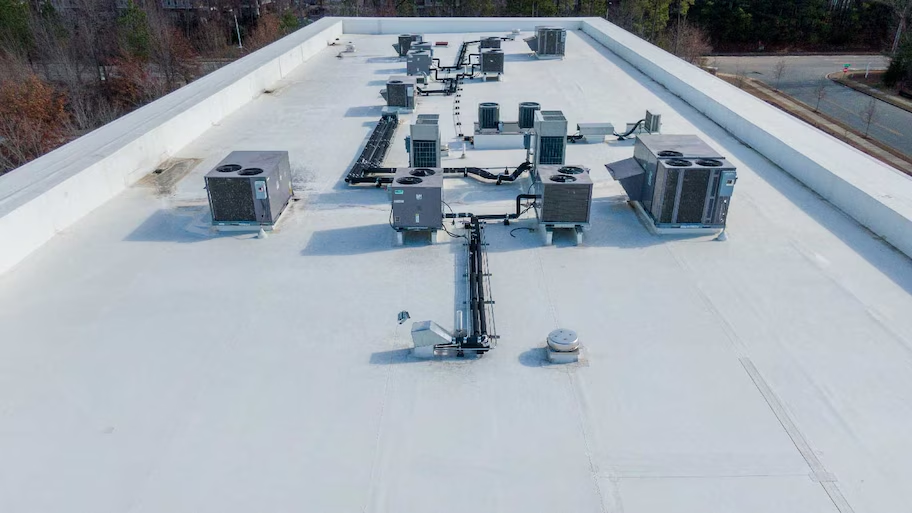
On a flat or low-slope roof the membrane in the middle of the field is rarely the problem. It is the terminations: parapet walls, drains, curbs, pipe penetrations and the seams around rooftop HVAC units.
That changes how a commercial inspection works. Our commercial roofing services weigh drainage and ponding as much as the surface, check every penetration, and photograph the details rather than handing over a square-foot number and a price.
Scheduling matters too. Churches need the work done between services, shops need to stay open, and a business with product inside needs the roof watertight at the end of every single day, not at the end of the job.
TPO Membrane
The current standard for low slope. Heat-welded seams, a reflective white surface that keeps the building cooler, and a straightforward repair path years down the line.
Modified Bitumen
Torch-applied or self-adhered, in multiple plies. Still the right answer on smaller sections and around complicated penetrations where a membrane is hard to detail cleanly.
Metal Over Steep Slope
For commercial buildings with real pitch: standing seam and exposed-fastener panel, with the same longevity argument that makes it attractive on houses.
The smartest roof work you will ever pay for
Maintenance is the least glamorous of our roofing services and still the best money spent on a roof. A $200 visit that catches a lifted flashing is a $12,000 replacement that happens ten years later than it would have.
After Storm Season
The single most valuable check of the year. Hail and wind damage documented while it is still recent enough to be provable.
Gutters And Valleys
Leaf pack in a valley holds water against the shingle. Blocked gutters push it back under the edge and into the fascia.
Sealant And Boots
Rubber vent boots crack in the Texas sun long before the shingles wear out. They are inexpensive, and they are a very common leak.
Pre-Sale Inspection
Roofs come up in every inspection report. Knowing the condition before a buyer inspector does keeps you in control of the negotiation.
Questions about the work itself
Often, yes, and we will tell you when that is the better call. Damage confined to one slope or one detail on a roof that still has years left is a repair, and we price it as a repair. When a roof is genuinely finished we show you the photographs that led us there, so the decision is yours to make on the evidence.
If it needs it. Decking cannot be assessed until the old roof is off, so it is flagged as a possibility in the estimate with a per-sheet rate agreed in advance rather than raised mid-job. Soft or delaminated decking gets replaced, because nailing a new roof into bad substrate affects the wind rating.
It is a shingle rated to withstand hail strikes better than standard product, and in Northeast Texas it is worth asking about. Some insurance carriers offer a premium discount for a Class 4 roof, so it is worth a phone call to your agent before you choose materials.
An architectural asphalt system installed to spec, with the attic breathing properly, should give you somewhere in the 20 to 30 year range. Standing seam metal commonly outlasts that by decades. Ventilation and installation quality move that number more than the brand on the bundle does.
Regularly. A good share of our roofing services are agricultural: standing seam, PBR, PBU and corrugated panel. We will tell you which building justifies the premium system and which one is well served by the economical option.
Let’s get somebody up there to look.
Fill out the form or pick up the phone. Either way you get straight answers about your roof, the roofing services it actually needs, and a written estimate you can keep.