The short version
- Class 4 is the top impact rating in the UL 2218 test, and it is about resisting hail, not being hail-proof.
- Most Texas carriers offer a premium discount for a Class 4 roof. The size of it varies by carrier.
- Expect a modest cost premium over standard architectural shingles.
- The discount usually pays back the premium over several years, and the roof still resists better in the meantime.
- GAF Timberline UHDZ and Timberline AS II are Class 4. Standard Timberline HDZ is not.
- TAMKO StormFighter FLEX and Malarkey Legacy are the Class 4 lines from those makers.
Class 4 impact-resistant shingles are one of the smartest upgrades a Northeast Texas homeowner can make, because they are built to survive the hail that hits this region almost every spring, and many Texas insurers reward them with a premium discount. This guide explains what Class 4 shingles are, how much they can save you on insurance, what they cost, and whether they are worth it for your home.
What Are Class 4 Impact-Resistant Shingles?
Class 4 is the highest impact rating a shingle can earn under the UL 2218 test, where a steel ball is dropped on the shingle to simulate hail. To earn a Class 4 rating, the shingle has to withstand the impact without cracking. These shingles use reinforced backing and more flexible materials so they absorb a hailstrike instead of fracturing. For a region that sits in an active hail corridor, that difference can mean the gap between a roof that survives a storm and one that needs a full claim.
How Class 4 Shingles Lower Your Texas Insurance
This is the part that surprises homeowners. Many Texas insurance carriers offer a premium discount for roofs built with Impact-resistant shingles, because those roofs are less likely to file hail claims. The discount varies by company, but it can meaningfully reduce your annual premium, and over the life of the roof those savings can offset a large part of the higher upfront cost.
The catch is that you usually need documentation, such as the manufacturer certificate showing the Class 4 rating, to claim the discount. Ask your insurer exactly what they offer and what paperwork they require before you choose your shingle. For background on impact ratings, the Insurance Institute for Business and Home Safety publishes independent research, and the Texas Department of Insurance covers policy basics.
What Do Class 4 Impact-Resistant Shingles Cost?
Class 4 impact-resistant shingles typically add roughly 10 to 25 percent over standard architectural shingles. On an average Northeast Texas home, that often puts a Class 4 roof in the range of $10,000 to $17,000 installed. When you weigh that against the insurance discount, the lower odds of paying a deductible after a hailstorm, and the longer real-world lifespan in hail country, the math frequently works in the homeowner’s favor, especially for those planning to stay in the home for years.
Are They Worth It for Your Home?
For most Northeast Texas homeowners, Impact-rated shingles are worth the upgrade. You live in one of the most hail-prone regions in the country, the insurance discount is real, and the shingles simply last longer here because they shrug off impacts that would damage standard shingles. They make the most sense if you plan to stay in your home for several years, if your insurer offers a solid discount, or if you have already been through one hail claim and do not want another. If you are selling soon, the upgrade still helps with resale and insurability, though you may not recoup the full premium.
Class 4 Shingles vs. Metal Roofing
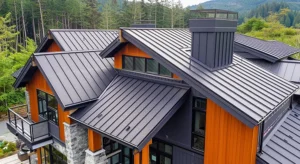
Both Class 4 shingles and metal roofing resist hail well. Class 4 shingles cost less upfront and look like a traditional shingle roof, while metal lasts longer and reflects more heat but costs more to install. If you love the look of shingles and want hail resistance plus an insurance discount, Class 4 is the natural choice. If you want maximum lifespan and energy efficiency, compare options on our metal roofing page.
The UL 2218 Test, and What It Measures
The rating behind Class 4 shingles comes from a specific laboratory test, and knowing what it involves makes the claim easier to judge.
UL 2218 drops a steel ball onto the shingle from a set height, twice in the same spot. For the Class 4 level the ball is two inches across and falls twenty feet. The sample is then examined from the back for cracking or splitting in the mat.
Passing means the mat did not fracture under two direct strikes. That is a meaningful bar, and it is why Class 4 shingles hold up where a standard product bruises. It is also a laboratory ball at a controlled angle, not wind-driven hail arriving sideways, so the result predicts performance rather than guaranteeing it.
There is a second standard, FM 4473, which uses ice balls fired from a launcher instead of steel. Some manufacturers test to one, some to both. Either will appear on the product documentation for Class 4 shingles.
Which Products Actually Carry the Rating
This is where homeowners are most often misinformed, because manufacturers sell several lines that sound similar and only some of them are rated.
- Owens Corning Duration STORM carries the impact rating. We are an Owens Corning Preferred Contractor.
- CertainTeed NorthGate, which is SBS-modified.
- GAF Timberline UHDZ and Timberline AS II. ? Timberline HDZ, the far more common product, is not Class 4, and the names are close enough to cause real confusion.
- TAMKO StormFighter FLEX. TAMKO Titan XT is Class 3, not Class 4.
- Malarkey Legacy.
- Atlas Pinnacle Impact, part of the StormMaster range.
Those distinctions matter because an insurance discount is applied to a specific product on a specific roof. Getting Class 4 shingles means naming the line, not the brand.
What Makes Them Different Inside
Two approaches dominate, and they behave differently over time.
The first adds a polymer, usually SBS rubber, to the asphalt itself. That keeps the material flexible so it deforms under impact and returns rather than fracturing. It works particularly well in cold weather, when standard asphalt is at its most brittle.
The second bonds a reinforcing layer, often a mesh or scrim, to the back of the shingle. That holds the mat together under a strike even where the surface takes a mark.
Both approaches pass the same test. SBS-modified Class 4 shingles tend to perform better as they age, because flexibility is a property of the material rather than a layer that can separate.
What Class 4 Shingles Do Not Do
This is worth stating clearly, because the marketing around impact ratings sometimes implies more than the test supports.
Class 4 shingles resist mat fracture. They do not make a roof immune to hail, and no roofing product does. Large hail can still bruise them, strip granules, and damage the roof enough to justify a claim. What the rating buys is a substantially better chance of coming through an ordinary hail event without structural damage to the shingle.
They also do nothing for the rest of the building. Gutters, vents, air conditioner fins, siding and windows take hail the same way they always did. A hail claim on a house with Class 4 shingles frequently still includes those items.
And they do not replace maintenance. A Class 4 roof with blocked attic ventilation ages from below exactly like any other asphalt roof.
The Cosmetic Damage Exclusion
Here is the detail that surprises people, and it is worth raising with your agent before you buy.
Some Texas policies that offer a discount for impact-rated roofs pair it with a cosmetic damage exclusion. That means marks which do not affect how the roof sheds water may not be covered, even though they are visible.
The logic is consistent from the carrier’s side: if the roof resisted functional damage, the policy was doing what the discount priced for. Whether that trade suits you depends on how much the appearance of the roof matters and how long you plan to own the house.
Ask specifically whether the discount for Class 4 shingles comes attached to such an exclusion. The Texas Department of Insurance publishes consumer guidance on homeowners coverage at tdi.texas.gov.
How to Prove You Have Them
The discount is not automatic. The carrier has to be told, and told in a form they accept.
- The manufacturer’s certificate for the specific product, which states the UL 2218 class.
- Your invoice naming the shingle line installed.
- Photographs of the wrapper or bundle labels taken during installation.
- The installation date, which establishes roof age.
We provide that documentation as part of any Class 4 installation, because a discount you cannot evidence is a discount you will not receive. Keep a copy somewhere other than the roofer’s file.
It is also worth notifying the carrier promptly rather than at renewal. Some will adjust mid-term, and the saving starts from when they are told rather than from when the roof went on.
Roof Age and Whether the Sums Work
The economics of Class 4 shingles depend almost entirely on how long you will own the roof.
The upgrade typically adds somewhere between ten and twenty percent to the material portion of a replacement. The insurance saving recurs annually. Over the life of a roof that usually more than covers the difference, but the crossover point is measured in years, not months.
If you expect to be in the house for a decade or more, the case is strong before you count avoided claims and deductibles. If you are likely to sell within two or three years, the saving is modest and the benefit largely transfers to the next owner, though a documented impact-rated roof is a genuine selling point.
Discount amounts vary considerably between carriers, which is why we do not quote a percentage. Your own insurer will give you the real figure in a phone call.
If You Are Replacing the Roof Anyway
This is the situation where the decision is easiest, and it is worth separating from a discretionary upgrade.
The labor, tear-off, disposal, underlayment, flashing and ventilation are identical whichever shingle goes on. The only difference is the material line. That makes the incremental cost of Class 4 shingles far smaller as part of a replacement than it would be as a standalone project, because none of the fixed costs change.
If a storm claim is funding the replacement, ask your adjuster how the upgrade is handled. Some carriers apply the settlement toward a like-for-like roof and let the homeowner pay the difference for the upgrade, which is often a small figure in that context.
Class 4 Shingles and Your Warranty
Impact-rated products carry the same structure of manufacturer warranty as their standard equivalents, and the same limits.
The material warranty covers manufacturing defects. It does not cover hail, which is an insurance matter, and it does not cover installation, which is the contractor’s responsibility. A long warranty on Class 4 shingles is not hail protection by another name.
Enhanced system warranties, where the manufacturer covers the whole assembly, require the full system and a contractor in their program. If that matters to you, ask for it in writing at estimate stage rather than afterward.
Our own workmanship warranty runs ten years and covers the installation itself, which is the part the manufacturer never does.
Getting a Real Number for Your House
Whether Class 4 shingles make sense on your roof depends on its size, its pitch, what your carrier offers, and how long you plan to stay. Those are not things a general article can settle.
What we can do is measure the roof and give you two written estimates, one for a standard architectural shingle and one for an impact-rated line, so the difference is a number rather than an estimate. Our roof inspections are free and the written comparison comes with them.
If the roof still has years left, we will say so. The upgrade belongs in a roof replacement conversation, not in a repair. For manufacturer specifications, Owens Corning publishes its full product data at owenscorning.com, and our manufacturers page sets out which lines we install.
Class 4 Shingles Compared With a Metal Roof
Both are sold as hail answers, and they solve the problem differently.
A standing seam metal roof conceals its fasteners beneath the seam, so hail that dents a panel is usually cosmetic rather than a leak path. Metal also lasts far longer, often forty years or more, and it carries a price to match.
Class 4 shingles cost a fraction of that and install on any roof that already takes asphalt, with no change to the structure or the detailing. They will show hail damage sooner than metal, and they will need replacing sooner.
The dividing question is usually how long you intend to own the building. Over a forty-year horizon metal frequently wins. Over fifteen, Class 4 shingles almost always do. Our metal roofing page covers the other side of that comparison.
Does the Rating Fade With Age?
A fair question, and the honest answer is that it depends on how the product achieves its rating.
Asphalt hardens as it ages. Every shingle becomes more brittle over time, and Class 4 shingles are no exception. A twenty-year-old impact-rated roof will not perform like a new one.
SBS-modified products tend to hold their flexibility better, because the polymer is distributed through the asphalt rather than applied as a separate layer. Reinforced products depend on that layer staying attached, which it generally does, but it is one more thing to age.
The practical implication is about expectations rather than product choice. Class 4 shingles reduce hail damage most in the first two thirds of their life, which is also when the insurance discount is compounding in your favor.
Installation Still Decides the Outcome
An impact rating describes the shingle. It says nothing about the roof it becomes.
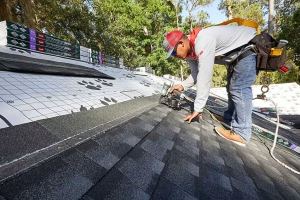
Nail placement matters more on a laminated impact-rated shingle than on a standard one, because the nailing zone is where the layers meet. A fastener driven high misses the zone entirely and leaves the shingle held by adhesive alone. Overdriven nails cut into the mat, which is the layer the whole rating depends on.
The rest of the system matters too: starter strip at eaves and rakes, correct underlayment, sealed penetrations, and attic ventilation within the manufacturer’s requirement. Class 4 shingles fitted over a poorly prepared deck are an expensive way to buy an ordinary roof.
That is not a sales point, it is the reason the manufacturer ties its enhanced warranties to a complete system rather than to the shingle on its own.
Worth Asking Your Agent First
Before committing to the upgrade, a short call to your insurer answers most of what matters, and the answers vary more between carriers than people expect.
- Do you offer a discount for a UL 2218 Class 4 roof, and how much is it on my policy?
- Does that discount come with a cosmetic damage exclusion?
- What documentation do you need, and will you apply it mid-term or only at renewal?
- Does it change my wind and hail deductible?
Those four answers turn a general case for Class 4 shingles into a figure for your house. If the discount is substantial and carries no exclusion, the decision usually makes itself.
How DJJ Roofing Installs Impact-Resistant Roofs
DJJ Roofing installs Class 4 shingles as an Owens Corning Preferred Contractor, with the manufacturer documentation you need to claim your insurance discount. We have served Northeast Texas since 2015 and are fully insured, BBB Accredited, and Google Guaranteed, with a 4.9 star rating across 76 Google reviews. Whether you are upgrading proactively or replacing after a storm, we can walk you through the options. See our roof replacement page, our hail damage page, and our insurance claims page, or call (903) 217-5431.
How Hail Damages a Standard Roof vs. a Class 4 Roof
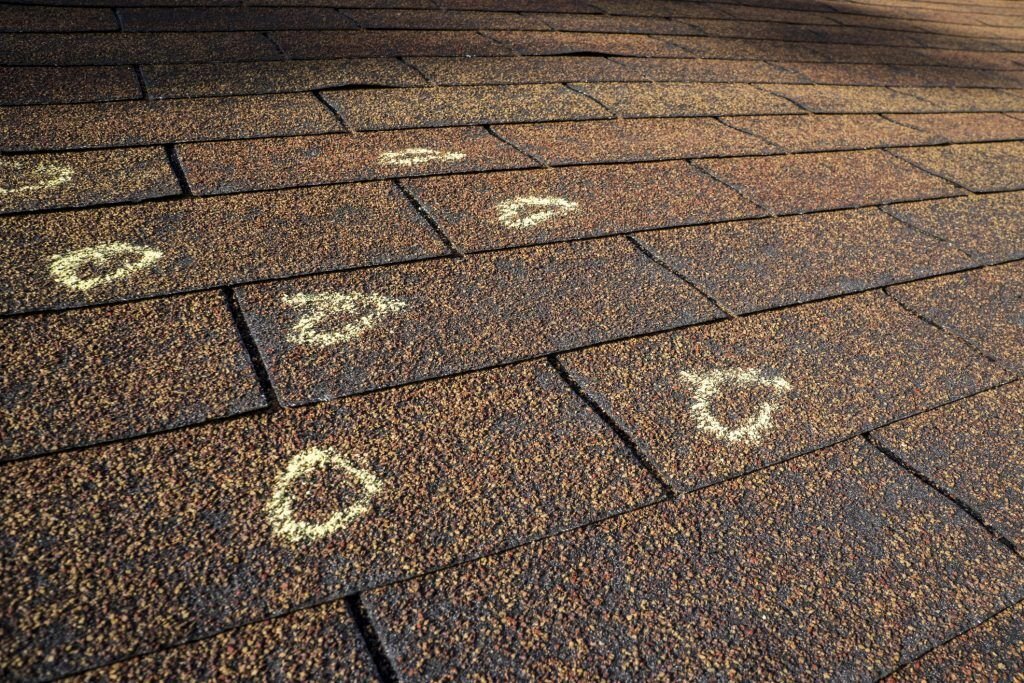
When hail hits a standard shingle, it can crack the shingle, fracture the mat underneath, and knock off the granules that shield the asphalt from the sun. Even when there is no visible hole, that hidden damage shortens the roof’s life and often leads to a claim. Class 4 impact-resistant shingles are engineered to flex and absorb that same impact without cracking, so they come through storms that would damage a standard roof. In a region where large hail is a regular spring event, that resilience is the difference between repeatedly filing claims and having a roof that simply holds up year after year.
What to Look For When Choosing Class 4 Shingles
Not all impact-resistant shingles are identical. Look for the UL 2218 Class 4 rating clearly stated by the manufacturer, a strong wind rating for Texas storm season, and a warranty that matches the premium you are paying. Color and style still matter for curb appeal, and most major shingle lines now offer Class 4 versions that look just like their standard architectural shingles. Finally, make sure your installer provides the documentation your insurer needs to grant the discount, because the savings only count if you can prove the rating. DJJ Roofing handles that paperwork as part of the job.
Frequently Asked Questions
What are Class 4 impact-resistant shingles?
They are shingles with the highest impact rating under the UL 2218 test, built with reinforced materials so they withstand hail without cracking. They are designed for hail-prone regions like Northeast Texas.
Do Class 4 shingles really lower insurance in Texas?
Many Texas insurers offer a premium discount for Impact-resistant shingles because they file fewer hail claims. The discount varies by carrier, so ask your insurer and provide the manufacturer certificate.
How much more do Class 4 shingles cost?
They usually add about 10 to 25 percent over standard architectural shingles, often landing a full roof around $10,000 to $17,000 installed on an average home. The insurance discount and longer life offset much of that over time.
Are impact-resistant shingles worth it in Texas?
For most Northeast Texas homeowners, yes. The region is highly hail-prone, the insurance discount is real, and the shingles last longer here because they resist impacts that damage standard shingles.
Do I need documentation for the insurance discount?
Usually yes. Insurers typically want the manufacturer certificate showing the Class 4 rating. Your roofing contractor can provide this after installation.
Thinking about a hail-tough roof? Ask DJJ Roofing about Impact-rated shingles and the insurance discount they can unlock. Call (903) 217-5431 or contact us.