Storm Damage Roof Repair in Greenville, TX
DJJ Roofing has been doing storm damage roof repair in Greenville since 2015, working out of one shop in Sulphur Springs. Greenville sits straight down I-30 from us, so getting a crew and a load of material there is a short run. Inspections are free, the photographs are yours to keep, and the estimate is written down before anything starts.
- Free damage assessment with dated photographs
- Documentation prepared for your carrier
- Active leaks jump the queue

Storm damage roof repair in Greenville
Hunt County is squarely in the spring hail corridor, and the flat farmland west of Greenville gives straight-line wind a long clean run at a roof. After a storm the question is rarely whether the roof was hit, but whether the damage is the kind that matters and whether it is documented properly.
All of it is covered by the written estimate for storm damage roof repair in Greenville before any work starts. If something turns up once we are on the roof, you see a photograph of it and decide what to do, rather than finding it as a line on an invoice afterwards.
Wind damage
Lifted, creased and missing shingles, and seals broken along the tab line. A shingle that looks fine but has lost its seal is the one that leaves during the next storm. That is the standard on every Hunt County job we take on, not an upgrade.
Hail damage
Impact bruising knocks granules off and shortens shingle life without leaking on the day. It reads clearly underfoot and barely at all from the ground. Nothing here is an optional extra on a Greenville roof.
A dated record you keep
Photographs stamped with the date, elevation by elevation, plus a plain written summary. It is yours whether or not a claim follows and whoever ends up doing the work. That is the standard on every Hunt County job we take on, not an upgrade.

The building stock around Greenville
Greenville is the biggest town in Hunt County and it shows in the roof stock. There is a large stock of mid-century homes near the older streets, a lot of 1990s and 2000s shingle in the subdivisions off the loop, and commercial and light industrial buildings along the I-30 corridor running low-slope membrane.
That range is the reason we do not quote a Greenville roof from a photograph or a satellite measurement. Two houses on the same street can need completely different work, and the only way to know which is which is to get on both of them.
Greenville sits straight down I-30 from us, so getting a crew and a load of material there is a short run. If you want the wider picture of what we do in the area, the Greenville page covers it, and the Storm Damage Roof Repair page goes deeper on the work itself.
The short version is that we are close enough to Greenville to be useful and small enough to care whether the job was right. Both of those matter more in year three than they do on the day.
The three things Greenville roofs take
Hunt County is squarely in the spring hail corridor, and the flat farmland west of Greenville gives straight-line wind a long clean run at a roof. Roofs in this part of Texas seldom fail all at once. They are worn down in three or four predictable ways, and all of them are visible long before a ceiling stains.
Knowing which of these a roof has taken changes what the right work is, and it is not something anybody can judge from a driveway. It is the first thing we establish before quoting storm damage roof repair in Greenville.
Spring hail
March through June is when Hunt County takes most of its hail. The damage that matters is bruising and granule loss, neither of which leaks on the day and both of which shorten the roof.
Straight-line wind
Wind does not need to remove a shingle to do harm. Lifting a tab far enough to break the self-seal strip is enough, and the shingle lies back down looking untouched.
Summer heat
Texas summers cook a roof from both sides. Where attic ventilation is not balanced, the heat builds underneath and takes years off the shingle above it.
What the roofs around Greenville are actually like
Greenville is the largest town in Hunt County and the roof stock reflects that. There is a substantial body of mid-century housing on the older streets, a lot of 1990s and 2000s shingle in the subdivisions out toward the loop, and genuine commercial and light industrial stock along the I-30 corridor running low-slope membrane rather than shingle. Very little of it is new construction.
A mix of homeowners and building owners, which is less common than it sounds. Most towns we cover are one or the other; Greenville has enough commercial stock to keep both sides of what we do busy.
Getting to you
Greenville is a straight run down I-30 from the shop, about thirty-five minutes, so it is one of the easiest towns for us to reach. We generally have a crew out that way most weeks already, which keeps scheduling short and makes a return visit straightforward rather than a special trip.
How the year runs here
The calendar here is set by the spring storm season more than anywhere else we cover. A single significant hail event fills the following six weeks with inspections and claim documentation. Outside that window it is planned replacements and commercial maintenance, and the commercial work is genuinely year-round because low-slope problems do not wait for a season.
About the area
The older residential streets carry a lot of mid-century housing with original roof geometry, which means cut-up rooflines and more flashing per square foot than newer construction anywhere else in the county.
Most of it is not a hole in the roof
People expect storm damage to be dramatic. Around Greenville most of what we document is quiet enough to be missed, which is why it goes unreported until it is not.
This is why our inspection covers the whole roof rather than the one slope you asked about. Around Greenville it is common for the problem you noticed and the problem that matters to be on different elevations.
Wind-driven rain
Water pushed sideways gets past details that handle vertical rain without trouble. That is why a roof can leak once in five years and then never again. We find this often on Greenville roofs.
Soft metal as evidence
Gutters, vents and flashing dent before shingle shows anything, which is why they are photographed first. This turns up across Hunt County on roofs of every age.
Delayed failure
A broken seal does nothing until the next strong wind. A good share of what we repair was caused by a storm months earlier. We find this often on Greenville roofs.

What to do after a storm in Greenville
The order matters, particularly if a claim is going to follow. This is the sequence we would suggest to anybody, whoever ends up doing the work.
Nothing in that sequence costs you anything until you agree to the written estimate. The inspection, the photographs and the quote for a Greenville property are free either way.
Make it safe
Get a container under any active drip and move what matters. Do not climb onto a wet roof to look. The same sequence runs at every Greenville address.
Call for an assessment
Get it documented while it is fresh. Dated photographs taken soon after the event carry real weight. Standard on all our Hunt County work.
We inspect and photograph
Every elevation walked and recorded separately, because storm damage very often lands on one slope and not the others. The same on a small repair and a full replacement in Greenville.
You get the documentation
Photographs and a written summary of what we observed, in a form you can give your carrier. This does not change from one Hunt County job to the next.
Repair or replace
Once coverage is settled, the work itself. Most Greenville storm repairs are a single visit. The same sequence runs at every Greenville address.
Six things to look for after a Greenville storm
Most storm damage is subtle, which is exactly why it goes unreported until it becomes something worse. You can check for several of these from the ground.
If you can see one of these from the ground at a Greenville address, it is worth having somebody look properly. Most of them are inexpensive to deal with early and expensive to leave.
Shingles or debris in the yard
If a shingle came off, others on the roof have almost certainly lost their seal without leaving. We photograph it on every Greenville inspection where it is present.
Dents in a metal roof or outbuilding
Anything metal on the property records the hail size for you, which is useful documentation in itself. This is one of the more frequent findings on a Hunt County roof.
Damaged fence, deck or vehicle
Hail that dented a car dented the roof too. Damage elsewhere on the property is part of the picture for a claim. Worth a look from the ground at any Greenville address after a storm.
Creased shingles visible from the ground
A horizontal line across a tab, particularly on the windward slope. It means the seal is broken even though the shingle is still up there. Worth a look from the ground at any Greenville address after a storm.
Damage to a neighboring outbuilding
Anything metal on the property records the hail size for you, which supports the roof assessment. Worth a look from the ground at any Greenville address after a storm.
Screens or window frames dented
Soft metal dents before shingle shows damage, so it indicates whether the property was in the footprint. It shows up on Greenville roofs of every age, not only the old ones.
How the insurance side actually works
This is the part that causes the most confusion, so it is worth being plain about who does what and where the limits sit.
Any of these can be the right answer in Hunt County. The wrong answer is the one chosen without anybody looking at the roof first, which is why the inspection comes before the recommendation rather than after it.
Worth reading elsewhere: the Texas Department of Insurance publishes a plain-English guide to storm claims, and National Weather Service Fort Worth keeps the warning history for this part of Texas.
What we do
We inspect, photograph and prepare factual scope information describing contractor-observed damage on your Greenville roof, and we meet the adjuster on site if that helps. This comes up often on Greenville jobs and we will quote it on request.
What the carrier does
The carrier decides coverage and payment. We are not public insurance adjusters, and negotiating or settling a claim is a separate role the state regulates. This comes up often on Greenville jobs and we will quote it on request.
When to call the carrier
Generally after you know what the damage actually is. An inspection first means you are reporting something specific rather than a suspicion. It is a common choice across Hunt County and we stock for it.
Damage elsewhere on the property
Dented gutters, vents, fencing or a vehicle all help establish hail size. They support the roof assessment and cost nothing to photograph. This comes up often on Greenville jobs and we will quote it on request.
What storm damage repair costs in Greenville
If the damage is covered, your cost is the deductible. If it is not, the repair is priced like any other and these are the variables.
The range is wide because Greenville properties are. The only honest way to narrow it for storm damage roof repair in Greenville is to get on the roof and measure it, which costs nothing and carries no obligation whatsoever.
What is underneath
Wind-driven water can reach the decking. If sheets need replacing they are priced individually and shown to you. We measure rather than estimate it, on every Hunt County job.
Emergency cover
Where a Greenville roof needs tarping before it can be repaired, that is a small separate cost and it is usually recoverable on the claim. It is assessed the same way on every Greenville job we quote.
Interior damage
We do not do interior repairs, but we will document what the water reached so it is part of the record your carrier works from. The same method applies to every property we price in Hunt County.
Get it documented before you decide anything
Whatever you do next, dated photographs of the damage are worth having. We provide them free with no obligation, and the Texas Department of Insurance publishes a plain-English guide to storm claims that is worth reading before you file.
“They did an excellent job on my roof. They were fast and professional. They were respectful and a pleasure to do business with. I am so thankful I chose them.”
 Verified on Facebook
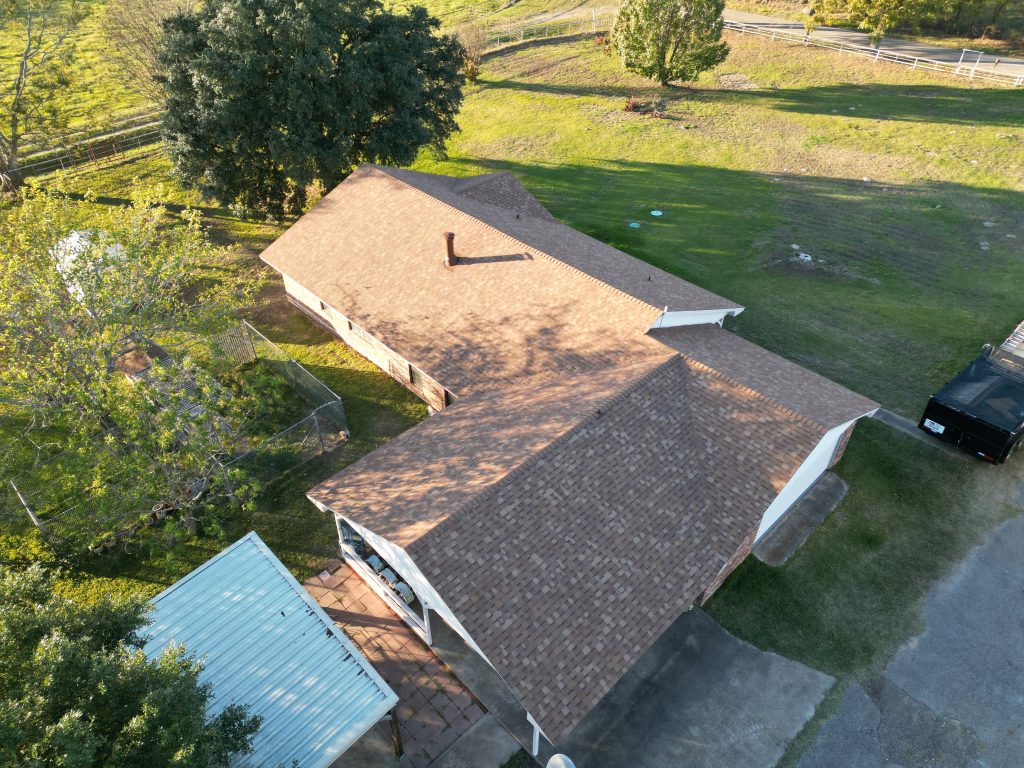
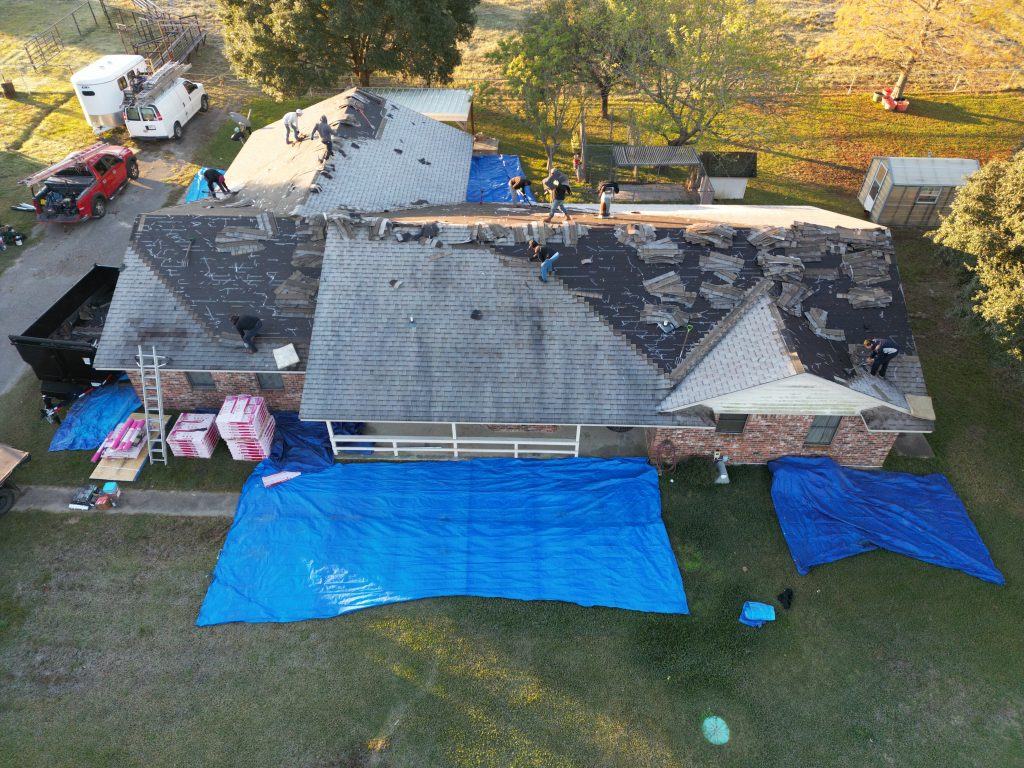
Roofs we have finished around Northeast Texas

Why Greenville property owners call us
If you are weighing up who to call in Greenville, these are the things that actually matter once the work is done and the invoice is paid.
Every one of those is verifiable before you commit to anything. Ask us for the certificate of insurance, read the reviews at the source rather than the ones we chose to reprint, and keep the written estimate somewhere safe once you have it.
Somebody local answers
Eliceo and Daniel handle the calls themselves. There is no call center between you and the people doing the work on your Greenville roof. That is how we have worked around Greenville from the start.
Scheduling in days
Greenville sits straight down I-30 from us, so getting a crew and a load of material there is a short run. Most weeks we can have somebody at a Greenville address within a few days, and an active leak moves to the front of the queue. It holds on every job we take in Hunt County.
A warranty that means something
Ten years on our workmanship, in writing, on top of whatever the manufacturer covers on the material itself. Two different things covering two different failures. The same on a Greenville repair as on a full replacement.
4.9 across 76 reviews
Published on Google and Facebook, unfiltered, and a good share of them from Hunt County. You can read every one of them at the source. No exceptions, on any Greenville address.
Towns near Greenville
Scheduling around Greenville normally takes in the towns below as well, which is why a nearby job seldom means a longer wait. Every one of them has a page of its own with the local detail.
Other roofing work in Greenville
The other jobs we handle at Greenville addresses. If what you need is not storm damage roof repair, it is almost certainly on this list, and each one has a page of its own.
We keep a page per job per town rather than one page for everything because the honest answers differ. Roof age, pitch, material and exposure all change what the right work is at a Greenville address, and a page written for the whole region cannot say anything useful about any of them.
Questions we get about storm damage roof repair in Greenville
Rarely, and neither can anybody else. Hail bruising and granule loss read clearly underfoot and barely at all from a driveway. That is why the inspection is done on the roof.
Soft metal around the property is the useful giveaway. Gutters, downspouts, vents and any metal outbuilding dent before shingle shows damage, so they indicate whether a Greenville property was in the hail footprint at all. If you want that answered for your own Greenville roof specifically, the inspection is free and we will put the answer in writing.
No. A storm-damaged roof can have loose material, broken decking and slippery debris on it, and the things worth finding are not visible to an untrained eye anyway. Check what you can from the ground, photograph it, and let somebody with fall protection do the rest. For a Greenville address we would rather look at the roof than answer it in general terms, and looking costs nothing.
Bring whatever documentation you have. A previous repair is part of the history rather than a problem, and where it was done well we will say so. What matters for a claim is a clear record of what the storm did. We are happy to go through this in more detail for a Greenville roof, either on the phone or when we are out there.
We speak to adjusters, meet them on the roof and provide documentation, and that is genuinely useful. What we cannot do is negotiate or settle on your behalf, because in Texas that is work reserved for a public insurance adjuster. The honest answer for any particular Greenville property depends on what is actually up there, which is what the free inspection establishes.
That is a question for your carrier or agent rather than for a roofer, and the honest answer varies by policy and by claim history. What we can tell you is what the damage actually is, so you are making that decision with real information. If it matters for a decision you are making about a Greenville property, ask us and we will give you the specific answer rather than the general one.
Get your free Storm Damage Roof Repair quote in Greenville
A few details is all we need to get a free inspection booked at your Greenville address. We will walk the roof, photograph what we find and put a price in writing, and none of that costs you anything.
Get Your Free Quote
Enter your details below and we will get back to you with a real number.
One call, and somebody is on the roof this week.
Fill out the form or pick up the phone. Either way you get straight answers about your Greenville roof, a written estimate for this kind of work on a Greenville roof you can keep, and no pressure to use us.