The short version
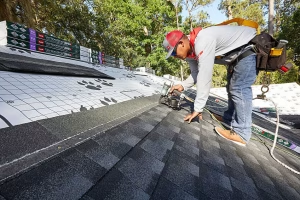
- A roof check is a full walk of the roof surface with photographs, not a look from the driveway.
- It covers the field, the flashing, the penetrations, the decking feel underfoot and the attic where accessible.
- Once a year is sensible in Northeast Texas, plus after any significant hail or wind event.
- The photographs matter as much as the verdict. They are your record of condition on a given date.
- For an insurance claim, an inspection is what connects visible damage to a dated storm.
- DJJ Roofing inspections are free and the photographs are yours whether you hire us or not.
A roof inspection is the single most useful thing a homeowner can do to protect their roof, catch problems early, and avoid expensive surprises. Whether you just weathered a hailstorm, you are buying or selling a home, or your roof is simply getting older, a professional roof check tells you exactly what condition your roof is in and what, if anything, it needs. This guide explains what happens during a roof evaluation, how often you should get one, and why it matters so much in the Northeast Texas climate.
What Is a Roof Inspection?
A roof assessment is a thorough, professional evaluation of your roof’s condition, inside and out. A qualified roofer examines the shingles or panels, the flashing, the valleys, the gutters, and the penetrations on the exterior, then checks the attic for ventilation, moisture, and signs of leaks. The goal is to identify damage, wear, and potential problems before they turn into leaks or structural issues, and to give you a clear, documented picture of where your roof stands.
What Happens During a Roof Inspection
A complete roof check usually covers several areas:
- Shingles or panels: checking for curling, cracking, missing pieces, hail bruising, and granule loss.
- Flashing and seals: inspecting chimneys, walls, valleys, and vents where leaks most often start.
- Gutters and drainage: looking for granule buildup and proper water flow.
- Decking and structure: checking for soft spots, sagging, or signs of rot.
- Attic interior: looking for stains, daylight, moisture, and adequate ventilation.
- Documentation: photographing any damage, which is essential if an insurance claim is involved.
At the end, you should receive a clear summary of the roof’s condition and an honest recommendation.
How Often Should You Get a Roof Inspection?
In Northeast Texas, a good rule is once a year, plus after any major hail or wind storm. The annual inspection catches normal wear before it becomes a leak, while the post-storm inspection catches hail and wind damage that is often invisible from the ground. Older roofs benefit from more frequent checks, and a roof evaluation is also smart before buying or selling a home so there are no surprises in the transaction.
Why Roof Inspections Matter More in Texas
The Texas climate is hard on roofs. Hail can bruise shingles and strip granules without leaving an obvious hole, intense summer heat dries out and cracks asphalt, and storms stress flashing and seals. A roof assessment finds this damage early, while it is still inexpensive to address. Skipping inspections is how small, fixable problems quietly become attic leaks, rotted decking, and ceiling damage that cost far more to repair.
Roof Inspections and Insurance Claims
After a storm, a documented roof check is the foundation of a successful insurance claim. Insurers want photos and a professional report that ties the damage to a specific event. A roof evaluation done soon after the storm gives you that evidence and tells you whether the damage is worth filing against your deductible. Learn more on our insurance claims page and our hail damage page.
What the Inspector Is Actually Looking For
Most of a roof inspection is spent on the surface, moving slowly across the field of shingles or panels and reading what the roof has been through. A roof in Northeast Texas takes hail, wind, and long stretches of heat, and each of those leaves a different mark.
- The field. Granule loss is the first thing to show. Asphalt shingles shed granules as they age, but sudden bare patches, especially in a scattered pattern, point at hail rather than wear.
- The sealing strips. Every shingle is glued to the one below it by a strip of adhesive. Heat, age, and wind all work against that bond, and an unsealed course lifts in the next storm.
- Penetrations. Plumbing stacks, furnace flues, exhaust vents, and satellite mounts are all holes cut in an otherwise continuous surface. Their boots and collars fail long before the shingles do.
- Valleys. Where two roof planes meet, all the water from both planes concentrates. Valleys carry more volume than any other part of the roof and wear accordingly.
- Edges and rakes. Wind gets its first grip at the edge. Drip edge, starter course, and the first three rows tell you how a roof will behave in the next high wind.
None of that is visible from the driveway, and very little of it is visible from a ladder at the eave. It is the reason a real inspection means walking the roof.
What Hail Damage Actually Looks Like
Hail rarely punches a hole. What it does is bruise, and a bruise is easy to walk past if you are not looking for it.
A hail strike crushes the granules into the asphalt mat and breaks the mat underneath. Pressed with a thumb, the spot gives slightly, like a bruise on fruit. That soft spot is the damage. The shingle is not leaking today, but the mat is broken, water now reaches the fiberglass, and the clock on that shingle has been shortened by years.
Because hail is hard to read on the shingle itself, an inspection also looks at the soft metals around the house, which dent at a lower threshold than a shingle bruises:
- Gutters and downspouts, especially the flat faces
- Furnace and plumbing vent caps
- The fins on the air conditioner condenser
- Window screens, mailboxes, and painted metal trim
If the soft metals are dented and the shingles look untouched, the shingles are usually worth a second, closer look. You can check whether a storm was formally recorded at your location through the NOAA Storm Events Database, which is the same record insurers and roofers refer back to.
What Wind Damage Looks Like
Wind damage reads differently. Instead of scattered bruising, you get a directional pattern, usually worst on the slope that faced the storm.
The classic sign is a crease: a horizontal line across a shingle where it was folded back by wind and then dropped again. From the ground the roof looks intact, because the shingle fell back into place. Up close the crease is permanent, and the shingle will tear along that line eventually.
The other sign is a shingle that simply lifts when you run a hand under it. Once the seal strip lets go, that shingle is loose for the rest of its life, and every storm afterwards works on it a little more. A roof inspection after a wind event is mostly a hunt for creases and unsealed courses.
What the Attic Tells You That the Roof Cannot
Half of a good inspection happens inside. The attic shows the roof from the other side, and it records history the surface has already hidden.
- Stains on the decking. A dark ring that is dry to the touch is an old leak that has stopped. A damp one is active. Both matter, for different reasons.
- Daylight. Any point of light through the decking is a hole, and it is worth tracing to the surface.
- Nail frost. In winter, exposed nail tips that collect frost show warm moist air is reaching the underside of the deck, which is a ventilation problem rather than a leak.
- Insulation. Flattened or discolored insulation usually sits under a spot that has been wet.
Ventilation is the part homeowners hear about least and pay for most. A roof that cannot breathe cooks its own shingles from underneath and shortens their life substantially. The National Roofing Contractors Association publishes the intake and exhaust guidance that most manufacturers write their warranties around.
What You Should Receive Afterwards
The verdict is worth less than the record. A roof inspection should leave you holding something, whether or not you hire the company that did it.
At minimum that means dated photographs of anything noted, taken close enough to be read by somebody who was not on the roof. It should also include a plain summary of what was found, where, and what it means for the roof’s remaining life. If work is recommended, the scope should be written down, set out, and specific enough to compare against another written estimate.
Keep the photographs even if nothing is wrong. A clean report from a known date is useful evidence later, because it establishes what the roof looked like before the next storm. That is the single most common thing homeowners wish they had.
Where an Inspection Ends and the Carrier Begins
A roofing contractor documents what is on the roof. The insurance carrier decides what is covered and what it will pay. Those are two separate jobs, and it is worth knowing which is which before a claim starts.
What a contractor can do is establish condition: this is the damage, here is where it is, here are the photographs, here is the date. What follows, the adjuster’s visit, the scope, and the settlement, is the carrier’s process. Negotiating or settling a claim on a homeowner’s behalf is work reserved for a public insurance adjuster, which is a separate role the state regulates. The Texas Department of Insurance publishes free guidance for homeowners on how that process runs.
Under Texas law the deductible is the homeowner’s share, and it is payable whoever does the work. Any figure discussed before the carrier has responded is an estimate of damage, not a promise of payment.
How to Get Ready for the Visit
An inspection goes faster and finds more when a few small things are taken care of beforehand.
- Clear access to the attic hatch, and move anything stored directly under it.
- Unlock side gates so the whole perimeter can be walked.
- Put pets inside, since ladders and gates tend to be left open for a while.
- Move vehicles clear of the eaves if the roof will be walked over a driveway.
- Dig out any paperwork from previous roof work, including the installation date if you have it.
Mention anything you have noticed yourself, even if it seems minor. A stain that appears only after a driving rain from one direction is a genuinely useful clue, and it is the sort of detail that is almost impossible to find in an hour on a dry day.
What Usually Turns Up on a Ten-Year-Old Roof Here
Most roofs in this part of Texas are asphalt shingle, and by year ten a predictable set of findings shows up.
Pipe boots are the most common. The rubber collar around a plumbing vent typically cracks between years eight and twelve, well before the shingles are finished, and it is a small repair that prevents a ceiling stain. Sealant at chimney and wall flashing is next, since caulk has a shorter life than the metal it seals. After that come lifted shingles along the windward rake, and granule accumulation in the gutters that tracks how far through its life the surface actually is.
None of those means a roof needs replacing. That is worth saying plainly, because the assumption that an inspection ends in a sales pitch is what stops people booking one. A roof with ten good years left and two bad pipe boots needs two pipe boots.
Metal Roofs Are Inspected Differently
A growing share of roofs around Hopkins and the surrounding counties are metal, and the checklist changes with the material. Metal does not bruise the way asphalt does, so an inspection is looking at fasteners and movement instead of granules.
- Exposed fasteners. On corrugated and R-panel roofs, every screw carries a rubber washer. Those washers harden and shrink with age, and screws back out slightly as the panel expands and contracts through the seasons. Each one is a potential leak path.
- Seams and laps. Where panels overlap, sealant does the work. It is checked for gaps, splits, and separation.
- Standing seam clips. A standing seam roof hides its fasteners under the seam, so hail on it is usually cosmetic rather than a leak path, because nothing penetrates the weather surface. The inspection focuses on the seams themselves and on movement at the eave.
- Trim and closures. Ridge caps, rake trim, and foam closures at the eave are where wind and pests get in.
A dented metal panel is not automatically a failed panel. Whether a dent matters depends on where it sits and whether it holds water, which is exactly the judgment a walk on the roof is for.
Buying or Selling a House
A roof is one of the few things in a home inspection that can move a price by five figures, and it is usually assessed by a general inspector rather than a roofer.
A general home inspection covers the whole property, and the roof portion is often a visual check from a ladder or from the ground. That is reasonable for its purpose, but it does not find hail bruising, and it rarely includes the attic in detail. If a roof is more than eight years old or the house sits in a county that has taken hail recently, a separate roof inspection gives you something the general report cannot.
For a seller, a dated report with photographs is a negotiating document. It answers the buyer’s roof question before it is asked, and it removes the guesswork that tends to become a price reduction. For a buyer, it tells you whether you are inheriting a roof with ten years left or a claim that somebody chose not to file.
What an Annual Check Actually Saves
The economics are simple, and they are the reason the inspection is free.
A cracked pipe boot costs very little to replace while it is only a cracked pipe boot. Left alone, it drips into the decking, the decking softens, the ceiling stains, and the repair now includes decking, insulation, paint, and sometimes drywall. The roofing part of that bill barely changed. Everything around it did.
The same pattern applies to a lifted shingle at the rake, a failed length of sealant at a chimney, and a gutter that has stopped draining. None of them is urgent on the day it is found. All of them get considerably more expensive once water has been moving through the assembly for a season or two.
The other saving is on the claim side. Damage that is documented soon after the storm that caused it is straightforward to tie to a date. The same damage found three years later, after two more storm seasons have passed over it, is a much harder conversation with a carrier, and it is the most common reason a legitimate claim becomes complicated.
How Long It Takes and What Happens on Inspection Day
A standard roof inspection on a single-story house takes about an hour. A larger or steeper roof, or one with several dormers and valleys, can take closer to ninety minutes. It is not a ten-minute visit, and it should not feel like one.
The order is usually the same. A walk around the perimeter first, looking at the roof from each side and checking the soft metals and the gutters. Then the ladder goes up and the surface is walked plane by plane, with photographs taken as things are found rather than afterwards from memory. The attic comes last, because by then the inspector knows which part of the roof to look under.
You do not need to be on the roof, and you do not need to follow along. What is worth doing is being there at the end, when the photographs are gone through with you. That is the part where a stain in an upstairs corner turns out to match a cracked boot on the back slope, and the whole thing makes sense.
If the weather turns, the inspection is rescheduled. A wet roof is unsafe to walk and it hides the things worth finding, so there is nothing gained by pushing through it.
Free Roof Inspections from DJJ Roofing
DJJ Roofing provides free, no-obligation roof assessments across Northeast Texas. We give you an honest assessment with photos, and if your roof only needs minor work or nothing at all, we will tell you. Serving the area since 2018, we are fully insured, a BBB Accredited Business, Google Guaranteed, and an Owens Corning Preferred Contractor, with a 4.9 star rating across 76 Google reviews. Whether you need a routine check, a post-storm inspection, or a pre-sale evaluation, schedule it on our roof check page, and if work is needed see our roof repair and roof replacement options. Or call (903) 217-5431.
Frequently Asked Questions
How much does a roof inspection cost?
Many roofing contractors, including DJJ Roofing, offer free roof evaluations. Specialized inspections for real estate or detailed engineering reports may carry a fee, but a standard contractor inspection is typically free.
How often should I get a roof inspection?
Once a year is a good baseline in Northeast Texas, plus an inspection after any major hail or wind storm. Older roofs and pre-sale situations call for more frequent checks.
What does a roof inspection include?
It includes checking shingles, flashing, valleys, gutters, and penetrations on the exterior, plus the attic for moisture, ventilation, and leaks, with photo documentation of any damage.
Do I need a roof inspection after a hailstorm?
Yes. Hail damage is often invisible from the ground, and a prompt inspection catches it while it is still tied to the storm, which matters for both your roof and any insurance claim.
Can a roof inspection help with my insurance claim?
Yes. A documented inspection with photos is exactly the evidence insurers require to approve a storm damage claim.
When was your roof last checked? Get a free, no-obligation roof assessment from DJJ Roofing. Call (903) 217-5431 or contact us.