The short version
- Architectural shingles are multi-layer and heavier; 3-tab is a single flat layer.
- Wind ratings differ substantially, and that gap matters in Northeast Texas.
- Expect roughly 25 to 30 years from architectural against 15 to 20 from 3-tab in this climate.
- 3-tab costs less up front. Over a full roof life the cost per year usually favors architectural.
- Architectural gives a dimensional shadow line; 3-tab reads flat and uniform.
- Installation quality affects the outcome more than the shingle line you pick.
Choosing between architectural vs 3-tab shingles is one of the first decisions homeowners face when replacing a roof, and it affects how your roof looks, how long it lasts, and how well it holds up to Texas weather. Both are asphalt shingles, but they are built differently and perform differently. This guide breaks down architectural vs 3-tab shingles so you can pick the right one for your home and budget.
What Is the Difference Between Architectural and 3-Tab Shingles?
3-tab shingles are the older, flat, single-layer style with cutouts that create three uniform tabs, giving a flat, repetitive look. Architectural shingles, also called dimensional or laminate shingles, are built from multiple layers laminated together, which gives them a thicker, textured, more dimensional appearance and more strength. The core difference in architectural vs 3-tab shingles comes down to construction: more material and layering in architectural shingles means more durability and a longer life.
Durability and Wind Resistance
This is where architectural shingles pull ahead. Their thicker, layered build resists wind better, typically rated for higher wind speeds than 3-tab, which matters during Texas storm season. They also handle the heat and impact stress of this climate better. 3-tab shingles are lighter and thinner, which makes them more vulnerable to wind lift and cracking over time. For a region that sees high winds and hail, the extra toughness of architectural shingles is a real advantage.
Lifespan
3-tab shingles generally last about 15 to 20 years, while architectural shingles last roughly 22 to 30 years with proper installation and maintenance. In the harsh Northeast Texas climate, that gap matters, because a few extra years of life can mean the difference between one roof and needing a second sooner than you planned. When you compare architectural vs 3-tab shingles over the long run, architectural usually wins on cost per year despite the higher upfront price.
Appearance
Architectural shingles have a richer, dimensional look that many homeowners prefer, and they can mimic the appearance of wood shake or slate. 3-tab shingles have a flat, uniform look that is perfectly fine but less upscale. For curb appeal and resale value, architectural shingles are the stronger choice, which is part of why they have become the default for most replacements.
Cost: Architectural vs. 3-Tab Shingles
3-tab shingles cost less upfront, which is their main advantage, and they can make sense for a tight budget or a rental property. Architectural shingles cost modestly more, but the gap is often smaller than homeowners expect, and the added lifespan and wind resistance usually justify it. On an average Northeast Texas home, a 3-tab roof might run $6,000 to $10,000 while an architectural roof runs $8,000 to $14,000. Given the durability difference, most homeowners find architectural the better value.
Which Should You Choose?
For most Northeast Texas homes, architectural shingles are the better pick because they last longer, resist wind and hail better, and look nicer, all for a modest price increase. 3-tab shingles still make sense when budget is the top priority or for a property you do not plan to keep long. If you want the strongest hail protection, ask about Class 4 impact-resistant architectural shingles, which add hail resistance and a possible insurance discount. Compare full options on our roof replacement page, or for a longer-lasting alternative see our metal roofing page.
How Architectural Shingles Are Built
The difference starts in the factory. A 3-tab shingle is a single layer of fiberglass mat coated in asphalt and surfaced with granules, cut with two slots so it reads as three tabs once installed.
Architectural shingles are laminated. A second layer of material is fused to the first in an irregular pattern, so the finished shingle has varying thickness across its face. That lamination is the whole difference, and nearly every practical advantage follows from it.
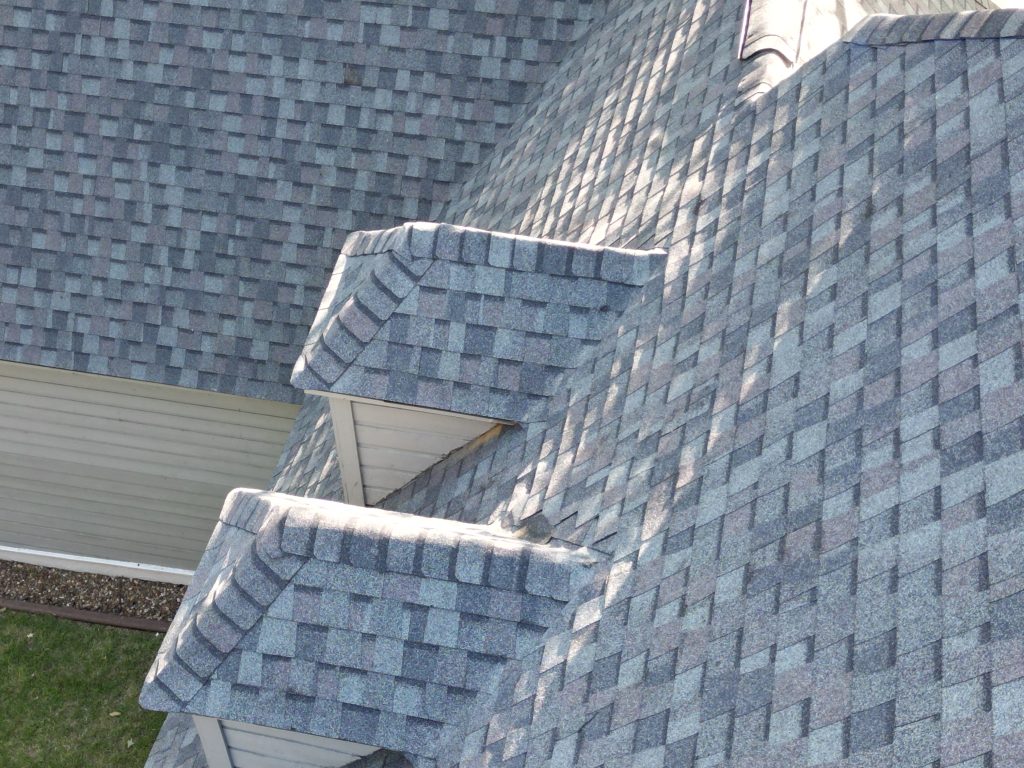
The extra layer adds mass, which resists wind lift. It adds thickness, which resists impact. And it creates shadow lines across the roof, which is what gives architectural shingles their dimensional appearance rather than the flat, uniform look of a 3-tab field.
Weight, and Why It Matters
A square of 3-tab shingles, meaning enough to cover a hundred square feet, weighs somewhere around 200 to 240 pounds. The same square in architectural shingles typically runs 300 to 400 pounds, and premium lines go higher.
That weight is not a drawback. On a roof it translates directly into wind performance, because a heavier shingle is harder to lift and the laminated layer gives the sealant strip more to hold.
It does mean the structure has to carry it, which is rarely an issue on a standard framed roof but is worth confirming on an older structure or where layers are being added rather than torn off. That check is part of any inspection before a replacement.
Wind Ratings, in Plain Terms
Shingles carry a wind rating from testing, and the numbers are easy to misread.
Most 3-tab products are rated to 60 miles per hour. Most architectural shingles are rated to 110 or 130 miles per hour. Those are laboratory figures achieved under specified installation conditions, not a promise about any given storm.
The condition that matters most is the sealant strip. Shingles bond to each other with an adhesive strip that softens in the sun and cures into a seal. Until that happens, the rating does not apply. A roof installed in cold weather can take weeks to seal, which is why late-season installations get more attention to fastening.
- Nail placement has to land in the manufacturer’s specified zone.
- Nail count rises for high-wind installation, typically from four to six per shingle.
- Starter course at eaves and rakes is what stops wind getting under the first row.
- Sealant activation needs warmth and time.
How the Two Look on a Real Roofline
Appearance is subjective, but the way each behaves on a particular roof is not.
A 3-tab field is uniform and flat. On a simple gable with a long unbroken plane, that reads as clean and orderly, and on some older houses it is the historically correct look.
Architectural shingles create shadow and variation, which flatters a complicated roofline. On a house with dormers, valleys and changes of direction, the dimensional pattern breaks up the surface and hides the slight irregularities that a flat field would emphasize.
The other practical difference is that architectural shingles hide minor deck imperfections. A 3-tab roof telegraphs every high spot and seam beneath it, because the flat surface has nothing to disguise them.
Impact-Resistant Versions
Most manufacturers offer an impact-rated line, and it is nearly always built on an architectural shingle rather than a 3-tab.
These carry a UL 2218 Class 4 rating, achieved by adding a polymer-modified layer that absorbs impact instead of fracturing. In a hail region that matters, and many Texas insurers offer a premium reduction for a Class 4 roof. The discount varies by carrier, so it is worth asking yours directly rather than assuming a figure.
The point for this comparison is that choosing architectural shingles is what opens that option at all. It is not available in the 3-tab category, so a 3-tab roof forecloses it.
Installation Differences That Affect the Price
Labor is not identical between the two, and it is worth understanding where the difference sits.
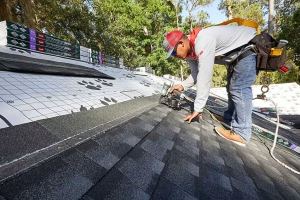
Architectural shingles are heavier to carry up and slightly slower to set, because the exposure and alignment matter more visually. They also use a purpose-made starter strip and matching hip and ridge caps, where a 3-tab roof is often capped by cutting field shingles into three pieces.
Against that, a 3-tab roof requires more care over deck preparation, because the flat surface shows everything underneath. The net labor difference is smaller than people expect; most of the price gap between the two is material.
Resale, Appraisal and Buyer Perception
A roof is one of the first things a buyer’s inspector reports on, and one of the largest single items in a negotiation.
Architectural shingles read as current. A recently installed dimensional roof with documentation tends to close the roof question quickly. A 3-tab roof, fairly or not, reads to many buyers and agents as the economy choice, and on a house of any size that perception can open a conversation you would rather not have.
The lifespan difference compounds it. A ten-year-old architectural roof has most of its life ahead. A ten-year-old 3-tab roof is well into the second half of its.
When 3-Tab Still Makes Sense
There are honest cases for it, and pretending otherwise would be selling rather than advising.
- A detached garage, shed or outbuilding where appearance and resale are not factors.
- A rental being turned quickly on a defined budget, where the owner understands the tradeoff.
- Matching an existing roof where only one section is being redone and the rest is 3-tab.
- A period-correct restoration where the flat profile is the point.
- A property being sold as-is where the goal is a sound roof rather than an investment.
Outside those situations, the gap in cost between the two is usually smaller than the gap in service life, which is why architectural shingles have become the default on almost every residential roof we install.
Warranty in Practice
Both categories carry a manufacturer material warranty, and both are longer on paper than most homeowners will ever use.
What differs is the enhanced coverage. Manufacturers reserve their upgraded warranty programs for complete systems, meaning the shingle plus the matching underlayment, starter, ventilation and ridge cap, installed by a contractor in their program. Those systems are built around architectural shingles.
The other detail worth knowing is that a material warranty covers manufacturing defects, not storm damage and not installation error. Storm damage is an insurance matter and installation is the contractor’s. Reading a long warranty as broad protection is the most common misunderstanding we encounter.
Ventilation Applies to Both
Whichever you choose, the attic beneath decides how long it lasts, and this gets overlooked in a discussion about shingles.
Heat trapped under a roof deck ages asphalt from below, and it does that to architectural shingles and 3-tabs alike. Manufacturers require adequate ventilation as a warranty condition for exactly that reason.
If the soffit intake is blocked by insulation, which is extremely common, a new roof of either type will age faster than it should. Correcting it during the replacement costs very little; going back afterward is a separate job. The National Roofing Contractors Association publishes design guidance for anyone wanting the technical detail.
What We Install, and Why
We install architectural shingles on the large majority of residential roofs in this area, and the reasoning is specific to Northeast Texas rather than a general preference.
This region gets hail and it gets wind. A laminated shingle handles both better than a single-layer product, and it makes a Class 4 upgrade available where a homeowner wants it. Over a roof’s life, the difference in service years usually outweighs the difference in price per square.
That said, the right answer depends on the building and the plan for it. A shop roof and a family home are not the same decision. If you are weighing a roof replacement, we will walk the roof, measure it, and give you both figures in writing so the comparison is yours to make.
Owens Corning publishes full specifications for its shingle lines at owenscorning.com, and we are a Preferred Contractor for their products. If you would rather start with a look at the existing roof, our roof inspections are free.
Lifespan in This Climate, Not on the Package
Published lifespans assume moderate weather. Northeast Texas is not moderate, and the honest figures here are shorter than the packaging suggests.
In practice a 3-tab roof in this region tends to give 12 to 18 years before it needs replacing, and architectural shingles tend to give 20 to 28. Both ranges shift with attic ventilation, roof color, shade, pitch, and how many hail events pass through.
The variable people underestimate is hail. A single significant event can take years off either product, and it does so invisibly by bruising the mat rather than breaking the surface. The thicker laminated construction of architectural shingles absorbs more of that impact, which is the main reason the gap between the two widens in a hail region rather than narrowing.
Color, Heat and Granules
Granules are not decoration. They are the layer that takes the ultraviolet and the impact, and the asphalt underneath begins aging the moment they are gone.
Lighter colors reflect more solar energy and run cooler, which slows that aging and takes some load off the attic in summer. Darker colors absorb more and look excellent on many houses, which is a legitimate trade to make knowingly.
Architectural shingles typically carry more granule coverage per square foot simply because there is more surface and more material. That is part of why they weather more slowly, and it is why granule loss in the gutters is such a reliable early indicator on any asphalt roof.
What Goes Underneath Matters Too
A shingle is the visible layer of a system, and choosing between architectural shingles and 3-tabs settles only that layer.
- Decking has to be sound. Soft sheathing will not hold a nail regardless of what sits on top.
- Underlayment is the secondary water barrier. Synthetic outperforms felt and is now standard on our installations.
- Ice and water membrane in valleys and around penetrations is where most leaks would otherwise begin.
- Drip edge at eaves and rakes directs water into the gutter instead of behind it.
- Starter strip is what resists wind uplift at the perimeter.
- Ridge and hip caps matched to the field shingle.
A premium shingle over poor underlayment is a worse roof than a modest shingle over a well-built system. When comparing written estimates, that list is where the real differences hide, and it is why a written quote is worth more than a single number.
Questions Worth Asking Before You Decide
The comparison gets much simpler once a few specifics about your own house are on the table.
- How long do you plan to stay? A five-year horizon and a twenty-year horizon point different directions.
- What does your insurer offer for Class 4? That answer can close the price gap on its own.
- How complicated is the roofline? Dimensional shingles flatter complexity; flat fields expose it.
- What is the attic ventilation like? It affects how long either choice lasts.
- Is this the main house or an outbuilding? The right answer genuinely differs.
None of those require a salesperson to answer. They require someone to look at the roof and tell you what they found, which is what an inspection is for.
A Note on Mixing the Two
Occasionally a house ends up with both, usually because an addition was roofed separately or one slope was replaced after damage.
It works structurally, but the transition is visible from the street because the shadow line stops where the architectural shingles do. If the sections meet on the same plane it reads as a patch; if they are on separate planes divided by a ridge or a wall, most people never notice.
Where a match matters, it is worth knowing that granule colors drift between production runs even within the same product. A replacement section rarely matches a weathered roof exactly, whichever type is used.
Why Homeowners Choose DJJ Roofing
DJJ Roofing installs both architectural and 3-tab shingle systems as an Owens Corning Preferred Contractor, and we help you choose the right option for your home, climate, and budget without upselling. Serving Northeast Texas since 2015, we are fully insured, BBB Accredited, and Google Guaranteed, with a 4.9 star rating across 76 Google reviews. Based at 124 Como St S in Sulphur Springs, we cover Hopkins County and beyond. For a free estimate, call (903) 217-5431 or schedule a roof inspection.
Why Installation Matters More Than the Shingle
Whichever shingle you choose, the quality of the installation has a bigger effect on how long the roof lasts than the brand name on the package. Correct nailing, sealed valleys, proper flashing, a full underlayment, and good attic ventilation are what let any shingle reach its rated lifespan. A premium architectural shingle installed poorly can fail years early, while a properly installed roof reaches its full life. This is why choosing an experienced, Owens Corning Preferred Contractor matters as much as the architectural vs 3-tab shingles decision itself.
Warranty Differences Between Architectural and 3-Tab
Architectural shingles generally carry longer manufacturer warranties than 3-tab, reflecting their heavier construction and longer expected life. Many architectural lines offer limited lifetime warranties when installed by a certified contractor, while 3-tab warranties are typically shorter. Keep in mind that most warranties require professional installation and adequate ventilation to remain valid, and the strongest warranty tiers are usually only available through manufacturer-certified contractors. That extra coverage is one more reason most Northeast Texas homeowners lean toward architectural shingles when they compare the two.
Frequently Asked Questions
What is the difference between architectural and 3-tab shingles?
3-tab shingles are flat, single-layer shingles with a uniform look, while architectural shingles are multi-layer, thicker, and more dimensional, giving them more durability, better wind resistance, and a richer appearance.
Are architectural shingles worth the extra cost?
For most homeowners yes, because they last 22 to 30 years versus 15 to 20 for 3-tab, resist wind and hail better, and improve curb appeal, all for a modest price increase.
Which lasts longer, architectural or 3-tab?
Architectural shingles last longer, typically 22 to 30 years compared to 15 to 20 years for 3-tab, especially important in the harsh Texas climate.
Are 3-tab shingles ever the better choice?
3-tab shingles can make sense when upfront budget is the top priority or for a rental or property you do not plan to keep long, since they cost less to install.
Can I get architectural shingles that resist hail?
Yes. Class 4 impact-resistant architectural shingles add strong hail resistance and may qualify for a Texas insurance discount, which is a popular choice in this hail-prone region.
Not sure which shingle is right for your roof? DJJ Roofing will walk you through the options and give you a free estimate. Call (903) 217-5431 or contact us.