DJJ ROOFING

April 2026 Hail Storm Damage in Northeast Texas — Check Your Roof Now

The April 2026 hail storm damage in Northeast Texas is now confirmed across Hopkins, Hunt, Rains, and Delta Counties. The April 2026 severe weather events reached dangerous levels across Northeast Texas — marble-to-baseball-sized hail, wind gusts exceeding 70 mph, and tornado watches covering Hopkins, Hunt, Rains, Delta, Lamar, and Rockwall Counties. Communities from Sulphur Springs and Emory to Greenville, Mount Pleasant, Commerce, and Canton were directly in the path.

If you have not had your roof inspected since these storms, now is the time. Hail storm damage is not always visible from the ground — and waiting too long to file an insurance claim can leave you paying out of pocket for repairs that should be fully covered.

April 2026 Hail Storm Damage in Northeast Texas

When you’re evaluating hail storm damage in northeast texas, the details in this section matter most.

The storm system moved through the region in two rounds. The first wave on April 19 brought marble-sized hail across multiple East Texas counties, with homeowners reporting damage to roofs, vehicles, and fences across the area. A second and more severe event followed on April 22, producing very large hail and triggering a tornado watch specifically covering Hopkins, Hunt, Rains, and Delta Counties — the heart of DJJ Roofing’s service area.

Rains County, where Emory is located, took a direct hit during the second event. Hopkins County — including Sulphur Springs — experienced back-to-back storm impacts within the same week. That kind of repeated stress on a roof system compounds damage in ways that a single event does not. A shingle weakened by the first storm can fail entirely under the second.

What Hail Damage Looks Like on a Northeast Texas Roof

Here’s what every Northeast Texas homeowner should know about hail storm damage in northeast texas.

Most homeowners look from the ground after a storm and see nothing obvious. That is not a sign your roof is fine — it is a sign you need a trained eye on a ladder. Here is what hail damage actually looks like on an asphalt shingle roof:

  • Granule loss — Hail knocks the protective granule coating off shingles, leaving dark circular spots or bald patches. Check your gutters — granule buildup after a storm is one of the most reliable indicators of shingle impact.
  • Dents on metal components — Gutters, downspouts, flashing, ridge caps, and metal vents all show hail dents clearly. If your gutters are dented, your shingles absorbed the same impact.
  • Bruised or cracked shingles — On older shingles, hail impact causes a soft, bruised feel or visible cracking. The structural integrity is compromised even if the shingle has not yet let water through.
  • Damaged seals at penetrations — Skylights, plumbing vents, chimney flashing, and ridge caps are the highest-risk leak points after storm impact and are commonly overlooked in a casual visual check.
  • Lifted or missing shingles — Wind gusts weaken the adhesive seal strips on shingles. A shingle that survived the storm may lift and fail on the next moderate rain.
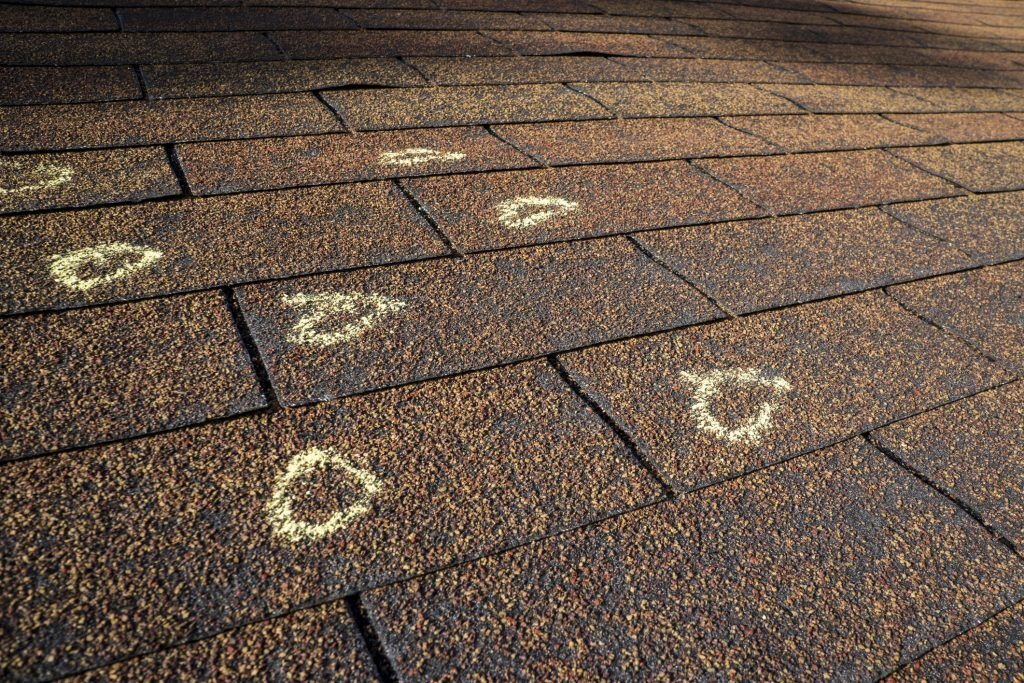
How to identify hail storm damage in Northeast Texas on residential roof shingles

Why You Should Not Wait on the Insurance Claim

Our team at DJJ Roofing breaks down hail storm damage in northeast texas for you below.

Most Texas homeowners insurance policies allow storm damage claims within one to three years of the event. In practice, waiting hurts you. The longer the gap between the storm and the inspection, the easier it is for an insurance adjuster to attribute damage to normal wear and tear rather than the storm event — even when the storm clearly caused it.

Getting a professional inspection while the April 2026 storm is recent and well-documented by the National Weather Service gives you the strongest possible foundation for a claim. DJJ Roofing documents every inspection with photos, measurements, and a written assessment — exactly what your adjuster will ask for.

Storm Chasers Are Already in Northeast Texas — Know the Warning Signs

If you’re still researching hail storm damage in northeast texas, this part answers the basics.

Within days of any significant storm, out-of-area roofing contractors follow the damage trail. They work door-to-door, offer a free inspection, and pressure homeowners to sign paperwork — sometimes an assignment of benefits — before any scope of work is agreed on. Once the insurance payout is secured, workmanship and accountability disappear with them.

This pattern repeats across Texas after every major hail event, and Northeast Texas homeowners have been warned about it repeatedly by local consumer advocates. The advice is consistent: do not sign anything at the door, do not allow an unknown contractor on your roof, and verify that any roofer you hire has a local address, a verifiable history in your community, and proper insurance.

DJJ Roofing has been headquartered in Sulphur Springs since 2015. We are not chasing this storm. We were here before it and will be here long after every claim is settled.

What to Do Right Now

Choosing hail storm damage in northeast texas starts with the points covered in this section.

  • Do a safe ground-level walk-around — Check gutters for granule buildup, look for obvious missing or lifted shingles, inspect any skylights or vents you can see from ground level.
  • Document what you find — Take photos with your phone, including the date stamp. Check your gutters for granule accumulation and photograph that too.
  • Call your insurance company to open a claim — You do not need a contractor’s assessment first. Open the claim now to establish the date of report. The Texas Department of Insurance advises filing promptly — the longer you wait, the easier it is for adjusters to attribute damage to wear and tear rather than the storm.
  • Schedule a professional roof inspection — Before your insurance adjuster arrives, have an independent contractor inspect so you know what to expect and can advocate for your claim.
  • Do not sign anything from a door-to-door contractor — Get a written estimate, check references, and verify local standing before committing to any roofer.

Free Roof Inspections — Hopkins, Rains, Hunt, Delta, and Surrounding Counties

This is what sets reliable hail storm damage in northeast texas work apart from the rest.

DJJ Roofing is scheduling free post-storm roof inspections for homeowners affected by the April 2026 storm events throughout Northeast Texas. We are fully insured, an Owens Corning Preferred Contractor, and have completed hundreds of storm damage assessments across the region since 2015.

We serve Sulphur Springs, Emory, Greenville, Mount Pleasant, Commerce, Winnsboro, Canton, Rockwall, Caddo Mills, Princeton, and all surrounding communities in Hopkins, Hunt, Rains, Delta, Franklin, and Wood Counties.

Call (903) 217-5431 or visit our Contact Us page to schedule your free inspection. If your neighbors are calling — there is a reason. Hail does not skip houses.

Key Takeaways: Hail Storm Damage In Northeast Texas

  • A reliable hail storm damage in northeast texas should always be fully insured before stepping on your roof.
  • Look for hail storm damage in northeast texas with manufacturer certifications like Owens Corning Preferred.
  • The right hail storm damage in northeast texas explains scope, materials, and pricing in writing — never verbally only.
  • A hail storm damage in northeast texas with local Northeast Texas roots understands hail, wind, and humidity patterns.
  • Ask any hail storm damage in northeast texas for proof of insurance and recent local references before signing.
  • Trustworthy hail storm damage in northeast texas work comes with a written manufacturer warranty.
  • DJJ Roofing is the hail storm damage in northeast texas Northeast Texas homeowners trust since 2015.
  • Confirm that your hail storm damage in northeast texas has Google Guaranteed status before agreeing to work.
  • Strong hail storm damage in northeast texas work begins with a thorough, no-cost roof inspection.
  • A hail storm damage in northeast texas should always provide a written estimate before any tear-off begins.

Frequently Asked Questions — Hail Storm Damage in Northeast Texas

When it comes to hail storm damage in northeast texas, taking the right approach saves money long-term.

How do I know if my roof has hail damage?

Homeowners asking about hail storm damage in northeast texas often miss the simple steps that follow.

The most reliable signs are granule loss in your gutters, soft bruised spots on shingles when pressed, and visible dents on metal components like gutters, downspouts, and flashing. Because many of these signs are only visible up close, a professional inspection is the only way to get a definitive answer. DJJ Roofing offers free post-storm inspections across Northeast Texas — no obligation.

How long do I have to file a claim after hail storm damage in Northeast Texas?

The reality of hail storm damage in northeast texas is straightforward once you know what to look for.

Most Texas homeowners insurance policies allow you to file a claim within one to three years of the storm event. However, filing sooner is always better — the longer you wait, the more likely an adjuster will attribute damage to normal wear and tear rather than the storm. For the April 2026 events, file now while National Weather Service documentation and storm reports are current and readily available.

Will insurance cover a full roof replacement or just repairs?

Working with hail storm damage in northeast texas should always feel transparent — never rushed.

It depends on your policy and the extent of the damage. If hail has caused widespread granule loss across multiple roof sections, most policies will cover full replacement rather than patchwork repairs — because a partially replaced roof creates matching and warranty issues. An independent contractor inspection before your adjuster visit ensures you have documentation to support the full scope of damage rather than accepting a minimum settlement.

Why choose a local roofer over a storm chaser after hail damage?

Most questions about hail storm damage in northeast texas come down to the points laid out here.

Storm chasers follow the damage trail across multiple states. They are not invested in Northeast Texas — they are invested in capturing your insurance payout before moving to the next storm market. A local contractor like DJJ Roofing has a permanent address, a verifiable history with local homeowners, and warranty obligations that actually mean something. If there is a problem six months after installation, we are still here.

Documenting Hail Storm Damage in Northeast Texas for Your Insurance Claim

A good guide to hail storm damage in northeast texas makes the next decisions easier for you.

If your property sustained hail storm damage in Northeast Texas during the April 2026 event, thorough documentation is what separates a fully-paid claim from an underpaid one.

Start from the ground before anyone goes on the roof. Photograph any visible impact marks on your vehicle, HVAC condenser unit, window screens, and gutters — these establish that hail struck your property and provide size reference for the adjuster. Hail that dents an HVAC coil or punches through a window screen is the same hail that bruised your shingles.

Call DJJ Roofing at (903) 217-5431 for a certified inspection. We photograph all impact points following insurance industry documentation standards, measure hail strike density per 10 square feet — the metric adjusters use to determine scope — and provide a written inspection report you can submit directly with your claim. Homeowners with a professional inspection report in hand before their adjuster visit consistently receive more complete settlements than those who file without one.

Act promptly: Texas homeowner policies require storm damage claims to be filed within a reasonable window after the event, and insurance companies scrutinize claims filed months after a storm more closely. Filing within 30 to 60 days of the April 2026 event gives you the cleanest path to full coverage. DJJ Roofing serves all of Hopkins, Hunt, Delta, Franklin, and Wood Counties — inspections within our service area carry no travel charge. If your home or business was hit by hail storm damage in Northeast Texas this spring, call us before filing your claim.

Types of Roof Damage Caused by Hail in Northeast Texas

When you’re evaluating hail storm damage in northeast texas, the details in this section matter most.

Not all hail damage looks the same, and not all damage is immediately obvious. Understanding the different categories of impact helps homeowners know what to document and what to discuss with their roofing professional during a post-storm assessment.

  • Granule loss — the most common result of hail impact on asphalt shingles. Granules protect the asphalt mat from UV degradation. After a significant hail event, impact sites lose granule clusters, accelerating aging and reducing water-shedding performance at those points. Granule loss is typically visible in gutters as a concentration of dark, sand-like material after a storm.
  • Shingle bruising — hail impact compresses the asphalt mat and fiberglass reinforcement beneath the granule surface without cracking the shingle. The bruised area becomes a soft spot — detectable only by pressing on the shingle — and fails at a much faster rate than undamaged areas. Bruising is the most commonly overlooked damage type because it leaves no visible external sign from the ground.
  • Tab cracks and splits — larger hailstones, particularly half-dollar size and above, can crack or split shingle tabs at impact points. These are visible up close and represent immediate water entry risks.
  • Ridge cap damage — ridge caps are exposed to hail at a perpendicular angle, making them particularly susceptible. Displaced or cracked ridge caps are a key indicator for insurance adjusters because they are easy to photograph and clearly correlated with impact events.
  • Metal component denting — gutters, vent caps, flashing, and HVAC equipment show visible denting from hail impact and serve as corroborating evidence for the severity and coverage of a storm event.

Repair vs. Full Replacement After Hail Storm Damage

Here’s what every Northeast Texas homeowner should know about hail storm damage in northeast texas.

One of the most common questions homeowners face after a significant hail event is whether their roof needs targeted repairs or a full replacement. The answer depends on the extent of damage, the age and condition of the existing roof, and the specific coverage terms of your homeowner’s policy.

Targeted repair is appropriate when damage is isolated to a small area — a few cracked tabs, a section of lifted ridge cap, or failed flashing — and the remainder of the roof is in sound condition with meaningful life remaining. In this scenario, addressing the specific damage points restores the roof’s performance without the cost of a full replacement.

Full replacement is typically the right choice when:

  • Damage affects more than 25–30% of the total roof surface
  • The existing shingles are within 3–5 years of end of expected life (20–25 years for standard architectural grades)
  • Multiple previous repair areas exist — continued patching on an aging roof shifts problems rather than solving them
  • The insurance carrier’s damage assessment supports replacement — if an adjuster has already determined the damage warrants replacement, it is rarely in the homeowner’s interest to negotiate down to a repair

DJJ Roofing will give you an honest assessment of whether repair or replacement makes more sense for your specific situation. We are not incentivized to push replacement over repair — our goal is to give you the option that delivers the best long-term value for your property.

Serving All of Northeast Texas After Storm Events

Our team at DJJ Roofing breaks down hail storm damage in northeast texas for you below.

DJJ Roofing serves the full Northeast Texas region — Hopkins, Hunt, Delta, Franklin, and Wood Counties — for all storm damage repair and replacement needs. Our team is based in Sulphur Springs and has been operating continuously in this region since 2015. We understand Northeast Texas storm patterns, how local insurance carriers handle hail claims, and which repair approaches hold up best in this specific climate.

Storm response times matter. DJJ Roofing prioritizes post-storm assessments within 24 to 48 hours of a request, with same-day response available for active leaks and situations with exposed decking. All storm damage inspections are provided at no charge, and we prepare written documentation for insurance submission as part of every inspection — at no additional fee.

Call (903) 217-5431 or use our contact form to schedule your post-storm inspection. The sooner you document the damage, the stronger your insurance position.

Hail and Wind Resistance Ratings — What the Numbers Mean

If you’re still researching hail storm damage in northeast texas, this part answers the basics.

When choosing roofing materials in Northeast Texas, two ratings deserve particular attention: the wind rating and the impact rating. Both are determined by industry-standard tests, but the certifications behind them are different.

Wind ratings are listed on most architectural shingles as a maximum wind speed the product is warrantied against. Common ratings include 110 mph, 130 mph, and 150 mph. The test methodology subjects samples to controlled wind tunnel conditions and measures the speed at which tabs lift or shingles separate from the deck. For Northeast Texas, 130 mph is the recommended minimum given the wind speeds typical in the region during severe weather. Choosing 110 mph shingles to save a few dollars per square is false economy when storm-season wind speeds routinely exceed 75 mph and gust well above that.

Impact ratings are based on UL 2218, which uses a steel ball drop test to simulate hail impact. The ratings are Class 1 through Class 4, with Class 4 representing the highest level of impact resistance. Class 4 shingles are tested with a 2-inch steel ball dropped from approximately 20 feet — meaningfully more severe than what most hail events produce in Northeast Texas. Class 4 shingles also typically qualify homeowners for an insurance premium discount in Texas, which over the lifespan of the roof can offset the higher product cost entirely.

Owens Corning offers Class 4 impact-rated products in their Duration Storm and Duration Premium lines. DJJ Roofing installs both as appropriate to the home and homeowner preference. We discuss the cost difference and the insurance implications during the estimate process so you can make an informed decision rather than defaulting to the cheapest option.

Common Insurance Claim Mistakes After Northeast Texas Hail Storms

Choosing hail storm damage in northeast texas starts with the points covered in this section.

Hail claims in Texas are won and lost on documentation and process. Even with legitimate, significant damage, claims get reduced or denied because of avoidable mistakes during the filing process. Here are the most common errors we see in Hopkins and Hunt County.

  • Filing too late. Most policies require claim notification within a reasonable window — typically 30 to 60 days. Filing months later raises the question of whether the damage actually occurred during the covered event or developed gradually afterward.
  • Skipping the pre-adjuster inspection. Going into an adjuster meeting without your own contractor’s documentation means the adjuster’s findings are the only data point. A second documented opinion creates a baseline for negotiation.
  • Accepting the first estimate. Initial adjuster estimates are often low. If your contractor’s assessment differs significantly, request a re-inspection or supplement filing rather than accepting the lower amount.
  • Settling without supplements. Most replacement projects discover additional damage once the old roofing is removed — rotted decking, damaged underlayment, failed flashing. These supplements need to be filed during the project, not after closing.
  • Choosing a contractor based on adjuster recommendation. Texas law gives you the right to choose your own contractor. Adjuster-recommended contractors may have working relationships with the carrier that affect their incentives — your contractor should work for you, not for your insurance company.

DJJ Roofing has worked with Hopkins, Hunt, Delta, Franklin, and Wood County homeowners through hundreds of insurance claims since 2015. We can help you navigate each of these decision points so the claim outcome reflects the actual damage to your property.

Across Hopkins, Hunt, Delta, Franklin, and Wood Counties, DJJ Roofing has built relationships with thousands of homeowners over the past decade. Many of our current customers came to us through referrals from earlier clients — a pattern that we consider the most reliable indicator of customer satisfaction. We do not run aggressive marketing campaigns or rely heavily on cold lead generation; instead, we focus on doing each job correctly so that the next call comes from a recommendation rather than a directory search.

That referral-driven business model creates a strong incentive for us to maintain consistent quality across every project. A bad job loses not just the immediate customer but every prospective customer that customer would have referred over the next decade. We cannot afford that math, so we do not take it. Each estimate, each material specification, and each completed installation is approached with the awareness that the work itself is the marketing.

If you are considering a roofing project — repair, replacement, inspection, or simply a second opinion on an existing situation — we invite you to call. The conversation costs nothing, and the information you walk away with will help you make a better decision regardless of whether you ultimately choose to work with us. That is the standard we set for ourselves and the experience we aim to deliver to every Northeast Texas homeowner who picks up the phone.

Reach out to DJJ Roofing today for a free, no-obligation post-storm assessment. We respond promptly to all inquiries from Hopkins, Hunt, Delta, Franklin, and Wood Counties, and we look forward to helping protect your home from the next severe weather event Northeast Texas delivers.

Table of Contents

Why Choose Us

Reasons For People Choosing Us

Quality Material

We use high quality materials to ensure the strongest protection.

Top Rated

We are the most top rated 5 star roofers on Google in Northeast Texas.

Fair Pricing

Cost-effective and transparent pricing for all of your roofing service needs.

DJJ Roofing BBB Business Review

BBB Accredited

DJJ Roofing is a BBB Accredited Business, committed to ethical business practices and customer satisfaction.

Time Flexibility

Also, our clients take comfort in knowing that real solution options are provided as opposed to high pressure sales tactics.

Quick Response

We know your time is valuable, so we make it a priority to respond to every inquiry as fast as possible.

We Are Here To Serve

Also, our clients take comfort in knowing that real solution options are provided as opposed to high pressure sales tactics.

Get Your Free Roofing Estimate

Free Consultation

Contact Us