Metal Roofing in Rockwall, TX
DJJ Roofing has been doing metal roofing in Rockwall since 2018, working out of one office in Sulphur Springs. Rockwall is our furthest regular run west, and we schedule it as a full day rather than a single call. Inspections are free, the photographs are yours to keep, and the estimate is written down before anything starts.
- Standing seam and exposed-fastener panel
- Homes, shops, barns and commercial buildings
- Free inspection and written estimate
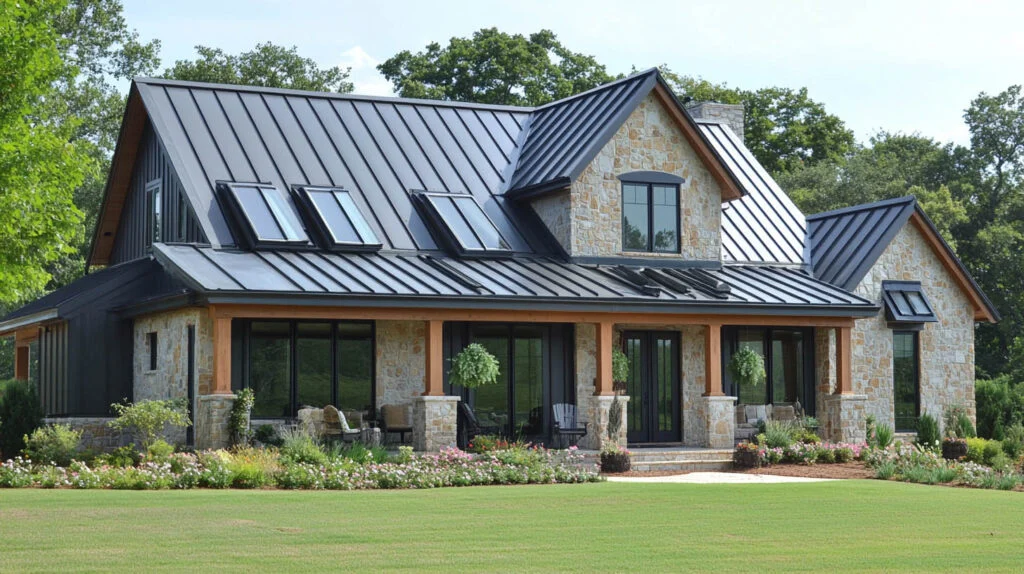
Metal roofing for Rockwall homes and buildings
Metal covers two quite different products that get talked about as one. Which one suits a Rockwall building depends on what is underneath it and what you want out of it.
All of it is covered by the written estimate for metal roofing in Rockwall before any work starts. If something turns up once we are on the roof, you see a photograph of it and decide what to do, rather than finding it as a line on an invoice afterwards.
That is the scope every quote for metal roofing in Rockwall is written against.
Standing seam
Panels lock together at a raised seam and the fasteners are concealed underneath. Nothing is exposed to work loose, which is why hail on standing seam is usually a cosmetic matter rather than a leak path.
Trim, closures and flashing
Metal lives or dies at the edges. Ridge, eave, rake, valley and every penetration need the right closure, or a good panel leaks anyway.
Finish and gauge named in writing
The estimate says which profile, which gauge and which coating system. Those three decide how the roof looks in fifteen years, and they are easy to leave vague.
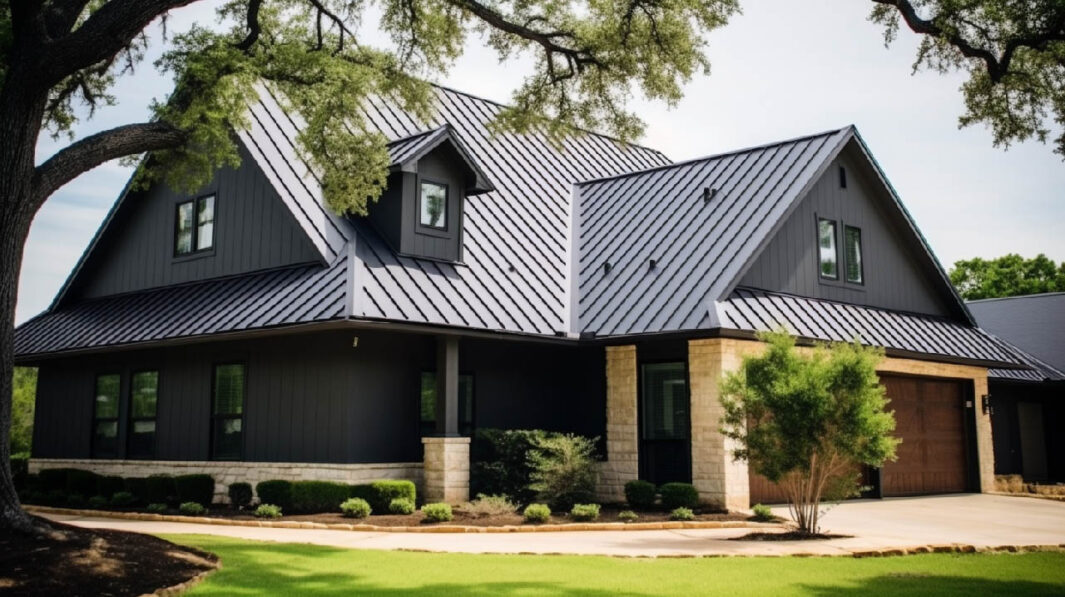
Why Rockwall gets its own page
Rockwall is the most suburban town we cover and the newest. Most of the roof stock went on in the last thirty years, a great deal of it architectural shingle on two-story homes, with lakefront property around Lake Ray Hubbard carrying more exposure than an inland house of the same age.
A crew that works the same counties every week already knows which subdivisions went up with builder-grade shingle and which older streets have the cut-up rooflines where flashing does the real work.
It also means the office that writes your estimate is the office that answers the phone in year three. You can read more about the town itself on our Rockwall page, or about the service generally on our Metal Roofing page.
It also means we already know the local roofs before we get on yours. The crews that work Rockwall have worked it for years, and that shows up in how quickly a problem gets identified.
Weather that shortens a Rockwall roof
Lake Ray Hubbard gives wind a clear run at anything on the shoreline, and the storms that come through the Dallas side of our area arrive with less warning than they do further east. None of it looks dramatic at first. It is cumulative, and it is why a roof here rarely reaches the number of years printed on the wrapper without somebody looking at it.
All three are gradual, and all three are visible to somebody standing on the roof long before they are visible from the yard. That gap is the reason an inspection is worth having before you need metal roofing in Rockwall rather than after.
All of it feeds into what metal roofing in Rockwall actually has to address.
Storm season
Most of the roof damage we document around Rockwall happens in a handful of spring storms. The rest of the year is mainly heat and time.
Heat and attic temperature
An attic that runs hot through a Rockwall County summer ages the shingle above it from the underside, where nobody is looking.
Water that does not leave
Blocked gutters and flat spots hold water against the roof edge long after the rain has stopped. That is a slow failure rather than a sudden one.
Working on Rockwall property
The most suburban town we cover and the newest. Most of the roof stock went on within the last thirty years, a great deal of it architectural shingle on two-story homes, with lakefront property around Lake Ray Hubbard carrying noticeably more exposure than an inland house of the same age and build. Very little of what we see in Rockwall is genuinely old.
Because the stock is young, the year here is less about age and more about events. A single wind or hail event generates most of the Rockwall work we do in a given season, and the rest of the year is quiet by comparison. Storms on the Dallas side of our area tend to arrive with less warning than they do further east.
What people choose
Most Rockwall roofs are already architectural shingle, so the real decision is usually whether to step up to an impact-rated line at replacement time. On two-story elevations and lakefront property that case is stronger than it is on a sheltered single-story house further inland.
How long we have been here
Rockwall is the furthest west we go regularly and the most recent addition to the area. It is scheduled as a full day, which is the only way an hour each way makes sense.
Who calls us here
Homeowners almost exclusively, and homeowners with relatively new roofs. The questions here are about storm damage and about whether to step up a shingle grade, rather than about roofs at the end of their lives.
Longer life, and a different failure mode
Metal is neither maintenance free nor indestructible. It outlasts asphalt comfortably and it fails in different places, which is worth knowing before choosing it.
None of it is visible from the ground, which is the practical problem. A Rockwall roof can look completely sound from the yard and be two or three years from a leak, and the only way to know which is to get on it and photograph what is actually there.
Service life
A properly installed metal roof commonly outlasts two asphalt roofs. The trade is a higher number on day one.
Fasteners, on exposed systems
Screws back out and neoprene washers harden over the years. On an exposed-fastener roof this is the thing to check every few years, and it is inexpensive to put right.
Dissimilar metals
The wrong fastener against the wrong panel corrodes at the contact point. It looks like nothing for years and then it is a hole.
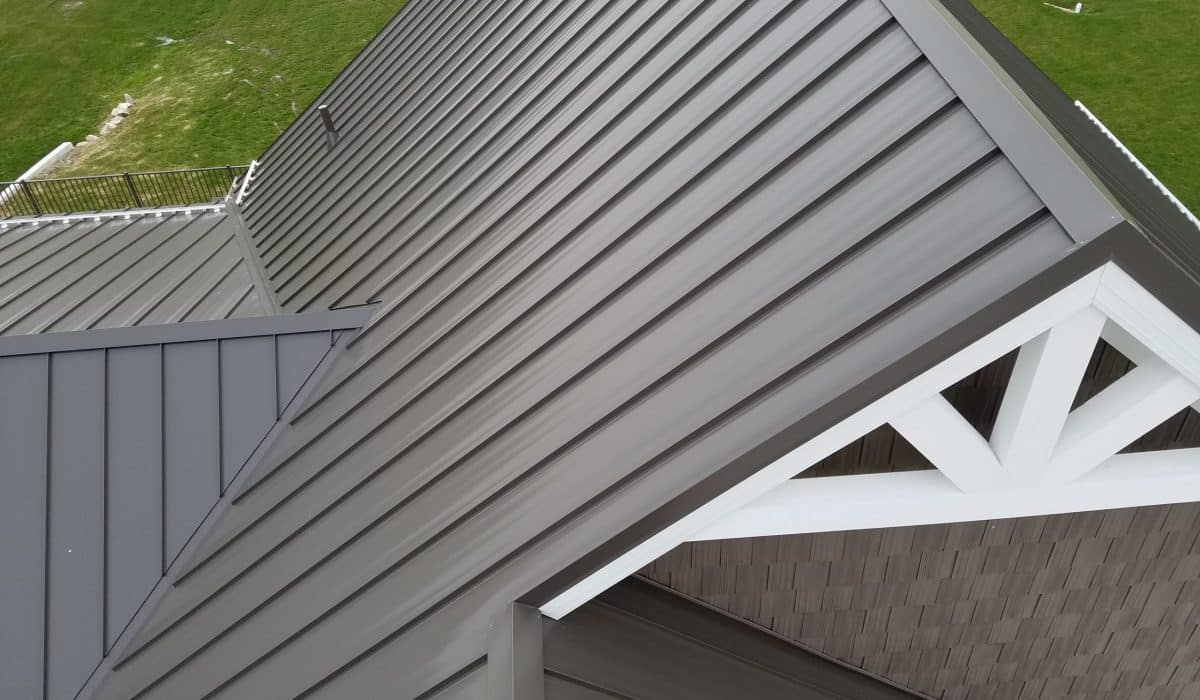
How a metal roof goes on in Rockwall
Metal takes longer than shingle and depends more on preparation. Rushing the layout is how a metal roof ends up looking wrong from the street.
You will know who is coming and roughly when at every stage. Eliceo and Daniel handle the calls themselves, so the person you spoke to about the Rockwall estimate is the person you reach afterwards.
Measure and inspect
Panel layout is worked out from real measurements, not an estimate. Decking and structure get checked at the same time.
Written estimate
Written down with the profile and gauge named, so you know exactly what is being quoted.
Preparation
Tear-off where it is needed, deck repairs, then an underlayment rated for the temperatures a metal roof actually reaches.
Panels and trim
Panels set out so the layout lands correctly at both ends, then ridge, eave, rake and penetration trim.
Walkthrough
We check every closure and penetration with you, and clear the site of offcuts and fasteners.
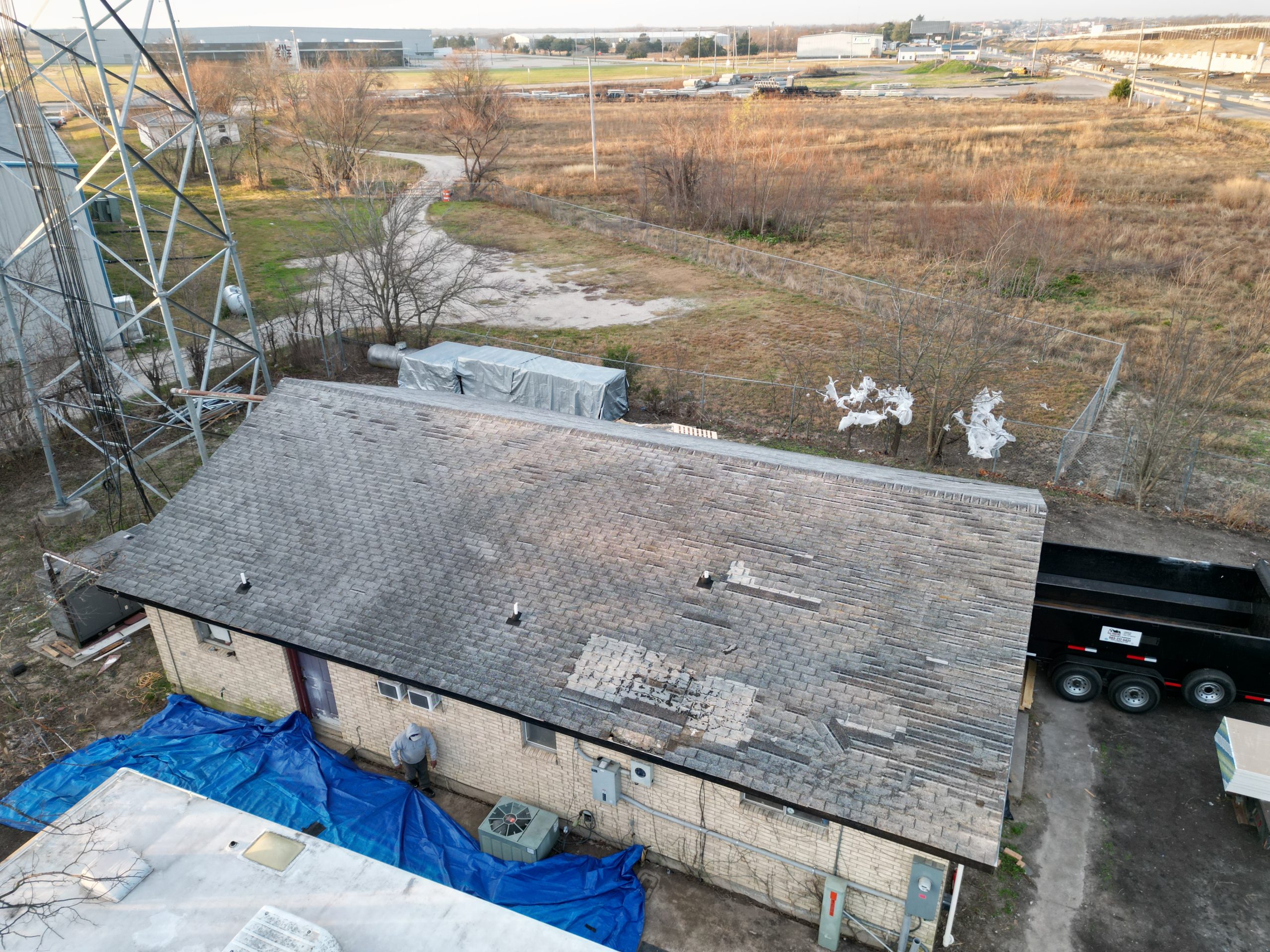
The old roof on a commercial building near Caddo Mills, TX, January 2026.
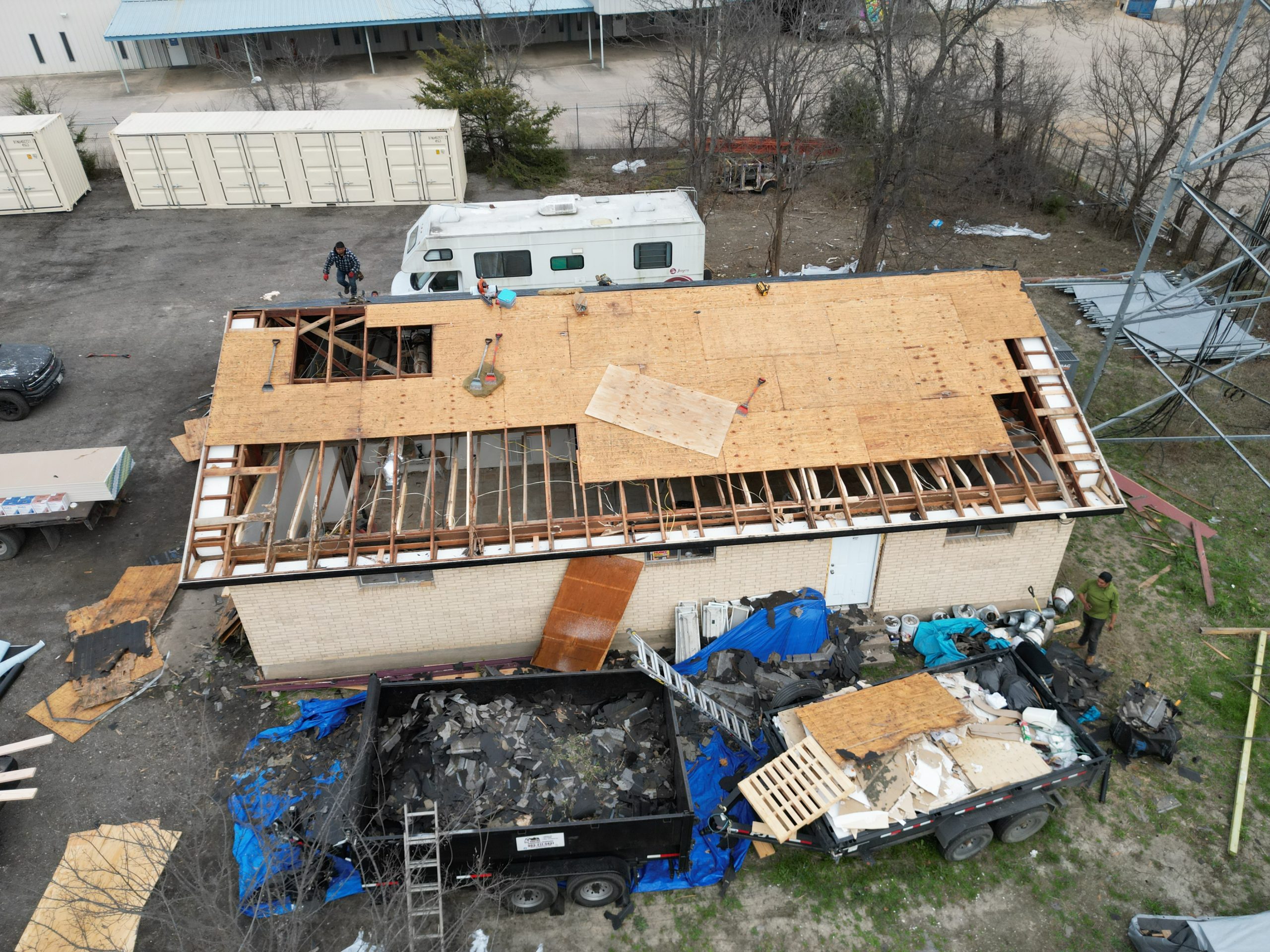
Damaged rafters and decking being replaced on the same building.
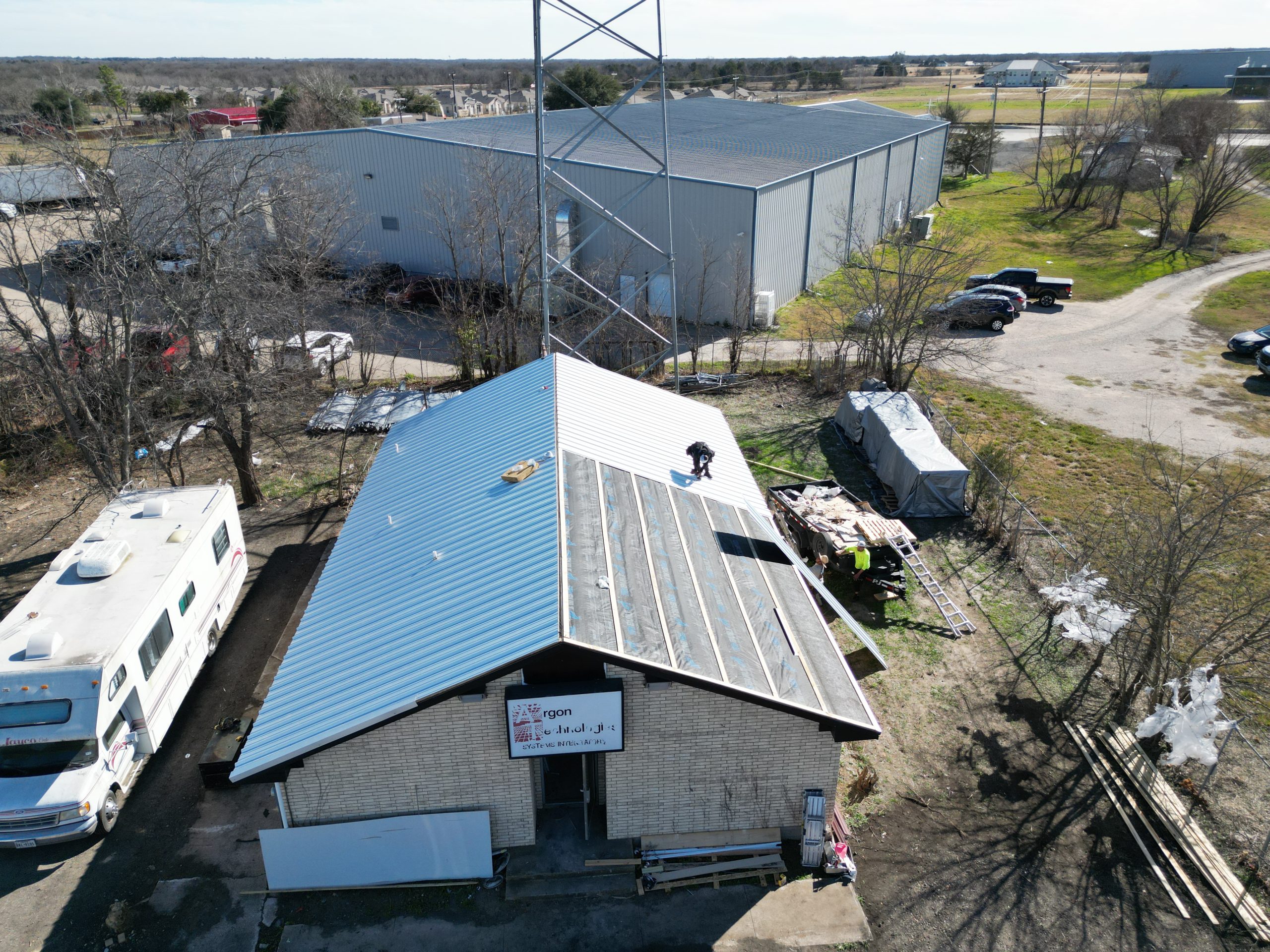
The finished roof on the same commercial building.
Six things to check on a Rockwall metal roof
Metal lasts a long time and it is not maintenance free. Nearly everything that goes wrong happens at a fastener, a seam or a piece of trim rather than in the panel.
None of these is an emergency on its own. Together they are usually the difference between a repair this season and a replacement two seasons from now, which is a large enough gap to be worth an hour of somebody’s time.
Hardened or split washers
The neoprene washer under the screw head is what actually seals. It ages faster than the panel and is inexpensive to replace.
Surface rust at cut edges
Panels cut on site can rust from the cut edge inward if they were never treated. Worth catching before it spreads.
Staining below a seam or penetration
A rust line or a stain running down from one point usually marks exactly where water is getting in.
Gaps in ridge or eave closures
The foam or metal closures that seal the profile at top and bottom break down before the panel does, and open the roof to wind-driven rain.
Sealant cracking at a pipe boot
The boot and the sealant age faster than the metal around them and are a straightforward replacement.
Scratches down to bare metal
Usually from a branch or a boot. Treated early they stay cosmetic; left alone they are where rust starts.
The profiles we install around Rockwall County
Profile is not a styling choice. It decides how the roof is fastened, how it behaves in hail and how low a pitch it can safely go on.
We will quote more than one option for a Rockwall property so the difference is a decision you make rather than an assumption we made for you. Seeing two numbers side by side is usually more useful than hearing one explained.
Worth reading elsewhere: the Metal Construction Association covers panel profiles and expected service life, and the National Roofing Contractors Association publishes the installation standards metal roofing is built to.
Corrugated panel
The traditional wavy profile. Still the right look and the right price on barns and outbuildings around Rockwall.
Gauge and coating
Panel thickness and the finish on it both matter more than the profile for how the roof looks in fifteen years. We name both on the estimate.
Closures and trim
Ridge, eave, rake and valley trim plus the foam or metal closures that seal the profile. Metal roofs leak at these long before a panel fails.
High-temperature underlayment
Metal reaches temperatures that ordinary shingle underlayment is not rated for. Using the wrong product here is invisible on day one and matters by year five.
What a metal roof costs in Rockwall
Metal generally starts around $12,000 for a residential roof in this region and rises with profile, gauge and complexity. These are the variables.
Every estimate we write for metal roofing in Rockwall names the work and the materials in plain terms, with decking priced per sheet, so you know exactly what you are getting. That also makes it straightforward to compare against anything else you have been quoted.
Preparation
Tear-off, decking repair and the right underlayment. Metal over a poor deck is money spent on the wrong layer.
Trim and closures
The metal you do not think about. Ridge, eave, rake, valley and penetration trim are a real share of a metal roof price and are set out separately.
Roof geometry
Metal punishes complexity. Every valley, dormer and penetration is trim work, so a cut-up roof costs noticeably more per square than a simple gable of the same area.
Metal is a long-stay decision
If you expect to be in the building in twenty years, metal usually makes financial sense. If you are likely to move inside ten, architectural shingle often does. We will give you the honest version for a Rockwall property rather than the expensive one. Compare on standing seam.
“They did an excellent job on my roof. They were fast and professional. They were respectful and a pleasure to do business with. I am so thankful I chose them.”
 Verified on Facebook
Why Rockwall property owners call us
There are plenty of roofing companies that will drive to Rockwall. These are the four things we would want to know about any of them, including us, before handing over a roof.
We would rather you checked all four with anybody you call in Rockwall, ourselves included. A roofer who minds being asked is telling you something useful, and none of it takes more than a few minutes to verify before you commit to any work.
The inspection is genuinely free
Free, and free even when the answer is that your Rockwall roof needs nothing. A fair share of the ones we look at do not.
We know the building stock
Working the same counties every week means we already know how Rockwall roofs are built and where they tend to give way.
No pressure, ever
You get the report and the estimate and then you get left alone. The form, the phone number and the reviews do the selling.
Owens Corning Preferred
One of the manufacturer credentials we actually hold, alongside being fully insured, BBB Accredited and Google Guaranteed.
Towns near Rockwall
Scheduling around Rockwall normally takes in the towns below as well, which is why a nearby job seldom means a longer wait. Every one of them has a page of its own with the local detail.
Other roofing work in Rockwall
Everything else we do for property owners in Rockwall, each with its own page covering what that work involves here specifically rather than in general.
We keep a page per job per town rather than one page for everything because the honest answers differ. Roof age, pitch, material and exposure all change what the right work is at a Rockwall address, and a page written for the whole region cannot say anything useful about any of them.
Questions we get about metal roofing in Rockwall
A wide range, and the finish matters more than the shade for how the roof looks in fifteen years. Lighter finishes reflect more heat, which is worth something through a Texas summer. We name the gauge and the coating system on the estimate so you know exactly what is being quoted. If it matters for a decision you are making about a Rockwall property, ask us and we will give you the specific answer rather than the general one.
Carefully, and in the right places. Standing seam panels should be walked near the ribs rather than in the flat pan, and exposed-fastener panel over open purlins needs you to know where the purlins are. We would rather do it than have you try.
Usually close. Profiles are fairly standard but finishes weather, so a new panel beside a fifteen-year-old one will read slightly different for a while. We will tell you honestly how noticeable it is likely to be before you commit. That is the general picture. What it means for your Rockwall roof is a question the photographs answer better than we can here.
Standing seam needs very little beyond keeping the valleys clear. Exposed-fastener panel does need attention: the screws and washers are the maintenance item and need checking every few years. It is a short visit and an expensive thing to skip. We are happy to go through this in more detail for a Rockwall roof, either on the phone or when we are out there.
Dents are generally treated as cosmetic rather than a product failure, and most finish warranties say so explicitly. What matters more is whether any fastener or closure was disturbed, because that is a leak path rather than an appearance question. An inspection after a storm answers it.
Book a free Rockwall roof inspection
Fill this in and we will call you back to arrange a time that suits you. The inspection and the written estimate are both free, and if the roof turns out to be fine that is what the report will say.
Get Your Free Quote
Enter your details below and we will get back to you with a real number.
Start with a look at the roof.
It costs nothing to find out what shape the roof is actually in, and you keep the full report whether you go ahead with the work or not. Most people who call us are trying to work out whether they have a problem at all, and that is a perfectly good reason to get in touch.
Ask us about metal roofing in Rockwall and we will tell you plainly what the roof needs.