Emergency roof repairs. Water coming in now? Call, do not fill in a form.
Emergency roof repairs across Northeast Texas. We get the opening covered first and diagnose properly once it is dry, because with an active leak, stopping the damage and fixing the roof are two different jobs. Call (903) 217-5431.

Emergency roof repairs in plain terms
An active leak is the one situation on this website where emergency roof repairs genuinely mean stopping what you are doing and using the phone. Every hour water is entering the building it is moving through insulation, into drywall, along framing, and into places that cost a great deal more to put right than the roof does. The right sequence is always the same: stop the water, then work out why.
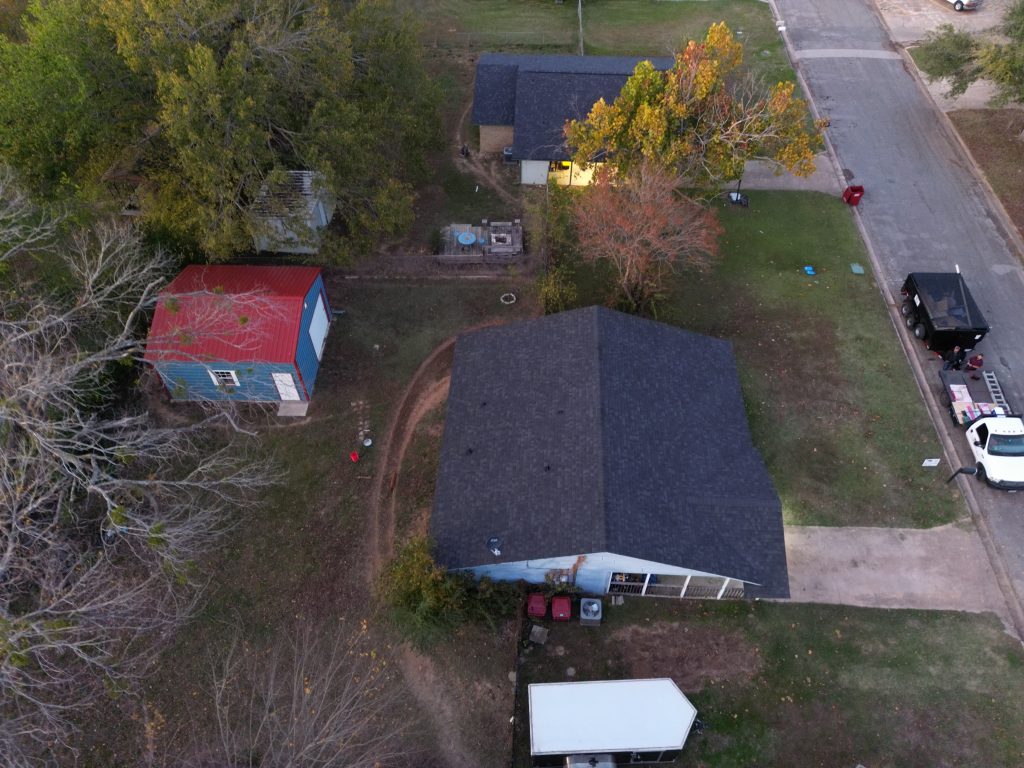
That distinction matters, because people frequently expect a permanent repair on the first visit, in the rain, at night, and that is not how good roof work happens. Covering an opening is fast, inexpensive and effective. Diagnosing a leak properly needs a dry roof, daylight and access to the attic, and doing the diagnosis badly in bad conditions means the wrong repair, which means the leak comes back.
What counts as an emergency is narrower than people think, and emergency roof repairs are a smaller category than the phrase suggests, and it is worth knowing so you are not paying for urgency you do not need. Water actively entering the building is one. Missing shingles or panels leaving decking exposed with more weather coming is another. A tree or limb on the roof is a third. Storm damage that has opened the envelope is a fourth. A stain on a ceiling that has been there for six months is a repair rather than an emergency: it should be looked at soon, and it does not need anybody on a wet roof at nine at night.
It is worth being specific about timing, because vagueness is unhelpful to somebody with water coming in. Emergency roof repairs jump the queue ahead of scheduled work, and being based an hour or less from most of the towns we serve means response is generally same-day during business hours. On a storm night, when every roofer in the region is fielding calls at once, we will tell you when we can realistically be there rather than giving you an optimistic answer.
There is also a limit on what can be done safely in the moment, and we would rather say so than pretend. Nobody should be on a roof during lightning, in high wind, or on ice. In those conditions the useful work is interior: containing water, protecting contents, and moving what can be moved, until it is safe to get up there. That is not a delay tactic, it is the only responsible sequence.
Emergency calls go to the front of our queue on houses and commercial buildings alike. On commercial work the stakes are usually stock, equipment or operations rather than a ceiling, which is exactly why those calls get the same priority rather than a lower one.
Everything below is part of how we handle emergency roof repairs
Emergency Covering
Tarping or temporary weatherproofing to stop water entering while a proper repair is arranged.
Priority Response
Active leaks and open roofs go to the front of the queue, residential and commercial alike.
Interior Guidance
Practical help containing water and protecting contents, including when conditions make the roof unsafe.
Documented Cause
Once dry, a proper diagnosis with photographs so the repair addresses the actual entry point.
Permanent Repair
The real fix, priced in writing, scheduled promptly, and warranted.
Insurance Documentation
Where the damage is storm-related, contractor-observed damage photographed and written up for your carrier.
Start to finish, in order
Phone Us
For an active leak, call (903) 217-5431. A form sits in an inbox; the phone gets somebody moving.
Immediate Containment
What to do inside while we are on the way: contain the water, protect what matters, and move what you can.
Get It Covered
Tarp or temporary weatherproofing to stop further water. This is triage rather than the repair.
Diagnose Dry
Once conditions allow, a proper inspection with the attic included, photographed, to find the real entry point.
Permanent Repair
Written estimate, scheduled promptly, the work photographed, and the warranty in writing.
Four things we do on every single job
Photographs, Not Opinions
Every problem area is photographed and shown to you before anybody quotes a price. You keep the images whatever you decide.
In Writing
The estimate names the products going on your roof, so you can compare it against anybody else’s.
Cleaned Up Daily
Beds and shrubs covered before work starts, and a magnet over the yard and driveway at the end of every working day.
A Local Phone Number
Our shop is on Como St S in Sulphur Springs. The company that fits your roof is the one you call in year four.
“Within just one hour of my request, they had a drone in the air and a full estimate with photos in my inbox. The pricing was very reasonable, the work was finished exactly on time and to a high standard.”

What to do before we arrive
Containment first, and it is more useful than it sounds. Get buckets or bins under the drips, put towels around them, and move furniture, electronics and anything with sentimental value out of the area entirely rather than covering it in place. Water spreads laterally along ceilings and comes down in more than one spot as the drywall saturates, so give yourself more room than the current drip suggests.
The counter-intuitive one: if a ceiling is bulging and holding water, it is generally better to relieve it deliberately with a small hole at the low point and a bucket underneath than to let it come down on its own schedule. A bulging ceiling holds a surprising amount of weight and it will come down eventually, taking more of the ceiling with it. A small hole is a patch; a collapse is a rebuild.
Electrical caution matters more than most people think. If water is anywhere near light fittings, ceiling fans or outlets, kill the circuit at the breaker before dealing with the water.
And please do not go on the roof yourself in wet or windy conditions to place a tarp. It is genuinely the most dangerous thing a homeowner can do in this situation, and people are seriously hurt doing it every year. Photograph what you can from the ground and from inside, and wait for somebody with fall protection. OSHA publishes the fall-protection standards professional crews work to, and there is a reason they exist.
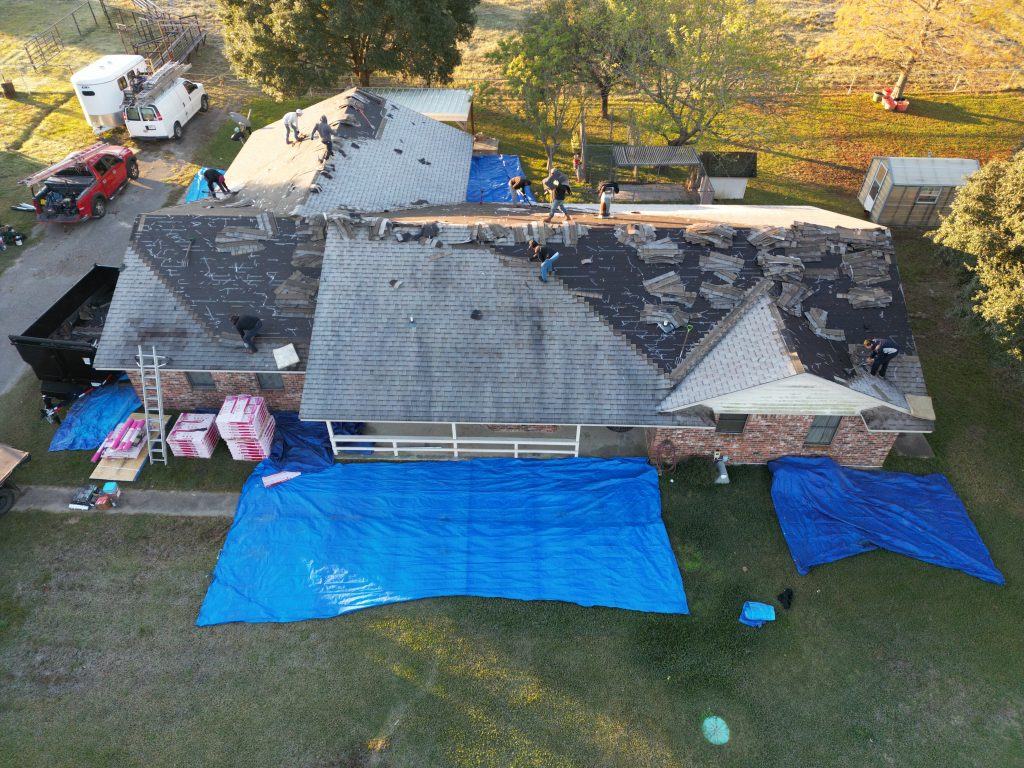
What actually needs an emergency call
Any one of these is a call rather than a form. The rest is a repair, and a repair can be booked in daylight.
Water actively entering the building, in any volume.
A ceiling bulging, sagging, or holding water.
Shingles or panels missing with decking exposed and more weather forecast.
A tree or large limb resting on the roof.
Storm damage that has visibly opened the roof envelope.
On commercial buildings, water reaching stock, equipment or electrical.
What an emergency visit involves
Four things can happen on the visit, and which one applies depends on the weather and on what is actually wrong. We will tell you which before we start.
Temporary Covering
Most emergency roof repairs start here: a tarp or temporary weatherproofing over the opening. Fast, effective, and explicitly not the repair.
Interior Containment
Help protecting the inside of the building where getting on the roof is not yet safe or sensible.
Same-Visit Repair
Sometimes possible where the cause is obvious, accessible and conditions allow, and we will say plainly when it is not.
Scheduled Permanent Repair
The diagnosed, documented, warranted fix, done properly once the roof is dry.
An emergency tarp over the general area is entirely sensible even though it is not precise. The aim in the moment is to keep water off a broad area so nothing more gets in, which buys time for a proper diagnosis. Precision is for the permanent repair; coverage is for tonight.
Why the drip is rarely under the hole
This is the single most useful thing to understand about roof leaks, and it explains why competent diagnosis takes an hour rather than five minutes. The wet spot on your ceiling is where water finally came through the drywall. It is not, in most cases, anywhere near where water came through the roof, and repairing above the drip is the most common way a leak gets paid for twice.
Water entering a roof almost never falls straight down. It lands on the decking or the underside of the sheathing and runs, along a rafter, down a truss, across a ceiling joist, following the framing until it finds a low point or a gap to come through. On a metal building it runs along a purlin. The result is that the wet patch on your ceiling can be a considerable distance from where the water actually got in, and frequently on the other side of a room.
That is why we do not simply repair above the drip, and why the attic matters so much. From underneath you can follow the staining backwards, uphill, to where it starts, and where the staining stops is usually within a foot or two of the actual entry point. Doing that in daylight on a dry roof is diagnosis. Guessing at it in the rain is how people end up paying for two repairs and still having a leak.
The five places leaks actually come from
The list of culprits is remarkably short and remarkably consistent. Almost every residential leak we find comes from one of five places, and none of them is the middle of a shingle. Knowing the list is useful, because it tells you roughly what a repair is likely to involve and whether the person diagnosing your leak is checking the right things.
Vent boots are first, and they are the most common single cause of residential leaks we find. The rubber collar around a plumbing vent stack perishes under UV, cracks, and lets water straight into the roof around the pipe. It is an inexpensive part, it is a straightforward repair, and it causes a genuinely large share of the ceiling stains in this county. Any roof past ten years is worth having them checked. The National Roofing Contractors Association sets out the flashing and penetration details these repairs are carried out to.
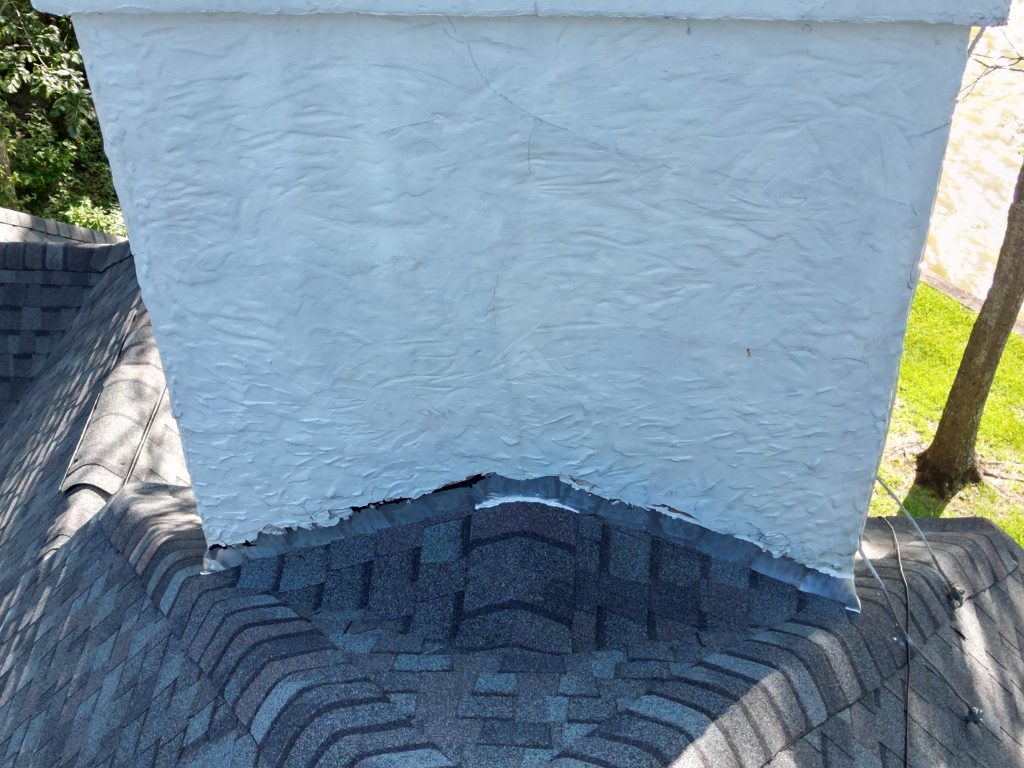
Then flashing, in three flavors: step flashing where a roof meets a wall, counterflashing at chimneys, and valley metal. All three are places where two surfaces meet, all three move slightly with the building, and all three fail through age, movement, or having been reused when the roof was last replaced. Chimneys in particular are a perennial, because the counterflashing needs letting into the masonry properly.
Fourth is skylights, which leak at their flashing far more often than through the unit itself. Fifth is the detailing at valleys and low-slope transitions, where a shingle roof meets an addition or a porch at a pitch too shallow for shingle to work. That last one is a design problem rather than a maintenance one, and the honest fix is usually a metal or membrane section rather than another repair.
Straight answers, free of charge
The inspection, the photographs and the written estimate cost nothing and commit you to nothing. If the honest answer is that the work can wait, that is what the estimate will say.
How emergency roof repairs are priced
The diagnosis is free, and temporary covering is a modest charge kept separate from the repair. Once the cause is found, the permanent fix after most emergency roof repairs runs about $300 to $1,500, and larger work involving decking, a valley or a chimney about $1,500 to $5,000 or more. These are typical Northeast Texas ranges, not a quote: the price for your repair is set after a free on-site inspection and a written estimate.
Covering Is Not The Repair
Temporary weatherproofing is quick and inexpensive. The permanent repair is quoted separately once it has been diagnosed.
Diagnosis Is Free
The inspection behind any of our emergency roof repairs costs nothing, the same as any of our inspections.
Repair Scope
A vent boot is a small job. Failed valley metal or a chimney re-flash is a larger one. Both are quoted in writing.
Access And Conditions
Steep roofs, height and difficult access take longer and need more setup, and that shows in the price.
Interior Damage
Drywall, insulation and decorating are usually somebody else’s trade, and we will say so rather than quoting for it.
Storm-Related Work
Documented and written up for your carrier where relevant. Coverage remains their decision against your policy.
Four things worth avoiding in an emergency
Going Up There Yourself
A wet or windy roof is the most dangerous place a homeowner can be. People are badly hurt placing tarps every year.
Accepting A Permanent Repair In The Rain
A leak diagnosed and repaired in bad conditions is a leak that comes back. Cover now, diagnose dry.
Sealant As The Fix
A tube of caulk over an unknown entry point buys a few days and makes the real diagnosis harder later.
Letting The Ceiling Collapse On Its Own
A deliberate small hole at the low point with a bucket underneath is a patch. A collapse is a rebuild.

Storm response around Sulphur Springs
Being an hour or less from most of the towns we serve is the practical point of using somebody local for emergency roof repairs. Storm nights are busy for every roofer in the region, and with water coming into a building the difference between a couple of hours and the following afternoon is exactly the unit that matters. Our yard is on Como Street in Sulphur Springs and the number has not changed.
The seasons here are predictable enough to plan around, and they shape what emergency roof repairs look like month to month. Spring brings hail and wind, and the calls are missing shingles and open roofs. Summer brings the storms that find the details, meaning vent boots and flashings that have been marginal for a season. Winter brings the slow ones: leaks that have been quietly wetting decking for weeks and finally show on a ceiling.
The other local factor is simply knowing the housing stock. Whole streets here were built in the same couple of years with the same details, which means the same things fail on them: the same vent boot type perishing at the same age, the same sidewall detail on the same rear addition design. On a street we have already worked, a leak call frequently starts with a reasonable hypothesis before anybody gets on the ladder, and that saves time when time matters.
On commercial and agricultural buildings we treat leaks as urgent for a straightforward reason: the consequence is stock, hay or equipment rather than a stained ceiling. A wet pallet or a spoiled hay crop costs more than the roof repair, so those calls get the same priority as a house with water coming through the kitchen light.
Questions about emergency roof repairs
Someone local picks up during business hours, Monday to Saturday, and storm and emergency calls are prioritized ahead of scheduled work. For an active leak, call rather than filling in a form: (903) 217-5431. A form sits in an inbox until somebody opens it.
Sometimes, where the cause is obvious and accessible and the weather allows. More often the first visit is about getting the opening covered so no more water gets in, with the diagnosis and the permanent repair done once the roof is dry. A leak diagnosed in the rain is a leak that comes back.
Please do not, in wet or windy conditions. It is the most dangerous thing a homeowner can do in this situation and people are seriously hurt doing it every year. Contain the water inside, photograph what you can from the ground and from the attic, and wait for somebody with fall protection.
It is a repair rather than an emergency, and it should be looked at soon. A stain that is not currently wet means water got in at some point and found its way out through the drywall, so the entry point is still there waiting for the next storm. Booking it in daylight is both safer and less expensive than a night call.
No, and we will say so rather than quoting for it. Drywall, insulation and decorating are somebody else’s trade. What we do is stop the water, find and fix the actual cause, and give you photographs and a written record of both, which is what an insurer or a drywall contractor will want to see.
Other services
Flashing failures, lifted shingles and wind damage put right before water gets in.
Five and six inch seamless aluminum, fabricated on site to fit your roofline.
Let’s get somebody up there to look.
Fill out the form or pick up the phone. Either way you get straight answers about your roof and a written estimate you can keep.