Roof repairs: fix the leak while it is still a leak.
Roof repairs across Northeast Texas: flashing failures, lifted shingles, cracked vent boots and wind damage put right before water gets into the decking and turns a two-hour job into a whole new roof. Free inspection, photographs of whatever we find, and a written estimate you keep either way.
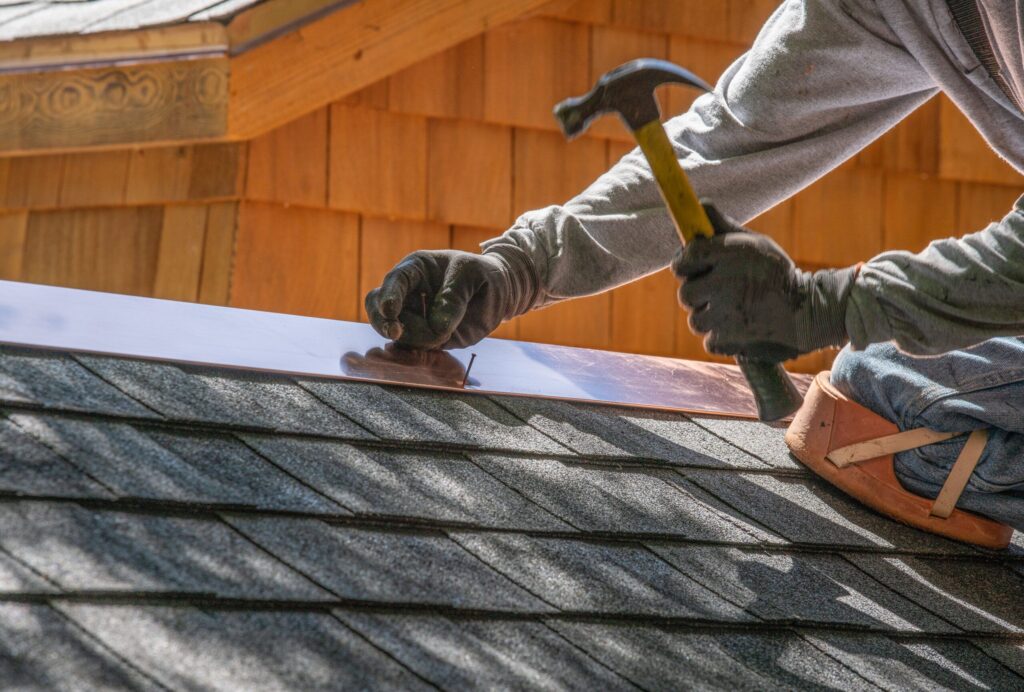
Roof repairs in plain terms
Almost every expensive roof problem started as an inexpensive one. Water is patient. It finds a gap at a flashing joint or a split in a vent boot, runs along the underside of the deck to somewhere else entirely, and sits there through a few seasons before it produces the ceiling stain that finally makes somebody pick up the phone. By then the repair is no longer just the roof.
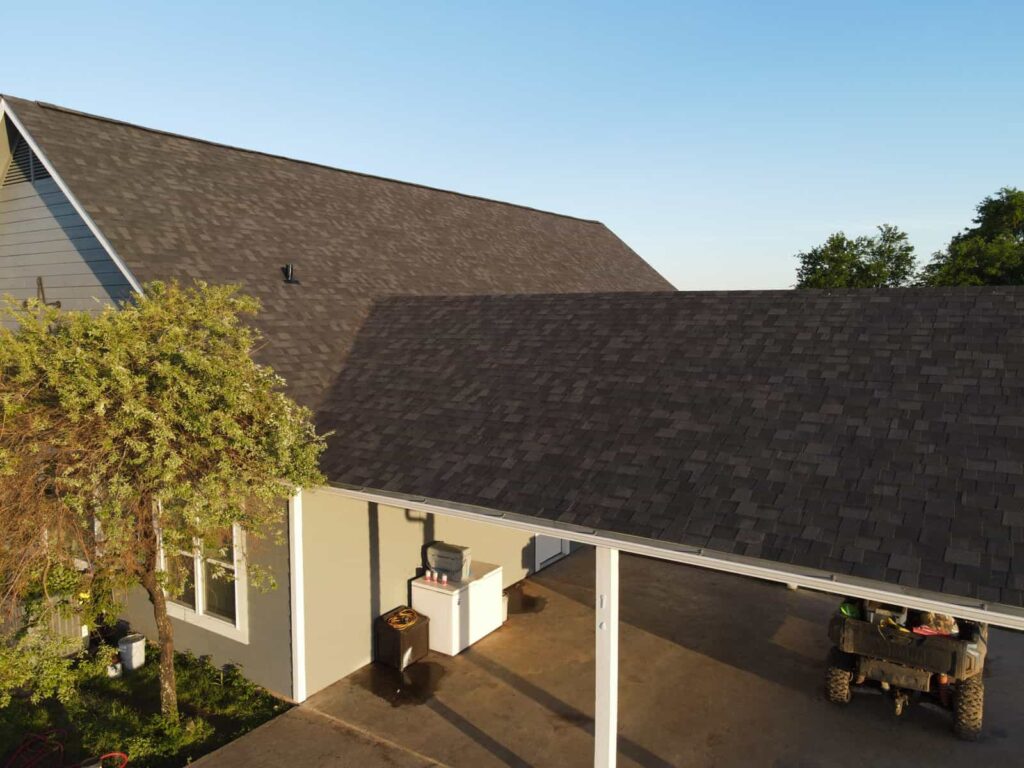
That is the argument for treating roof repairs as their own kind of work rather than as a consolation prize for a roof that was not old enough to replace. A two-hour flashing job is often the right answer, and we would rather do it properly than talk somebody into a replacement they do not need. A homeowner who was told the truth about a small job is who calls about the big one.
The first thing to understand about leaks is that the wet spot on your ceiling is almost never underneath the actual hole. Water enters high and travels: along rafters, across the top of the deck, down the side of a chimney chase. Finding the entry point means getting on the roof and into the attic and knowing what the usual suspects look like. That is why every inspection is done up there with a camera rather than from ground level.
There is a practical point about timing worth more than any advice about materials: leaks are simplest to fix in the season you notice them. A stain that appears in March and is dealt with in April is a flashing repair. The same stain left until October has had six months of intermittent wetting on the same rafter and deck, and by then the conversation includes sheathing, insulation and sometimes framing.
It is also worth knowing that roof repairs are a legitimate long-term answer more often than homeowners expect. A twelve-year-old roof in sound condition with one failed vent boot has a decade of service left in it, and the correct response is a new boot. We keep repairs a real part of the business because that situation is common and because it is the honest answer in a town we intend to keep working in.
Everything below is in the roof repairs price we quote you
Leak Diagnosis
Roof and attic both, tracing the water back to where it is actually getting in rather than to where it shows up on your ceiling.
Flashing Repair And Replacement
Step flashing, valley metal, chimney counterflashing and wall intersections. These are the places most roofs actually fail.
Vent Boots And Pipe Collars
Cracked rubber collars around plumbing stacks are one of the most common leaks on any roof in this climate, and one of the least expensive to put right.
Shingle Repair And Replacement
Missing, lifted, cracked or wind-damaged shingles replaced and properly sealed, matched as closely as the current range allows.
Storm And Wind Damage
Isolated damage after weather, photographed and documented in case it turns into an insurance conversation later.
Emergency Tarping
If water is coming in now, we can get the opening covered to stop the damage while the proper repair is scheduled.
Start to finish, in order
Call Us
Tell us what you are seeing and roughly when it happens: every rain, or only in wind-driven rain from one direction. That detail narrows it down before we arrive.
Inspection And Diagnosis
On the roof and in the attic, photographing as we go, working back from the stain to the entry point rather than guessing at it.
Written Scope And Price
What is wrong, what fixing it involves, and what it costs, plus an honest note if we think replacement is the better use of your money.
The Repair
Usually the same visit or within a few days. Small roof repairs are often a couple of hours from ladder up to cleanup.
Photographs And Follow-Up
You get the before and after images. If the leak comes back in the same place, so do we.
Four things we do on every single job
Photographs, Not Opinions
Every problem area is photographed and shown to you before anybody quotes a price. You keep the images whatever you decide.
In Writing
The estimate names the products going on your roof, so you can compare it against anybody else’s.
Cleaned Up Daily
Beds and shrubs covered before work starts, and a magnet over the yard and driveway at the end of every working day.
A Local Phone Number
Our shop is on Como St S in Sulphur Springs. The company that fits your roof is the one you call in year four.
“They did an excellent job on my roof. They were fast and professional. They were respectful and a pleasure to do business with. I am so thankful I chose them.”

The five places roofs actually leak
In the middle of a slope a roof is doing the easy part of its job, shedding water down a continuous surface. Nearly every leak we find is at an interruption: somewhere the roof meets something else, or something passes through it. Chimneys are the classic, because the counterflashing has to be let into the masonry properly and often was not. Sidewall intersections, where a roof plane runs into a vertical wall, are a close second, especially on houses with added-on rear sections.
Valleys are third. Two slopes meeting means a concentrated volume of water moving fast, and if the valley metal was omitted, cut short or nailed through in the wrong place, that is where it will find its way in. Fourth is penetrations: plumbing stacks, bath and kitchen vents, HVAC. The rubber collar on a plumbing boot has a shorter service life than the shingles around it, and in Texas sun it can be split by year ten.
Fifth is skylights, which are their own category of trouble. The unit itself, the flashing kit around it and the deck framing it sits in all offer routes for water. When we inspect for a leak those five are the first places we look, in that order, and the photographs show you what we found at each one. The National Roofing Contractors Association sets out the same order of priority in its own guidance, and the Texas Department of Insurance publishes a plain-language storm resource page if the damage turns out to be weather related.
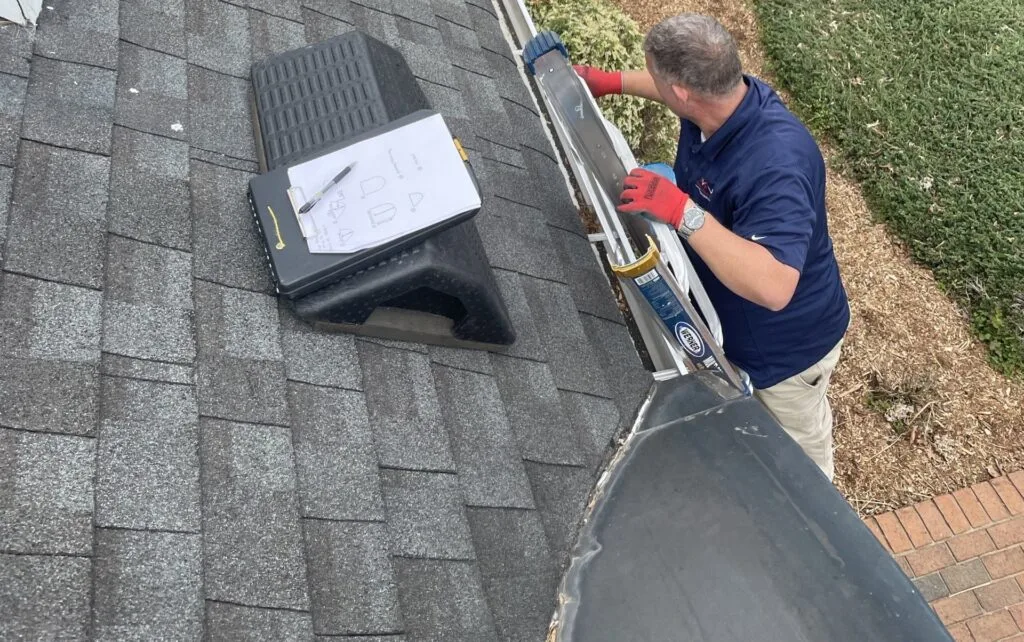
What to look for before it becomes a ceiling repair
Any one of these is worth a free look, and each is a common reason roof repairs get scheduled. None of them get less expensive by waiting.
A stain that appears only after wind-driven rain from a particular direction, which usually points to a flashing or sidewall detail.
Damp or discolored decking visible in the attic, even where no stain has reached the ceiling yet.
A shingle or two missing after a windy night, most often along a ridge or an exposed edge.
Granules in the gutters together with visible bald patches on the slope above.
A vent boot with a visibly cracked or perished rubber collar.
Nail heads that have backed out and are sitting proud of the shingle surface.
Common roof repairs, and roughly what each involves
These four cover the large majority of the roof repairs we are called out for around Hopkins County. What they have in common is that each is a defined job with a defined price.
Vent Boot Replacement
Cut in a new collar and seal it properly. One of the simplest repairs there is, and one of the most frequent causes of an interior stain.
Step Or Counterflashing Repair
Remove the surrounding course, fit new flashing correctly into the wall or masonry, and reinstate. Fiddly, quick, and the fix that lasts.
Valley Repair
Open the valley, install proper valley metal and membrane, and close it back up. More labor than a boot, far less than a slope.
Slope Section Replacement
Where wind or hail has taken out a defined area, that section is replaced rather than the whole roof, provided the surrounding shingles are still sound enough to work with.

Manufacturer coverage applies to defects in the material itself, not to a flashing detail that was fitted wrong or a boot that reached the end of its life. That is what our own ten-year workmanship warranty is for, and it is why we put the repair scope in writing.
When a repair is the wrong answer
Not everything should be repaired, and we would rather say so before you spend the money. If the shingles crack when we walk them, the roof is telling you its asphalt has gone brittle and any patch will be surrounded by material that is about to do the same thing. A repair there buys months, not years.
The other signal is spread. One failed detail on an otherwise sound roof is a repair. Three unrelated leaks in one season is a roof that has reached the end of its service life, and patching each one in turn costs more over two years than replacing it once. We will show you the photographs and tell you which of those two pictures you are looking at, in writing.
Age is the third factor. A roof past about fifteen years with widespread granule loss is close enough to the end that spending on roof repairs rarely makes sense unless it is buying you a specific amount of time for a reason. If that is the situation, we will say it plainly and you can do what you like with the information. You can read how a full replacement is scoped on our roof replacement page.
What a repair inspection actually consists of
A repair inspection follows the same sequence every time so that nothing gets skipped because the obvious answer looked obvious. It starts at ground level, walking the perimeter, looking at the fascia and soffit for staining and at the gutters for granules. That is context for everything that follows.
Then we get on the roof. Field condition first, then every interruption in turn: valleys, chimneys, sidewall intersections, skylights and penetrations. Each one gets photographed whether or not it is the problem, because a record of what was fine this year is what tells you something changed next year.
After the roof comes the attic, which is where the truth usually is. Damp or discolored sheathing, staining on rafters and daylight where it should not be all show up from underneath. Then you get a written scope: what we saw, what we would do about it, what it costs, and an honest note if we think you should spend your money on something else.
Straight answers, free of charge
The inspection, the photographs and the written estimate cost nothing and commit you to nothing. If the honest answer is that the work can wait, that is what the estimate will say.
What actually moves the price on roof repairs
Most roof repairs here are small: a cracked pipe boot, a few lifted shingles or a short run of flashing typically costs $300 to $1,500. Larger repairs that involve decking, a valley or several areas of the roof run about $1,500 to $5,000 or more. When repairs on an aging roof start adding up, compare them with a replacement, which typically runs $6,000 to $14,000 for asphalt on an average single-story home. These are typical Northeast Texas ranges, not a quote: the price for your repair is set after a free on-site inspection and a written estimate. Prices by home size and material are set out in our roof replacement cost guide.
What Failed
A vent boot is a different job from a chimney counterflashing, which is different again from a valley. The component drives most of the number.
Access And Pitch
Steep or high roofs need more setup and more safety equipment, and that time is real whether the repair itself takes twenty minutes or two hours.
How Far The Water Traveled
If the deck under the entry point is sound, the repair stops at the roof. If it is soft, the scope grows to include sheathing.
Matching The Existing Shingle
On an older roof the exact product may no longer be made. We match as closely as the current range allows and show you the difference first.
How Many Separate Problems
Three unrelated repairs on one visit is less expensive than three visits, which is one reason a full inspection is worth doing even when you called about one stain.
Whether It Is An Emergency
Tarping to stop active water is its own line, and it buys time to do the proper repair rather than a rushed version of it.
Four ways a repair goes wrong
Sealant Instead Of Flashing
A tube of roof cement over a failed flashing detail hides it for a season. The water keeps coming and the deck underneath keeps getting wet.
Fixing Where The Stain Is
Water enters high and travels. A repair directly above the ceiling stain is frequently in the wrong place entirely.
No Attic Inspection
Half the evidence is underneath. Skipping the attic means guessing at how far the water has already gone.
Nobody Photographed Anything
With no before and after images there is no record of what was wrong or what was done, which matters if it recurs or if insurance gets involved later.
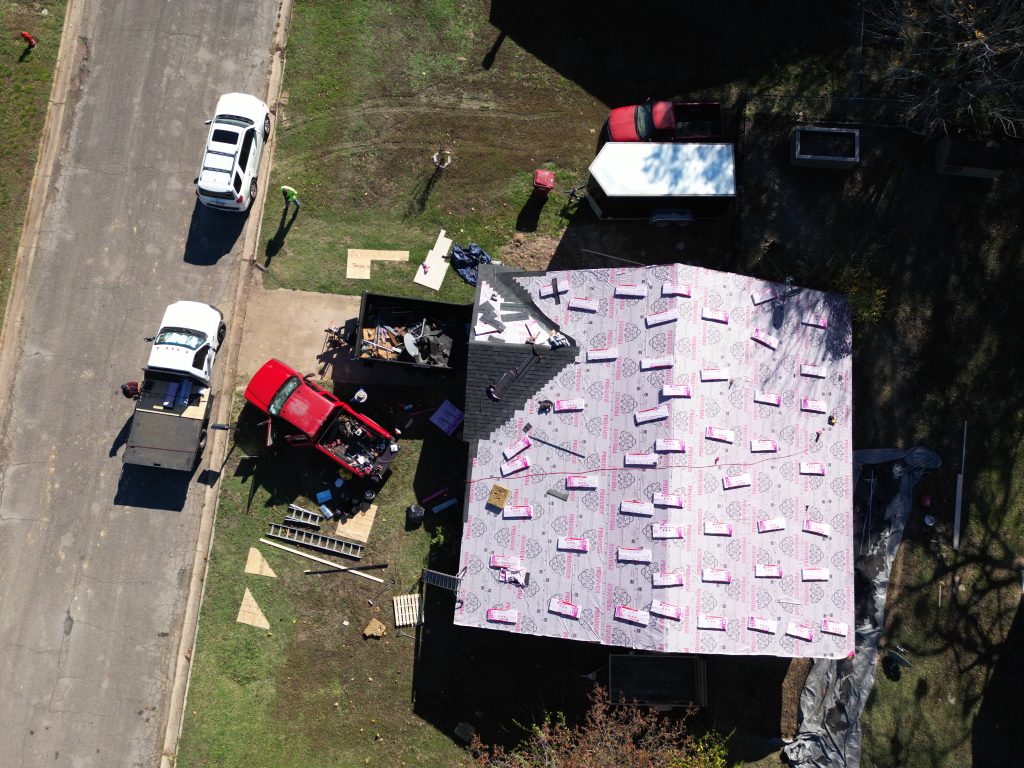
What this looks like in Hopkins County and around it
Most of the roof repairs we run out to fall into a few patterns. Around Sulphur Springs and Greenville a great many houses were roofed within a few years of each other, which means vent boots across whole streets reach the end of their service life at roughly the same time. If a neighbor has just had a collar replaced, yours is worth a look.
The second pattern is wind. Along the I-30 corridor and out toward the lake, exposed ridges and rakes lose the occasional shingle in spring, and a single missing shingle is a genuinely small job if it is dealt with before the next storm drives rain into the gap. Left through a season it stops being a shingle job.
Being an hour from all of it is the practical part. An active leak can usually be looked at within days rather than weeks, we can come back if something is not right, and the reviews on this page were left by people who live close enough to run into us at the feed store.
Questions about roof repairs
Most repairs in Northeast Texas run about $300 to $1,500. A cracked vent boot, a few lifted shingles or a short run of flashing sits at that end and is often a couple of hours of work. A chimney counterflashing, a valley or a repair that reaches the decking is more involved and runs about $1,500 to $5,000 or more. These are typical ranges, not a quote: you get a written price before anybody starts, so you are not agreeing to an open-ended job.
On a sound roof a properly done repair lasts. A new vent boot on a twelve-year-old roof in good condition is a permanent fix for that problem. Where a repair is only buying time is when the shingles themselves have gone brittle or the roof is leaking in several unrelated places, and in that situation we tell you so rather than taking the repair money.
Often, yes. Small roof repairs are frequently done on the inspection visit if the material is on the truck. Larger work gets scheduled, usually within a few days. If water is coming in right now we can tarp it immediately to stop the damage while the proper repair is booked.
As closely as the current range allows. On a roof more than about ten years old the exact product may no longer be manufactured, and colors weather. We show you the match before fitting it so there are no surprises, and on a visible slope we will tell you honestly how noticeable it will be.
Usually not, and we will say so. Most single repairs cost less than a typical deductible, which means filing gains you nothing and puts a claim on your record. Where it is worth considering is storm damage across a whole slope. Either way we document what we find with photographs so you have the evidence if you decide to.
Other services
Flashing failures, lifted shingles and wind damage put right before water gets in.
Five and six inch seamless aluminum, fabricated on site to fit your roofline.
Let’s get somebody up there to look.
Fill out the form or pick up the phone. Either way you get straight answers about your roof and a written estimate you can keep.