Roof replacement as a full tear-off, documented from the first photograph to the last nail.
A roof replacement here means the old roof off, decking checked, and the new system on to manufacturer spec, with the site swept for nails at the end of every day and a written estimate you agreed to before anybody started.
Roof replacement in plain terms
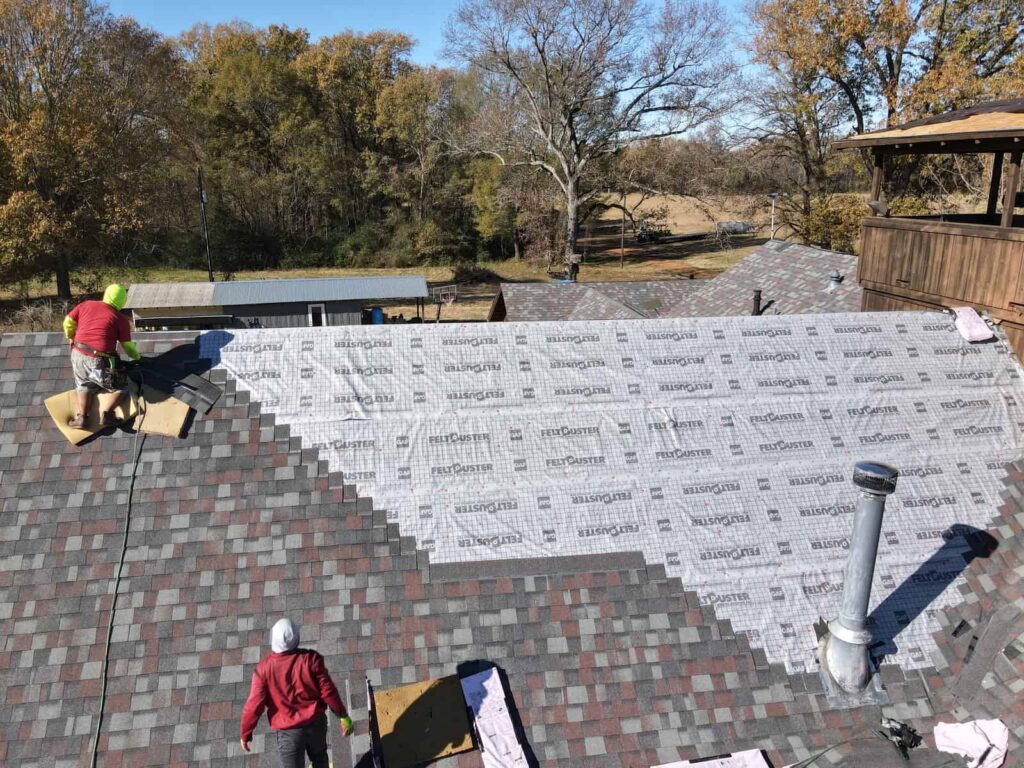
A roof replacement is the largest single piece of maintenance most houses ever need, and it is the one where homeowners have the least information. You cannot see the work while it happens, most of the important decisions get made in the first hour of the tear-off, and the finished result looks identical whether it was installed properly or not. That gap between what you are paying for and what you can verify is exactly why we photograph everything.
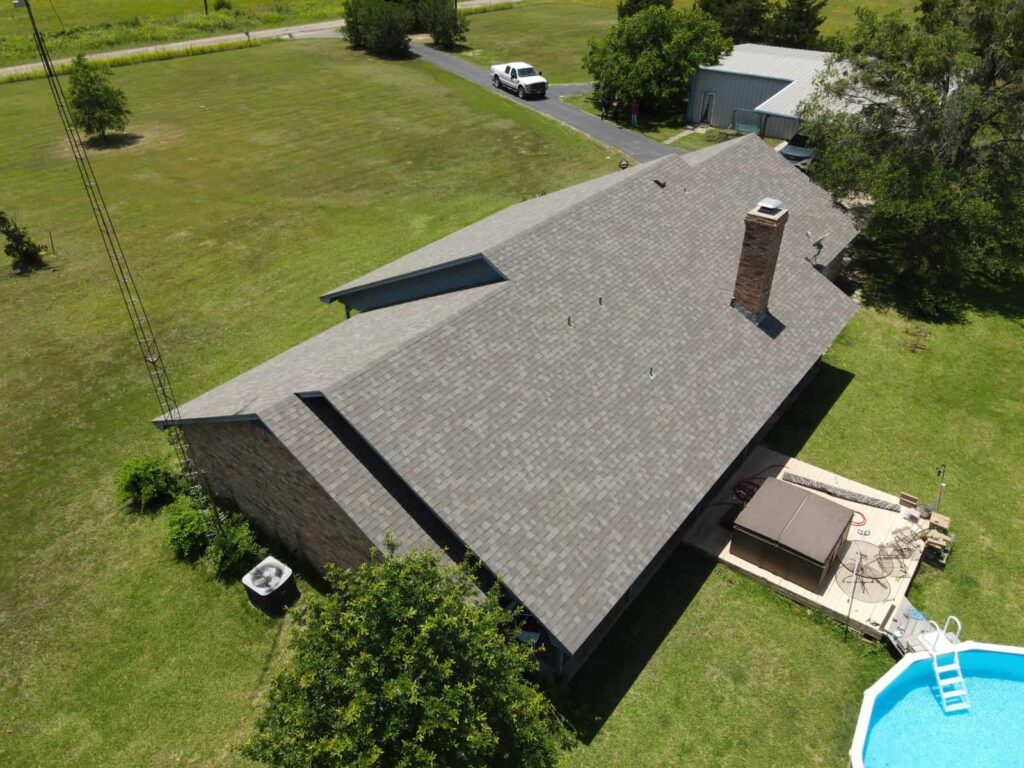
A roof replacement is genuinely warranted when the roof has reached the end of its service life rather than when it has a problem. Multiple leaks in a season, brittle shingles that crack under a boot, widespread granule loss, or storm damage across whole slopes are the usual signs. A single leak, on a roof that is otherwise sound, is a repair, and we will tell you that even though it is the smaller invoice.
The work itself is not complicated, but there is a right order to it, and most of the shortcuts that get taken in this trade happen in that order. Tarps and protection first. Complete tear-off down to the deck, not a layover. Decking inspected and repaired where it is soft. Ice-and-water or synthetic underlayment as specified. New flashing rather than reused flashing. Ventilation corrected while the roof is open, because that is the only convenient moment it will ever be. Then the roofing system itself, then clean-up, then a walkthrough with you.
Roofing has very low barriers to entry, and after a hailstorm the number of companies operating in a county can double for a season. That is why estimates for the same roof vary so widely, why the least expensive bid so often turns out to be a layover rather than a tear-off, and why the question that matters most is not what the total is but who will still be answering the phone in four years. Everything on this page, the photographs, the written estimate, the written warranty, the local address, exists to answer that question in a way you can verify rather than take on faith.
It is also worth being clear about what a roof replacement does not fix. A new roof will not solve a ventilation problem on its own, will not repair siding or fascia that has already gone, and will not stop a chimney with failed masonry from taking water. Those things get identified during the inspection and quoted separately, visible as their own lines, so you can decide what you want done now and what can wait. Rolling everything into one total is how homeowners end up unable to tell whether they were charged for work that happened.
We work in shingle and in metal, and on most jobs we will price both if you want to see the difference. We are an Owens Corning Preferred Contractor, and we also install GAF, CertainTeed, TAMKO, Malarkey and Atlas systems, so the recommendation is driven by the roof in front of us rather than by whatever we happen to be committed to.
Everything below is in the roof replacement price we quote you
Complete tear-off
A roof replacement goes down to the deck, so what is underneath can actually be seen and dealt with rather than covered up.
Decking inspection and repair
Soft, delaminated, or rotted sheathing replaced. Photographed before it is covered, at a per-sheet rate you agreed in advance.
New underlayment
Synthetic underlayment across the field and ice-and-water membrane in the valleys and at vulnerable details, per the manufacturer’s specification for the system.
New flashing throughout
Step, valley, and counterflashing, plus new vent boots and pipe collars. Flashing is where roofs leak, and reusing it to save an hour is a false economy.
Ventilation corrected
Intake and exhaust balanced while the roof is open, the one moment in a roof’s life when it is straightforward to fix.
Daily clean-up and nail sweep
Tarps down before we start, debris hauled away, and a magnet over the yard, drive, and beds each evening. Not just on the final day.
Start to finish, in order
Free inspection and photographs
We get on the roof, document the condition, and confirm whether a roof replacement is genuinely the right call.
Written estimate
Set out in plain terms, with the decking rate named per sheet, so nothing that comes up later is a surprise.
System and color selection
We go through the options with you, shingle or metal, standard or impact-rated, with the trade-offs stated plainly.
Delivery and protection
Material delivered, landscaping and windows protected, drive tarped, dumpster or trailer positioned before anything comes off.
Tear-off, deck, install
The roof replacement itself: old roof off, deck repaired, underlayment and flashing in, new system installed to spec. Most homes are one day.
Walkthrough and paperwork
We walk the property with you, hand over the photographs and warranty documentation, and register the manufacturer coverage where the system requires it.
Four things we do on every single job
Photographs, not opinions
Every problem area is photographed and shown to you before anybody quotes a price. You keep the images whatever you decide.
In writing
The roof replacement estimate names the products going on your roof and so you can compare it against anybody else’s.
Cleaned up daily
Beds and shrubs covered before work starts, and a magnet over the yard and driveway at the end of every working day.
A local phone number
Our shop is on Como St S in Sulphur Springs. The company that fits your roof is the one you call in year four.
Every roof replacement we do is the same job done the same way: old roof off, decking checked, new system on to manufacturer spec, the site swept for nails at the end of every day, and a written estimate you agreed to before anybody started.
What happens in the first hour, and why it decides the job
The first hour of a roof replacement is when a roofing company’s actual standards become visible, and it is also the hour no homeowner is watching closely. Once the old shingles come off, the deck is exposed and every decision about what to do with what is found gets made right there. A crew under pressure to finish in a day has an obvious incentive to call marginal decking acceptable and keep moving.
What we do instead is photograph the deck before anything goes back over it. Soft sheets, delamination around the fasteners, gaps at the seams, and rot around penetrations all get documented, and anything replaced is documented as replaced. It takes a few minutes and it means the invoice for decking, if there is one, comes with evidence attached rather than an assertion you are asked to take on trust. You keep those photographs whether or not any decking needed replacing at all.
The same hour is when the honest version of the estimate gets tested. If your estimate quoted a per-sheet rate for decking, the cost of what is found is arithmetic you already agreed to. If it did not mention decking at all, you are now negotiating mid-job with your roof open and the crew standing around, which is a bad position to be in and a reasonably common sales tactic in this trade. The difference between those two mornings is decided weeks earlier, at the point somebody either wrote the decking line into the estimate or left it out.
When a roof replacement is the right call rather than a repair
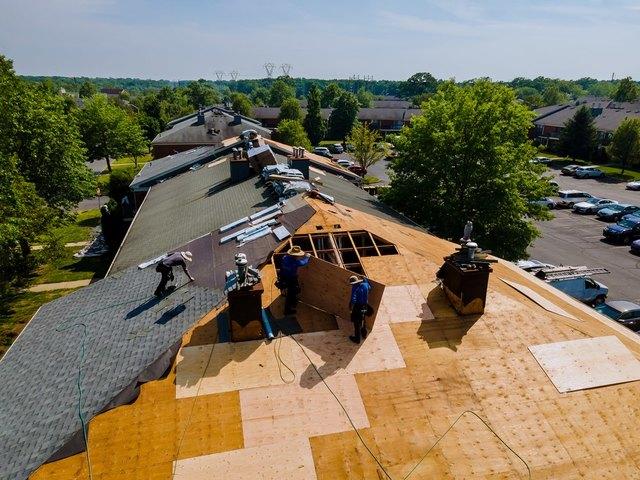
Any one of these is worth a free look, and each one is a common reason a roof replacement gets scheduled. None of them get less expensive by waiting.
The roof is at or past its rated service life, typically fifteen years or more for builder-grade asphalt in this climate.
Leaks in more than one location, or a leak that returns in a different spot after being repaired.
Shingles that crack or crumble when walked, which means the mat has gone brittle and repairs will not hold.
Granule loss across whole slopes, exposing the asphalt mat to direct sun.
Storm damage assessed across large areas rather than in isolated spots.
Two or more existing layers, where another layover would be both non-compliant and a way of hiding the deck.
What you can put back on
Four systems cover almost every roof replacement we quote around here. The right one depends on the roof itself, how long you plan to stay, and what your budget will carry.
Architectural asphalt shingle
The most common roof replacement here. Good wind resistance, a 25 to 30 year rated life, the widest color choice, and the most competitive material cost.
Impact-rated (Class 4) shingle
A heavier mat built for hail. Costs more per square, and some insurers offer a premium credit for it, worth a phone call to your carrier before you decide.
Standing seam metal
Concealed fasteners, the longest service life of anything we install, and no exposed screws to back out over time. The highest up-front cost and the lowest long-run one.
Exposed-fastener metal
PBR, PBU, and corrugated panel. Considerably less expensive than standing seam, extremely durable, and the standard on shops, barns, and outbuildings.

Everything comes down to the deck, so what is underneath can actually be seen and dealt with rather than covered up. That is the whole argument for a tear-off over a layover.
Reading a roof replacement estimate properly
Two roof replacement estimates for the same house can differ by thousands of dollars and both be honest, because they may not be describing the same scope. The only way to compare them is to check what each one includes, and the parts that matter most are the ones that are easiest to miss. Tear-off and disposal is one, because a layover is less expensive and it is not the same job. Decking is another, and the presence of a stated per-sheet rate tells you the company expects to look.
Then there is flashing. New step flashing, valley metal, counterflashing at the chimney, and new vent boots are real material and real labor. An estimate that says nothing about them is very likely reusing what is there, which is the single most common cause of a roof leaking within a few years of being replaced. Underlayment is worth checking too: synthetic across the field and ice-and-water membrane at valleys and details is not the same specification as felt everywhere.
Finally, ask what the warranty actually is, in writing, and what starts the clock. Manufacturer coverage often requires the installer to register the roof after completion, so ask for confirmation that it was registered, because that step is easy to skip and impossible for you to verify later.
Shingle or metal, the decision without the sales pitch
The honest version of this roof replacement comparison starts with how long you intend to own the house. Architectural asphalt is the less expensive roof today and will very likely need replacing once more in a long ownership. Standing seam metal costs substantially more up front and, installed properly, is plausibly the last roof the house needs. Over a fifteen-year horizon asphalt usually wins on money. Over a forty-year one metal usually does.
Then there are the factors specific to your roof rather than your timeline. Complex rooflines with many valleys, dormers, and penetrations are more expensive in metal, because every one of those details has to be fabricated and flashed rather than shingled over. Low-slope sections change what is even permissible. Hail history matters in the other direction: metal dents but sheds, impact-rated shingle resists but eventually bruises, and standard shingle is the most likely of the three to need a claim.
Noise, appearance, and resale come up constantly and deserve straight answers. A metal roof over a properly decked and underlaid attic is not appreciably louder in rain than shingle, because the drumming people remember is from panels fixed to open purlins on a barn. Appearance is genuinely subjective, though standing seam suits the farmhouse and modern-rural rooflines common out here better than a traditional brick suburban. On resale, both are marketable, and what moves a buyer is documentation showing the roof is recent and was installed by somebody they can still phone.
Straight answers, free of charge
The inspection, the photographs, and the written estimate cost nothing and commit you to nothing. If the honest answer is that you do not need this work yet, that is what the estimate will say.
What moves the number on a roof replacement
For an average single-story home in Northeast Texas, a roof replacement with asphalt shingles typically runs $6,000 to $14,000, including tear-off and disposal. Architectural shingles usually run $8,000 to $14,000, Class 4 impact-resistant shingles $10,000 to $17,000, and metal about $12,000 to $30,000 or more. These are typical Northeast Texas ranges, not a quote: the price for your roof is set after a free on-site inspection and a written estimate. Prices by home size and material are set out in our roof replacement cost guide.
Roof size in squares
Roof replacement is priced per hundred square feet of roof surface, which is always more than the footprint of the house.
Pitch
A steep roof is slower, needs more fall protection, and cannot be walked the way a shallow one can.
Complexity
Valleys, hips, dormers, skylights, and chimneys all add flashing detail and labor. A simple gable is the least expensive roof to replace.
Layers and disposal
Two or three layers to remove is more labor and much heavier disposal than one.
Decking repair
Unknown until the roof is open. Quoted per sheet up front so the exposure is bounded.
System choice
The gap between builder-grade shingle and standing seam metal is usually the largest single variable in the whole estimate.
Shortcuts that cost you later
A layover instead of a tear-off
Less expensive on the day, hides the deck completely, adds weight, and traps heat against the new layer. It is the most expensive way to save money on a roof.
Reused flashing and old vent boots
A cracked vent boot is a five-dollar part that causes a four-thousand-dollar ceiling repair. Replacing them during a tear-off costs almost nothing.
Unregistered manufacturer warranty
Some systems require the installer to register the roof for the coverage to exist. Nobody tells the homeowner when that step is skipped.
No photographs of the deck
If nothing was documented before the new roof went on, there is no way to settle a question about what was underneath. Ask for the photographs.

Roof replacements in this part of Texas
Hail is the reason most roof replacement work happens around here, and it does not fall evenly. One side of a town can be stripped while the other side is untouched. That is why a free inspection is worth having even when your neighbor’s roof looks fine, and why documentation matters: the damage nobody photographed is the damage that becomes difficult to prove months later, once the next storm has been through and the dates start to blur together. The NOAA Storm Events Database keeps the dated record of what came through each county.
Timing is the other local factor. Spring is when the storms come and also when every roofing company in the region is busiest, which means the wait for non-urgent work stretches out. Late summer through winter is when scheduling is easy, material lead times are short, and you have time to compare estimates properly rather than deciding in a hurry with a tarp on your roof. If your roof is aging but not yet failing, booking it in the quiet part of the year is the least expensive decision available to you.
The second factor is heat. A roof that would comfortably reach thirty years in a milder climate can lose years to a poorly ventilated attic in a Texas summer. Ventilation is treated as part of a roof replacement here rather than an optional extra, because the roof is only open once and doing it then costs a fraction of what it costs later. The National Roofing Contractors Association publishes the ventilation ratios manufacturers write their warranties against.

Questions About Roof Replacement
Most single-family homes are one day, start to finish. Complex rooflines, steep pitches, extensive decking repair, or larger properties can run two to three days. We tell you which yours is at estimate stage rather than on the morning of the job.
Most asphalt shingle replacements on an average single-story home here land between $6,000 and $14,000, with tear-off and disposal included, and Class 4 impact-resistant shingles add a few thousand to that. Metal starts around $12,000. Roof size, pitch, the layers coming off and the decking move the number either way. These are typical ranges, not a quote, and the real figure comes from a free inspection and a written estimate.
On a roof replacement we only tear off what we can dry in the same day, and the crew watches the forecast rather than the calendar. If weather moves in, the exposed area gets covered and secured before anybody leaves. That is why an open deck is never left overnight, and why we would rather push a start date than open a roof into a storm.
Sometimes, because on a roof replacement the decking cannot be seen until the old roof is off. That is exactly why the estimate carries a decking rate agreed in advance, so anything found is arithmetic you already approved rather than a negotiation with your roof open. Whatever gets replaced is photographed before it is covered.
A 10-year workmanship warranty from us, plus the manufacturer coverage on the system itself. Manufacturer coverage often requires the installer to register the roof after completion, and we do that and confirm it to you in writing, because it is easy to skip and impossible for a homeowner to verify later.
Other Services
Let’s get somebody up there to look.
Fill out the form or pick up the phone. Either way you get straight answers about your roof replacement and a written estimate you can keep.