Insurance claims: get the damage on the record while it's still fresh.
Storm season in Northeast Texas does not give much notice. Once hail or a straight line wind has been through, the most useful thing you can do is get the roof looked at and photographed while the evidence is still sitting on it. DJJ Roofing has supported roof insurance claims across Hopkins, Hunt, Franklin, Delta and Wood counties since 2015, and the part we own is the documentation: what is up there, where it is, and what it will take to put right.
How a storm claim actually goes.
Most homeowners buy a roof once or twice in a lifetime, so the sequence below is unfamiliar territory for almost everybody who calls us. Roof insurance claims follow a fairly predictable path, and knowing the order of it makes the whole thing far less stressful. Five stages, and you are only responsible for two of them: making the call, and deciding what you want done.
Call or book online
Reach out and we schedule the free inspection at a time that suits you.Free inspection
We get on the roof and document everything we find with photographs and notes.Documentation
Contractor-observed damage written up as factual scope information for your adjuster.Claim support
We stay reachable through the claim and can answer scope questions when asked.The repair
Once it is approved, our crew does the work and leaves the site clean.The timing matters more than most people expect. Many policies ask that damage be reported promptly, and a roof that sat through two more storm seasons before anybody looked at it is harder to write up cleanly, because the newer damage and the older wear are layered on top of one another. That is the single most common reason a homeowner ends up frustrated. Getting an inspection on the calendar in the days after a storm, rather than the following spring, keeps the picture simple.
Booking an inspection is not the same as filing. Plenty of the roofs we look at turn out to have nothing worth reporting, and we will tell you that plainly and put it in writing so you have a dated record either way. You can read how that written estimate is put together on our storm damage page.
What actually goes in the file.
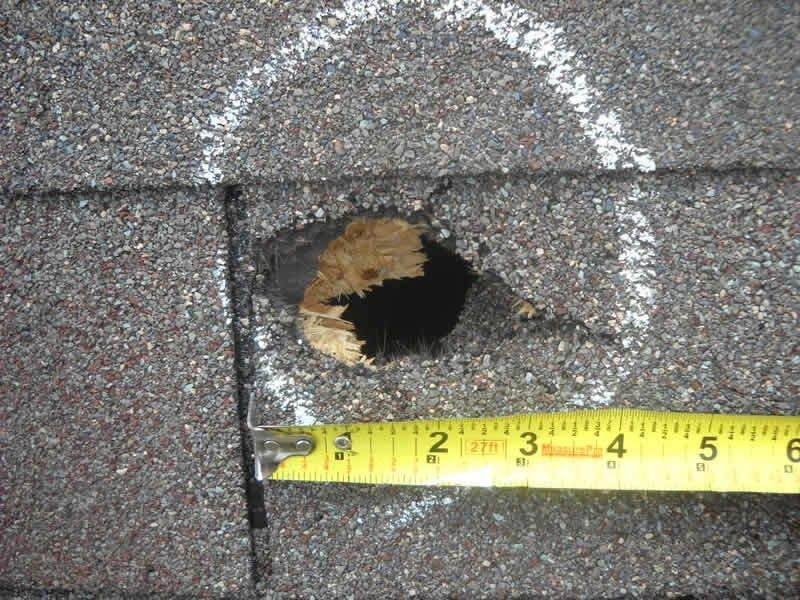
Roof insurance claims are decided on evidence. The more specific and the more dated that evidence is, the less of the process comes down to interpretation later on. When we inspect a roof we are not writing an opinion piece, we are recording measurable facts: the slope and elevation each mark sits on, the impact size, whether the mat underneath is fractured, and how the soft metal has taken it.
Soft metal is worth explaining, because it is the part homeowners rarely think about and adjusters look at first. Vents, valley flashing, gutters and gutter aprons are thinner than shingle, so they bruise and dent at a lower impact than the field of the roof does. A dented turbine vent is a dated, physical record that hail of a certain size landed on that elevation. It is often the clearest single piece of evidence on the whole property.
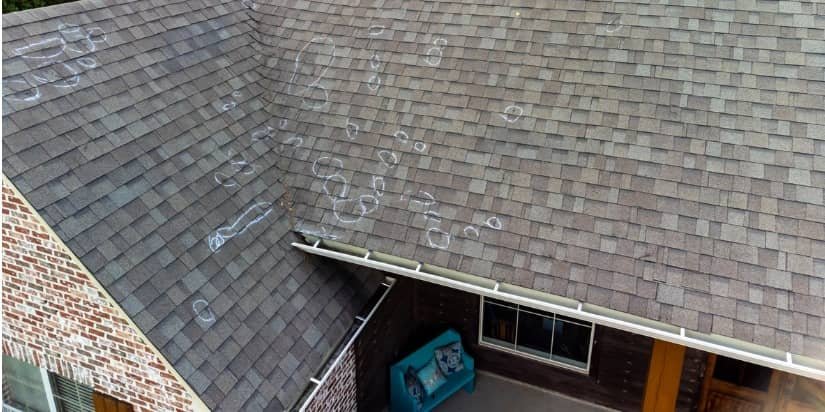
Everything we find is photographed with something in frame for scale, marked so the location is unambiguous, and written into a written scope. That scope is factual information about the roof, prepared for your file. It is not a demand and it is not a negotiation. Insurance claims are settled between you and your carrier, and the paperwork we hand you is simply the roofing detail neither of you should have to guess at.
Photographs with scale
Slope and elevation noted
Measurements and counts
A written scope
Signs a storm did more than make noise.
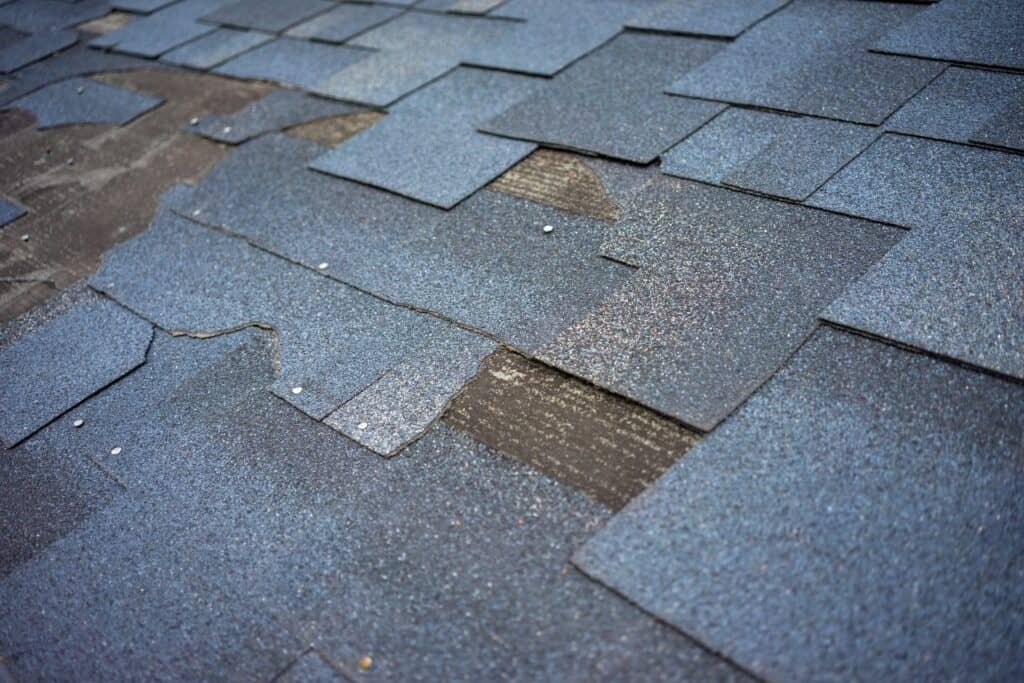
You do not need to climb up to get a reasonable idea of whether something happened. Most of the early indicators are visible from the ground, from a window, or from inside the attic with a flashlight. Any one of them is reason enough to book a look, and several together are what most roof insurance claims begin with.
A note on coverage
Who decides what, and what it costs you.
This is the part of roof insurance claims that causes the most confusion, so it is worth being direct about it. There are three parties involved and each one has a different job. You report and decide. Your carrier assesses and pays. We inspect, document and, if the work goes ahead, build the roof.
Your carrier decides coverage
Your deductible is yours to pay
You choose your own contractor
Replacement cost and actual cash value
Supplements when the scope was short
Damage nobody photographed is damage that is hard to prove.
The gap between straightforward insurance claims and frustrating ones is almost always the record. A roof photographed the week after the storm tells a clean story. The same roof photographed two years later has weathered, the granule loss has spread, and separating the storm from ordinary aging becomes genuinely difficult for everybody involved, including the adjuster who wants to be fair about it.
None of that requires you to file anything. An inspection is free, it takes under an hour, and you keep the photographs and the written findings whatever you decide afterwards. If there is nothing there, you have a dated record showing the roof was sound. If there is something, you have it captured while it is fresh.
That record is also worth having when you sell. A documented storm inspection, and the invoice for any work that followed, answers the question every buyer’s inspector asks about a roof of a certain age in this part of Texas.
What to do in the first week.
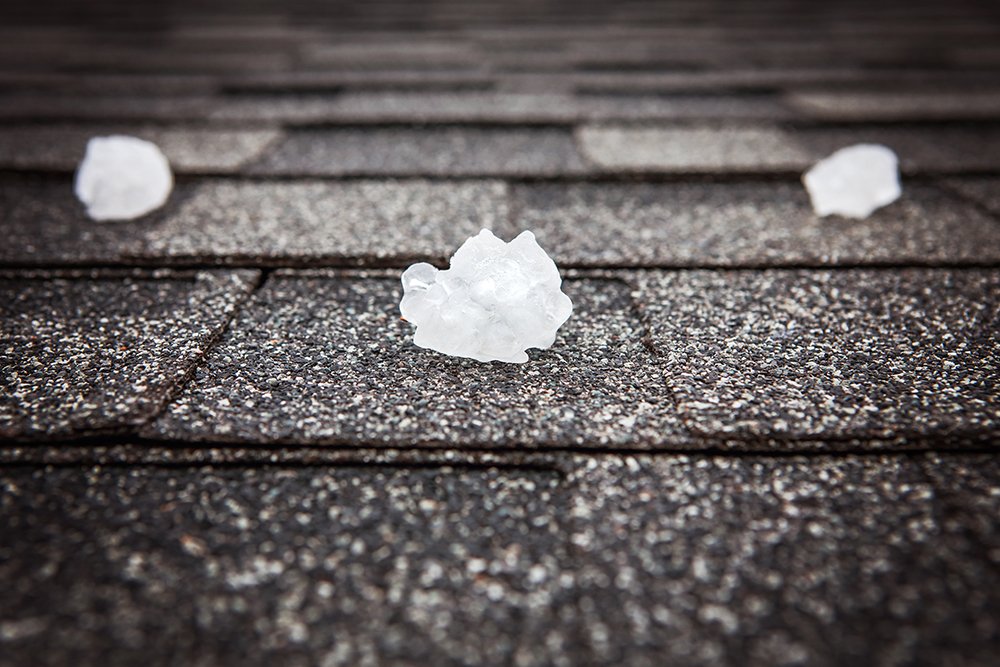
Nothing here is urgent to the point of panic, but the order helps. Safety first, then the record, then the phone calls.
Right after the storm
- Stay off the roof. Wet or hail-struck shingles are slick, and a fall costs more than any claim is worth.
- Photograph what you can see safely from the ground and from inside the attic, and note the date and time.
- If water is actively coming in, get it covered. Emergency tarping is usually treated as reasonable mitigation, so keep the receipt.
- Write down the date of the storm. Local news and the National Weather Service both confirm it, and a dated event is easier to reference later.
Once the claim is open
- Read your declarations page for the deductible and whether the roof is covered at replacement cost or actual cash value.
- Book the inspection so there is a written, photographed scope in the file before the adjuster visits. Most insurance claims go smoothly when both sides start from the same document.
- Keep everything in one place: the claim number, the adjuster's name, every estimate and every piece of correspondence.
- Ask questions in writing where you can. A short email trail is easier to refer back to than a series of phone calls.
One thing worth saying plainly: filing is your call, not ours. Some of the roofs we inspect have damage that is real but limited enough that a repair costs less than the deductible, and in that situation filing does not help you. We will say so. Insurance claims are worth making when the loss is genuinely bigger than the deductible, and a written scope is what tells you which side of that line you are on.
Why this comes up so often here.
Northeast Texas sits at the eastern edge of the country’s most active hail corridor. Spring storms running along the I-30 corridor through Greenville, Commerce and Caddo Mills regularly produce hail large enough to bruise a shingle, and the same systems carry on through Hopkins and Franklin counties. The National Centers for Environmental Information keeps a public Storm Events Database where you can look up confirmed hail and wind reports for your own county by date, which is useful when you are trying to establish when something happened.
The practical consequence is that roofs in this region age differently than the manufacturer’s brochure suggests. A shingle rated for thirty years is rated under laboratory conditions, not under a hailstorm every few springs. It is entirely normal for a roof here to need attention well before that number, and that is exactly the risk a homeowner’s policy exists to cover. It is also why roof insurance claims are a routine part of owning a house in this part of the state rather than a rare event.
The Texas Department of Insurance publishes plain-language guidance for homeowners on this, including its storm resource page and its home insurance guide. Both are worth ten minutes before you pick up the phone to your carrier, and both are free and written for homeowners.
Impact-rated shingles are the other half of the conversation. A shingle that carries a UL 2218 Class 4 rating is built to take a strike without fracturing the mat, and most Texas carriers offer a premium credit for having them on the roof. The size of that credit varies by carrier and by policy, so the number to trust is the one your own insurer quotes you. We install Class 4 products from several manufacturers and can price the upgrade alongside a standard replacement so you can compare them properly.
A roof is more than the shingles on top of it.
One of the most common surprises in roof insurance claims is how much of the system sits underneath the part you can see. A replacement is not simply new shingles laid over the same structure, and a scope that only counts shingles is describing a fraction of the job. These are the components that get inspected and named on every estimate we write.
Decking
Underlayment
Flashing and valleys
Ventilation
Drip edge and gutters
Cleanup and disposal
Listing all of it separately is deliberate. When every component has its own line, you can see exactly what you are paying for, your adjuster can match our scope against theirs in detail, and nothing has to be reinterpreted six weeks later. That transparency is worth more in roof insurance claims than any amount of persuasion, because it turns a disagreement about a total into a short conversation about one line.
It is also why we do not quote a roof from the driveway. Until somebody has been on the roof, into the attic, and around the perimeter, half of the list above is guesswork. The written estimate you are handed at the end of an inspection reflects what is actually there. You can see how the same approach applies to a full roof replacement.
Where to go next.
Questions about roof insurance claims
That is a decision your insurance company makes, and it varies by carrier, by policy and by your claims history, so nobody outside your insurer can answer it honestly. What we can tell you is the size of the loss, because that is the number most insurance claims decisions turn on. If the repair costs less than your deductible, filing gains you nothing and we will say so. If a roof genuinely needs replacing, that is the situation the policy was bought for. Your agent is the right person to ask about premium impact before you file.
No, and it is worth understanding why. In Texas, negotiating or settling a claim on a homeowner’s behalf is work reserved for a public insurance adjuster, a separate role the state regulates. We are roofers. What we do is inspect the roof, photograph and measure what is there, and prepare a clear written scope, so you and your adjuster are looking at the same detail. We stay reachable and answer scope questions when they are put to us. The claim itself stays between you and your carrier.
The inspection is free and it commits you to nothing at all. You are handed the photographs and a written estimate at the end of it, and those are yours to keep whatever you decide. Plenty of the roofs we look at do not need work yet, and a dated record showing the roof was sound is worth having on its own. There is no obligation to file and no obligation to use us for the repair.
Most Texas homeowner policies ask that damage be reported promptly, and some set a specific deadline, so the answer is on your own policy rather than in a general rule. In practice the sooner the better, for a reason that has nothing to do with paperwork: evidence weathers. A roof looked at within weeks of a storm tells a much cleaner story than one looked at two seasons later, once the granule loss has spread and the newer damage sits on top of ordinary wear.
Not necessarily, though it is a fair reason to have yours checked. Hail falls in narrow, uneven swaths, and it is common for one street to file insurance claims while the next one over is untouched. Roof age, pitch, orientation and shingle type all change how much damage a given storm does. The only way to know is to have somebody look at your roof specifically, which costs you nothing.
Let's get somebody up there to look.
Fill out the form or pick up the phone. Either way you get straight answers about your roof and a written estimate you can keep.