Storm Damage Roof Repair in Princeton, TX
DJJ Roofing has been doing storm damage roof repair in Princeton since 2015, working out of one shop in Sulphur Springs. Princeton is at the far western edge of what we cover, so we run it as a scheduled day rather than a single call. Inspections are free, the photographs are yours to keep, and the estimate is written down before anything starts.
- Free damage assessment with dated photographs
- Documentation prepared for your carrier
- Active leaks jump the queue

Storm damage roof repair in Princeton
Collin County sits on the Dallas side of our area, where storms tend to arrive with less warning than they do further east, and the open ground around Princeton gives wind very little to slow it. After a storm the useful question is rarely whether the roof was hit, but whether the damage is the kind that matters and whether anybody has documented it properly.
Everything below is included in the price we quote for storm damage roof repair in Princeton. There is no separate line for showing up, no charge for the inspection, and nothing added afterwards that was not on the estimate you agreed to before the work started.
Wind damage
Lifted, creased and missing shingles, and seals broken along the tab line. A shingle that looks fine but has lost its seal is the one that leaves during the next storm. It is included in the price quoted for a Princeton address, never billed after the fact.
Emergency tarping
Where a Princeton roof is open to the weather, getting it covered comes first. A temporary cover buys time to do the permanent repair properly rather than in the rain. That is the standard on every Collin County job we take on, not an upgrade.
Adjuster meetings
We will meet your adjuster on site and walk the roof with them, so the damage is being discussed in front of the evidence rather than from photographs alone. On a Princeton roof that is part of the same visit rather than a separate call-out.

Why Princeton gets its own page
Princeton is the newest roof stock we work on anywhere. The town has grown very quickly along US-380 as the Dallas metro has pushed east, so the large majority of what we see is subdivision shingle laid within the last twenty years, much of it builder-grade. Older farm property still sits on the edges of it, and that is a completely different kind of job.
We keep a separate page for Princeton rather than one page for the whole region because the answers genuinely differ. Roof age, pitch, material and exposure all change what the right job is, and a general page cannot say anything useful about any of them.
Princeton is at the far western edge of what we cover, so we run it as a scheduled day rather than a single call. There is more about the area on the Princeton page, and more about the work on the Storm Damage Roof Repair page.
Practically, it means we are in Princeton often enough that a job there is not a special trip. That keeps scheduling short, and it keeps us available if something needs looking at again afterwards, which matters more than most people expect when they are choosing a roofer.
Weather that shortens a Princeton roof
Collin County sits on the Dallas side of our area, where storms tend to arrive with less warning than they do further east, and the open ground around Princeton gives wind very little to slow it. None of it is dramatic on the day. It is cumulative, and it is why a roof here rarely reaches the number of years printed on the wrapper without somebody looking at it.
That is what the free inspection is for. Before we quote storm damage roof repair in Princeton we photograph every slope, so you can see which of these has actually happened to your roof rather than guessing at it from the ground.
Storm season
Most of the roof damage we document around Princeton happens in a handful of spring storms. The rest of the year is mainly heat and time.
Heat and attic temperature
An attic that runs hot through a Collin County summer ages the shingle above it from the underside, where nobody is looking.
Water that does not leave
Blocked gutters and flat spots hold water against the roof edge long after the rain has stopped. That is a slow failure rather than a sudden one.
What we see on Princeton roofs
Most Princeton roofs are already architectural shingle, so the real decision at replacement time is whether to step up to an impact-rated line. On two-story elevations with little shelter that case is stronger than it is on a sheltered single-story house, and many carriers offer a premium credit worth asking about.
Collin County is one of the fastest-growing counties in Texas, and Princeton has grown with it. That has a practical roofing consequence: enormous numbers of roofs in the same town went on within a few years of each other, so they also reach the end of their lives together.
What we work on here
Overwhelmingly newer single-family housing, a great deal of it two-story, put up as the town expanded along US-380. Roofs are mostly architectural shingle of one grade or another, with consistent geometry across whole streets. Out past the subdivisions there is still farm property with metal on shops and barns, which is the older Princeton underneath the new one.
What we get called for
Storm damage on young roofs, more than anything else. A roof that went on twelve years ago with builder-grade shingle and has since taken a hail event is the single most common Princeton job. The useful question there is almost never whether to replace it, but whether the damage is the kind a carrier will cover.
How the year runs here
Princeton runs on events rather than on the calendar. Because the stock is young, very little of what we do there is about age; a single spring hail or wind event generates most of a season of work, and the months either side are quiet by comparison.
Most of it is not a hole in the roof
People expect storm damage to be dramatic. Around Princeton most of what we document is subtle, which is exactly why it goes unreported until it has become something worse.
None of it is visible from the ground, which is the practical problem. A Princeton roof can look completely sound from the yard and be two or three years from a leak, and the only way to know which is to get on it and photograph what is actually there.
Wind-driven rain
Water pushed sideways gets past details that handle vertical rain without trouble. That is why a roof can leak once in five years and then never again. Regular enough at Princeton addresses that we look for it first.
Damage that shows up later
A broken seal does nothing until the next strong wind. Plenty of what we repair was caused by a storm several months earlier. It is one of the more common findings around Collin County.
Directional damage
Damage concentrated on one elevation is a storm signature. It is also what a ground-level look misses completely. It is one of the more common findings around Collin County.

What to do after a storm in Princeton
The order matters, particularly if a claim is going to follow. This is the sequence we would suggest to anybody, whoever ends up doing the work.
Nothing in that sequence costs you anything until you agree to the written estimate. The inspection, the photographs and the quote for a Princeton property are free either way.
Make it safe
If water is coming in, get a container under it and move what matters. Do not get on a wet roof yourself. The same on a small repair and a full replacement in Princeton.
Call for an assessment
Have it documented while it is fresh. Dated photographs taken soon after a storm carry real weight with a carrier. This does not change from one Collin County job to the next.
We inspect and photograph
Every elevation walked and recorded, because storm damage is often on one slope only. Standard on all our Collin County work.
You get the documentation
Photographs and a written summary of what we observed, in a form you can hand straight to your carrier. This does not change from one Collin County job to the next.
Repair or replace
Once coverage is settled, the work itself. Most Princeton storm repairs are a single visit. No Princeton job skips this stage.
Six things to look for after a Princeton storm
Most storm damage is subtle, which is exactly why it goes unreported until it becomes something worse. You can check for several of these from the ground.
None of these is an emergency on its own. Together they are usually the difference between a repair this season and a replacement two seasons from now, which is a large enough gap to be worth an hour of somebody’s time.
Granules washed into the downspouts
A sudden pile of grit after a hailstorm is a strong sign the shingle surface took a general hit. This is one of the more frequent findings on a Collin County roof.
Dents in a metal roof or outbuilding
Anything metal on the property records the hail size for you, which is useful documentation in itself. It turns up often on older properties around Princeton.
Damaged fence, deck or vehicle
Hail that dented a car dented the roof too. Damage elsewhere on the property is part of the picture for a claim. We photograph it on every Princeton inspection where it is present.
Creased shingles visible from the ground
A horizontal line across a tab, particularly on the windward slope. It means the seal is broken even though the shingle is still up there. Common enough on Princeton roofs that we check for it on every inspection.
Damage to a neighboring outbuilding
Anything metal on the property records the hail size for you, which supports the roof assessment. Worth a look from the ground at any Princeton address after a storm.
Screens or window frames dented
Soft metal dents before shingle shows damage, so it indicates whether the property was in the footprint. A regular finding across Collin County, and rarely urgent on the day.
How the insurance side actually works
This is the part that causes the most confusion, so it is worth being plain about who does what and where the limits sit.
Which of these suits a particular Princeton building depends on pitch, exposure and how long you plan to keep it. We would rather talk that through than sell you the most expensive one.
Worth reading elsewhere: the Texas Department of Insurance publishes a plain-English guide to storm claims, and National Weather Service Fort Worth keeps the warning history for this part of Texas.
The deductible
Your share is the deductible, payable whoever does the work. Under Texas law a contractor cannot pay, waive, rebate or absorb any part of it. This comes up often on Princeton jobs and we will quote it on request.
What to photograph yourself
Anything you can see from the ground, dated. Dents on gutters and vents, debris in the yard, and damage elsewhere on the Princeton property all support the picture. We install this regularly on Princeton properties.
When to call the carrier
Generally after you know what the damage actually is. An inspection first means you are reporting something specific rather than a suspicion. It works well on a large share of the roofs we see around Princeton.
What the adjuster measures
Hits per test square, granule loss and mat bruising. Knowing what is being counted is why a documented inspection before the visit is worth having. It is a common choice across Collin County and we stock for it.
What storm damage repair costs in Princeton
If the damage is covered your cost is the deductible. If it is not, the repair is priced like any other and these are the variables.
The range is wide because Princeton properties are. The only honest way to narrow it for storm damage roof repair in Princeton is to get on the roof and measure it, which costs nothing and carries no obligation whatsoever.
What is underneath
Wind-driven water can reach the decking. If sheets need replacing they are priced individually and shown to you. You will see this reflected on a Princeton estimate.
Interior damage
We do not do interior repairs, but we will document what the water reached so it is part of the record your carrier works from. It is assessed the same way on every Princeton job we quote.
Your deductible
If the damage is covered, this is your cost. The carrier pays the covered amount and the deductible is the homeowner share, payable whoever does the work. This is established during the free inspection at your Princeton address.
Get it documented before you decide anything
Whatever you do next, dated photographs of the damage are worth having. We provide them free with no obligation, and the Texas Department of Insurance publishes a plain-English guide to storm claims that is worth reading before you file.
“Excellent service! We were pleased with the work that was completed. Reliable and affordable. Highly recommend!”
 Verified on Facebook
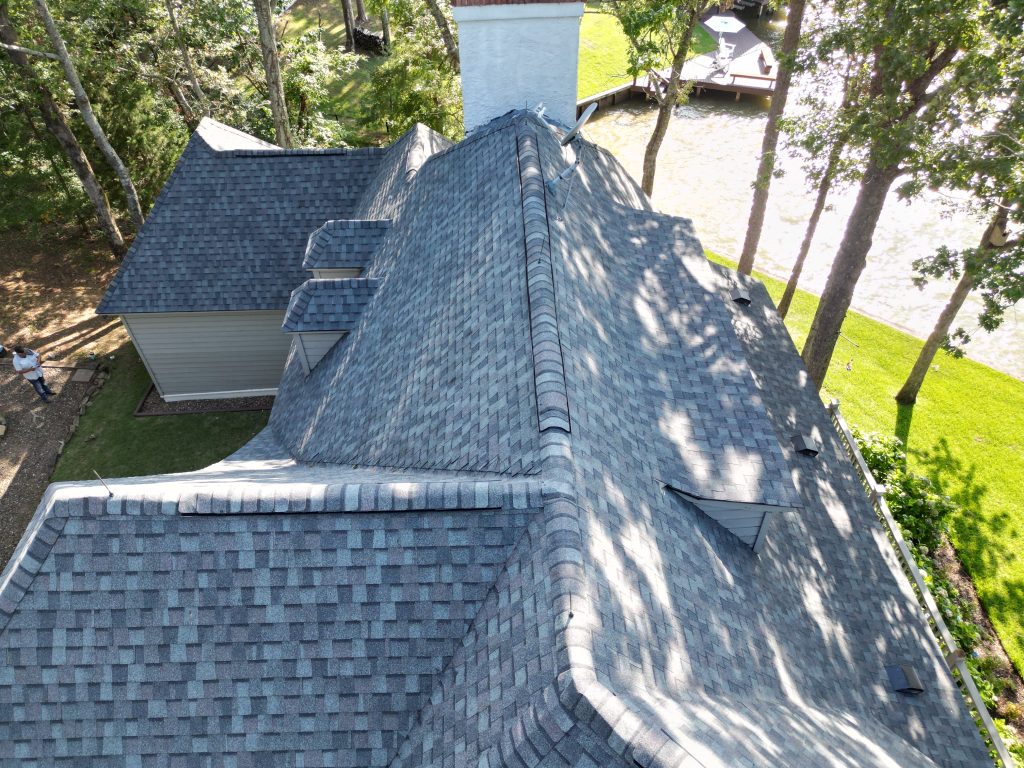
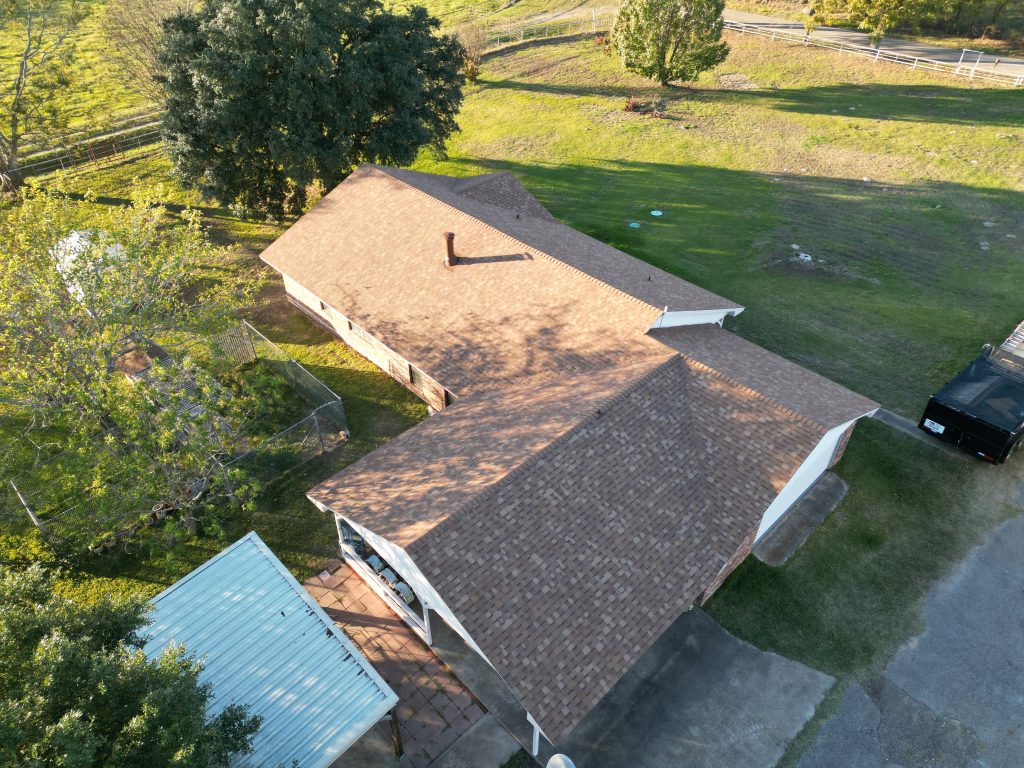
Roofs we have finished around Northeast Texas

Why Princeton property owners call us
If you are weighing up who to call in Princeton, these are the things that actually matter once the work is done and the invoice is paid.
Every one of those is verifiable before you commit to anything. Ask us for the certificate of insurance, read the reviews at the source rather than the ones we chose to reprint, and keep the written estimate somewhere safe once you have it.
Somebody local answers
Eliceo and Daniel handle the calls themselves. There is no call center between you and the people doing the work on your Princeton roof. No exceptions, on any Princeton address.
Scheduling in days
Princeton is at the far western edge of what we cover, so we run it as a scheduled day rather than a single call. Most weeks we can have somebody at a Princeton address within a few days, and an active leak moves to the front of the queue. That has been true for every Princeton job since 2015.
A warranty that means something
Ten years on our workmanship, in writing, on top of whatever the manufacturer covers on the material itself. Two different things covering two different failures. That is how we have worked around Princeton from the start.
4.9 across 76 reviews
Published on Google and Facebook, unfiltered, and a good share of them from Collin County. You can read every one of them at the source. It holds on every job we take in Collin County.
Towns near Princeton
We cover the towns around Princeton on the same trips, so a job a few miles out is rarely a separate journey or a longer wait. Each one below has its own page with the local detail for that area, including what the roofs there have actually been through.
Other roofing work in Princeton
The other jobs we handle at Princeton addresses. If what you need is not storm damage roof repair, it is almost certainly on this list, and each one has a page of its own.
We keep a page per job per town rather than one page for everything because the honest answers differ. Roof age, pitch, material and exposure all change what the right work is at a Princeton address, and a page written for the whole region cannot say anything useful about any of them.
Questions we get about storm damage roof repair in Princeton
Rarely, and neither can anybody else. Hail bruising and granule loss read clearly underfoot and barely at all from a driveway. That is why the inspection is done on the roof.
Soft metal around the property is the useful giveaway. Gutters, downspouts, vents and any metal outbuilding dent before shingle shows damage, so they indicate whether a Princeton property was in the hail footprint at all. For a Princeton address we would rather look at the roof than answer it in general terms, and looking costs nothing.
Storms have a direction and a footprint, and damage genuinely does stop at a property line sometimes. It also depends on roof age, pitch and material. The photographs from your own inspection are what answer that question for your house.
Roof age and material matter as much as location. A twenty-year-old three-tab roof and a five-year-old impact-rated one on the same Princeton street will come out of the same hailstorm in very different condition. For a Princeton address we would rather look at the roof than answer it in general terms, and looking costs nothing.
No. A storm-damaged roof can have loose material, broken decking and slippery debris on it, and the things worth finding are not visible to an untrained eye anyway. Check what you can from the ground, photograph it, and let somebody with fall protection do the rest. If you want that answered for your own Princeton roof specifically, the inspection is free and we will put the answer in writing.
We speak to adjusters, meet them on the roof and provide documentation, and that is genuinely useful. What we cannot do is negotiate or settle on your behalf, because in Texas that is work reserved for a public insurance adjuster. The honest answer for any particular Princeton property depends on what is actually up there, which is what the free inspection establishes.
Yes, where a roof is open to the weather. Getting it covered comes first so the permanent repair can be done properly rather than in the rain. It is a small separate cost and it is usually recoverable on a claim. If you want that answered for your own Princeton roof specifically, the inspection is free and we will put the answer in writing.
Book a free Princeton roof inspection
Tell us what is going on and we will get somebody out to look at it. There is no cost and no obligation, the photographs are yours to keep whatever you decide, and the estimate comes to you in writing rather than as a number over the phone.
Get Your Free Quote
Enter your details below and we will get back to you with a real number.
One call, and somebody is on the roof this week.
It costs nothing to find out what shape the roof is actually in, and you keep the full report whether you go ahead with the work or not. Most people who call us are trying to work out whether they have a problem at all, and that is a perfectly good reason to get in touch.