Roof maintenance: most roofs do not wear out, they get neglected in three specific places.
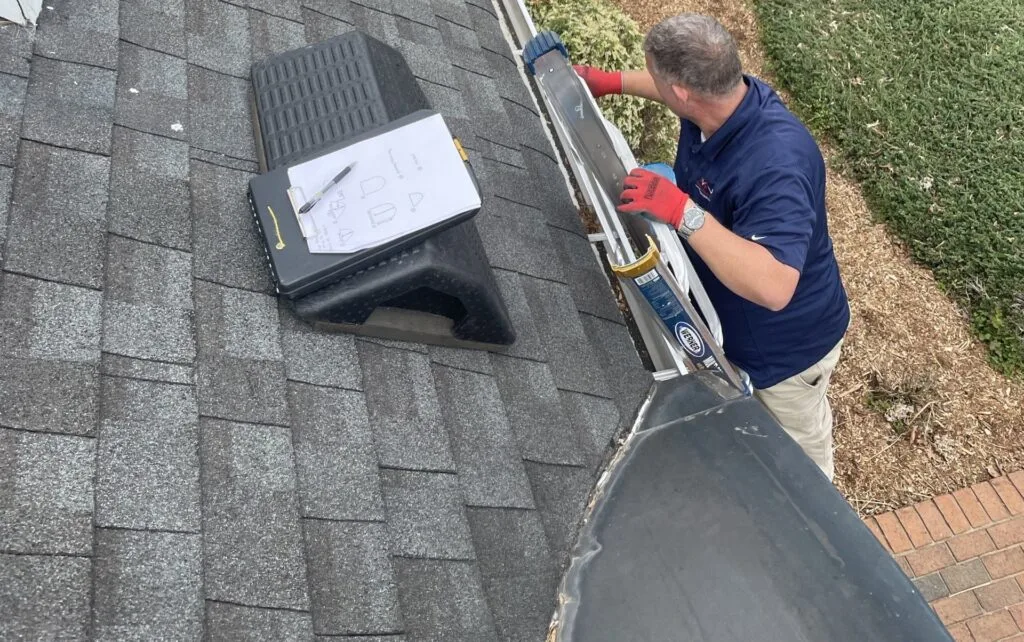
Scheduled roof maintenance across Northeast Texas: the details that age on a predictable timetable checked and renewed before they fail, with photographs and a written record each visit. It is the smallest job in this trade and it buys the most.
Roof maintenance in plain terms
A roof is not one product with one lifespan. It is a covering that lasts decades, sitting on top of a handful of components that do not. Sealant, vent boot collars, exposed fasteners and flashing joints all age on their own timetable, and every one of them is inexpensive while it is still intact and expensive once water has been through it.
Sealant is the shortest-lived thing on your roof and the one nobody thinks about. It is used at counterflashing, around penetrations and at exposed fastener heads, and in this climate it hardens, shrinks and cracks in something like five to ten years. The covering above it may be rated for thirty. Renewing sealant is about the smallest job that exists and it prevents a genuinely large share of the leaks we get called to.
Vent boots are second, and they are the single most common cause of residential leaks we find in this county. The rubber collar around a plumbing stack perishes under UV, splits, and lets water straight in around the pipe. Ten to fifteen years is a normal life for one. Any roof past ten is worth having them looked at, and replacing one is a small job by any measure.
On metal the equivalent is fasteners. The washers under thousands of exposed screws harden and take a compression set, and thermal movement works the screws against their holes until they stand proud. Comprehensive replacement somewhere in the fifteen to twenty-five year range is normal roof maintenance on an exposed-fastener building rather than evidence that anything has gone wrong.
Then there is everything the roof did not put there. Leaf litter in valleys holds moisture against the covering, debris in gutters backs water up behind the drip edge, and branches overhanging a slope scrape granules off every time the wind blows. None of it is dramatic and all of it shortens the roof.
The reason any of this matters financially is that these components fail quietly. A cracked boot does not announce itself; it wets decking for two seasons and then shows on a ceiling, by which point the repair includes sheathing and drywall rather than a twenty dollar part. Roof maintenance is almost entirely about catching things while they are still small.
Everything below is in the roof maintenance visit we quote you
Full Surface Check
Granule loss, cupping, cracking, lifted tabs and any previous repair work, photographed across every slope.
Penetrations And Sealant
Vent boots, pipe collars, exhaust and HVAC penetrations checked, with sealant renewed where it has hardened or cracked.
Flashing And Valleys
Step flashing, counterflashing, valley metal and wall transitions inspected and re-sealed where the detail calls for it.
Debris Removal
Valleys, low slopes and gutters cleared, because standing debris holds moisture against the covering.
Fastener Check On Metal
Exposed screws and washers assessed, with backed-out fasteners replaced rather than re-tightened into worn holes.
Written Record Each Visit
What we checked, what we renewed and what we are watching, with photographs, so the roof has a documented history.
Start to finish, in order
First Visit And Baseline
A full assessment with everything photographed, so there is a documented starting point to measure future visits against.
Agree A Rhythm
Once or twice a year depending on the roof, the trees over it and whether a manufacturer warranty sets conditions.
The Visit
Surface, penetrations, flashing, valleys and drainage checked in the same order every time so nothing is skipped.
Small Work Done There
Sealant renewed, a boot replaced, fasteners dealt with. Anything larger is quoted rather than started.
Written Report
Photographs, what was renewed, and what we are watching for next time, kept as a record for warranty and resale.
Four things we do on every single job
Photographs, Not Opinions
Every problem area is photographed and shown to you before anybody quotes a price. You keep the images whatever you decide.
In Writing
The estimate names the products going on your roof, so you can compare it against anybody else’s.
Cleaned Up Daily
Beds and shrubs covered before work starts, and a magnet over the yard and driveway at the end of every working day.
A Local Phone Number
Our shop is on Como St S in Sulphur Springs. The company that fits your roof is the one you call in year four.
“Eliseo and his crew set the gold standard for professionalism. Within just one hour of my request, they had a drone in the air and a full estimate with photos in my inbox. The pricing was very reasonable, the work was finished exactly on time and to a high standard.”

The three places roofs are actually neglected
The first is every place something passes through the roof. Plumbing stacks, bathroom and kitchen exhausts, HVAC penetrations and any conduit added since the building went up. Each is a hole in the weather surface sealed by a component with a shorter life than the covering around it, and each is checked individually rather than glanced at.
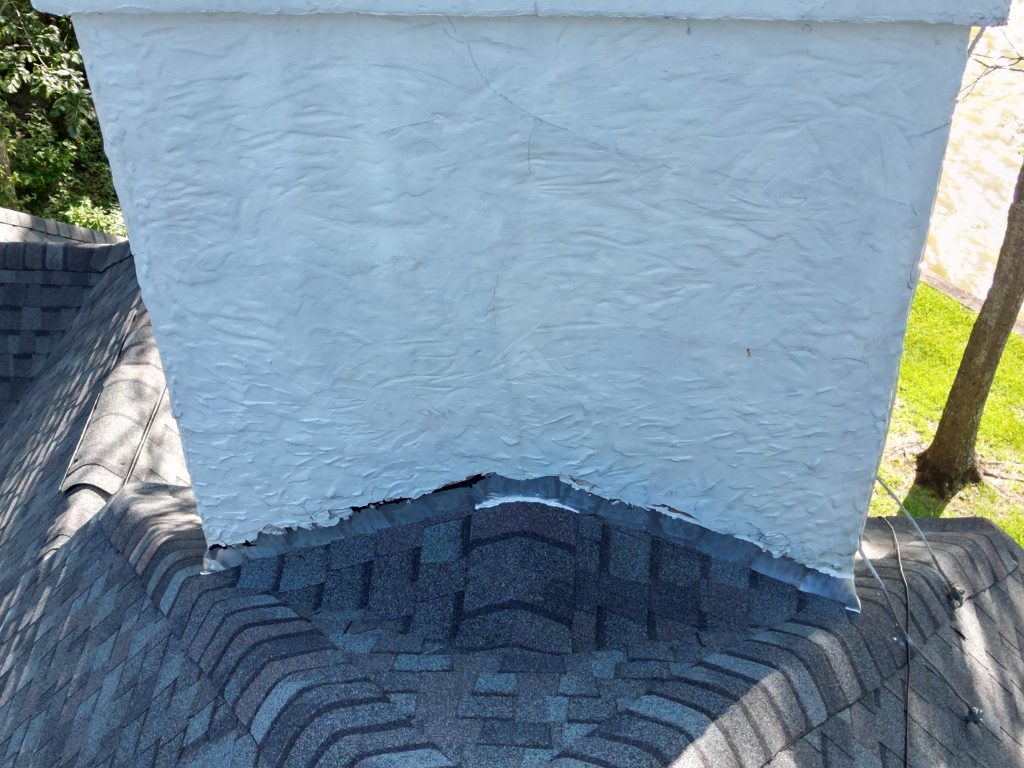
The second is every place the roof stops or meets something else. Chimney counterflashing, sidewall and step flashing where a roof meets a wall, valley metal, and the junction where an addition ties into the main roof. These move slightly with the building through every season, and movement is what eventually opens a joint that was sound when it was fitted.
The third is drainage, which is really the whole roof edge. Valleys full of leaf litter, gutters backing water up behind the drip edge, and downspouts discharging at the wall. That side of it is covered in more detail on our gutter cleaning page, and it is genuinely half of what shortens a roof here. The National Roofing Contractors Association publishes the maintenance guidance these visits follow.
When roof maintenance is worth booking
Any one of these is a reason to get on a rhythm rather than wait for something to show on a ceiling.
The roof is past ten years old and nobody has been up there since it was fitted.
You have a manufacturer warranty and want to keep meeting its conditions.
Trees overhang the roof, so valleys and gutters fill every season.
It is a metal building with exposed fasteners approaching fifteen years.
You have had one leak already, which usually means the details are of an age.
It is a commercial or low-slope roof, where drains and seams need checking on a schedule.
The kinds of roof maintenance we do
Four, and which one suits depends on the covering and on how the building is used.
Annual Residential Visit
The standard rhythm for a shingle roof with nothing much overhanging it. Surface, penetrations, flashing and drainage.
Twice-Yearly Under Trees
Autumn after leaf drop and spring after seed and pollen, on houses where valleys and gutters fill fast.
Metal Building Program
Fastener condition, closures, laps and trim, with whole-roof screw replacement scheduled when it is genuinely due.
Commercial And Low-Slope
Drains and scuppers cleared, seams and terminations checked, and ponding areas photographed and tracked over time.
Registration documents, the original specification and every maintenance report belong in one place. We keep copies of everything we issue, so if yours have gone astray, ask and we will send them again.
Your warranty probably has conditions attached
Manufacturer coverage on a roofing system is not unconditional. It generally assumes the system was installed to specification, that it has been reasonably maintained, and in some cases that the coverage was registered when the roof went on. Most homeowners have never read those terms, and find out what was in them at the point they most need the coverage to apply.
A documented maintenance history is what turns that from an argument into a record. Dated photographs and a written note of what was checked and renewed at each visit demonstrate that the roof was looked after, which is precisely the question a manufacturer asks. Owens Corning, whose systems we install as a Preferred Contractor, publish their coverage terms openly.
The same record does two other jobs. It establishes the condition of the roof on given dates, which matters after a storm, and it is a genuine asset at resale, because a buyer looking at a documented roof is looking at a known quantity rather than an unknown one they will price cautiously.
Maintenance, inspection, and repair are three different things
They get used interchangeably and they are not the same work, which matters because the right one for your situation is usually the smallest of the three.
An inspection is diagnostic. Somebody goes up, assesses condition, photographs everything and writes a report, and nothing is renewed or repaired on the visit. That is the right call when you want to know where a roof stands, before buying a house, or after a storm. Ours are free, and they are set out on the roof inspections page.
A repair fixes something that has already failed. A cracked boot letting water in, lifted flashing, a slope that lost shingles in a blow. It is reactive by definition, and the cost depends on how long the water was getting in before anybody noticed. That work is covered on our roof repairs page.
Roof maintenance is the preventive one. It assumes nothing has failed yet and works through the components that are known to age, renewing them on a schedule instead of waiting. It is the only one of the three that reduces what the other two cost, and on a roof past ten years it usually pays for itself the first time a boot gets replaced before it splits rather than after.
Straight answers, free of charge
The inspection, the photographs and the written estimate cost nothing and commit you to nothing. If the honest answer is that the work can wait, that is what the estimate will say.
What a roof maintenance visit depends on
Roof Size And Pitch
Area first, then how steep it is, because a steep roof is slower and needs more setup to work on safely.
Covering Type
Shingle, metal and low-slope membrane are checked for different things and take different amounts of time.
Number Of Penetrations
Every stack, vent and HVAC unit is a detail to check individually, and some roofs have a great many.
Trees And Debris Load
A roof under oaks or pines needs clearing as well as checking, and that is the difference between one visit and two.
Work Done On The Visit
Sealant and a boot are included in a normal visit. Anything larger is quoted separately before it is started.
Frequency
An annual rhythm on a roof already in good order costs less per visit than a first visit on one nobody has touched in fifteen years.
Four things that quietly shorten a roof
Sealant Nobody Renewed
It has the shortest life of anything up there, five to ten years here, and renewing it is about the smallest job that exists.
A Vent Boot Past Its Life
The most common single cause of residential leaks we find, and a small part on a roof that is otherwise sound.
Debris Sitting In Valleys
Leaf litter holds moisture against the covering and keeps that area permanently damp between rains.
Overhanging Branches
They scrape granules off every time it blows, and they drop the litter that fills the valleys and the gutters.
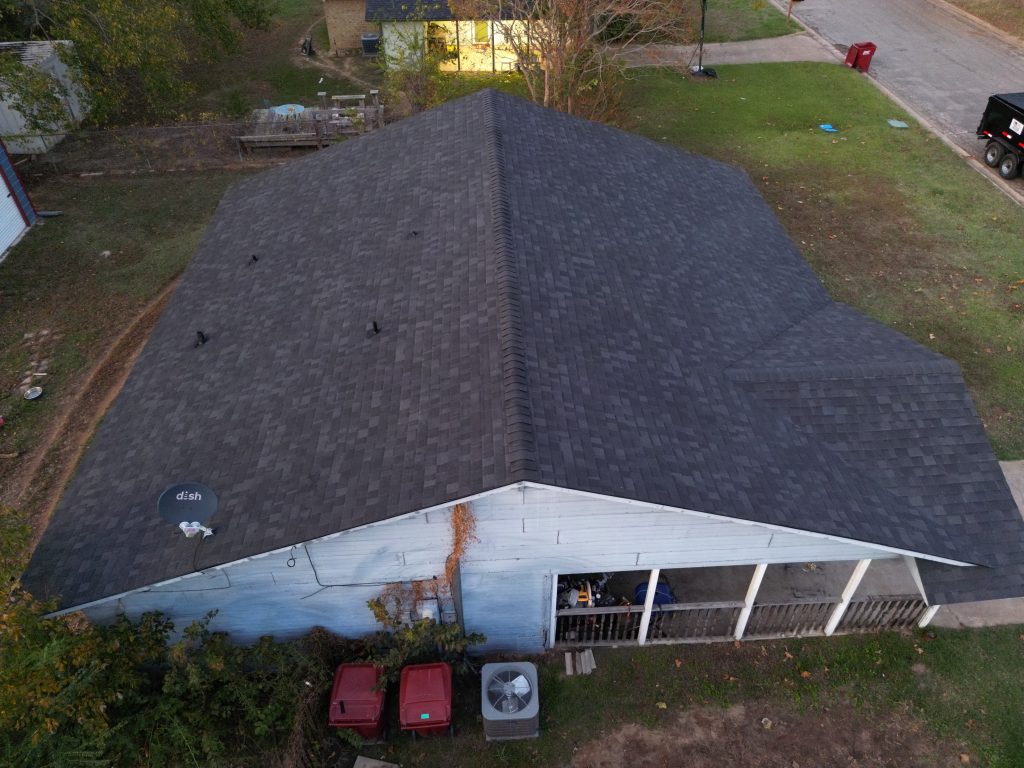
Roof maintenance around Sulphur Springs
Two things make upkeep matter more here than the national advice suggests. The first is heat: long summers put a real load on an asphalt mat and on sealant, so the components with the shortest lives reach the end of them sooner than a manufacturer’s general figure implies. The second is spring, when hail and wind arrive and find whatever detail was already marginal.
The older neighborhoods with mature oaks and pines directly over the rooflines are the twice-a-year houses. Needles in particular pack into valleys and gutters as a dense mat that water cannot pass, and a valley that stays damp between rains is a valley that ages faster than the rest of the roof around it.
On the metal buildings out on acreage the rhythm is different but the principle is the same. Fasteners, closures and lap sealant are the consumables, and going over them on a schedule is what turns a thirty-year panel into a forty-year roof. Plenty of buildings around here have been told they need replacing when what they actually needed was their screws done.
Being an hour or less from most of the towns we serve is what makes a rhythm practical rather than theoretical. We can get to a roof in Winnsboro, Quitman, Mount Vernon or Commerce without it being an expedition, and the same company holds the record of what was done on it each year.
Questions about roof maintenance
Once a year on a shingle roof with nothing much overhanging it, and twice where oaks or pines sit over the rooflines, because valleys and gutters fill faster than most people expect. On an exposed-fastener metal building an annual look at the fasteners and closures is sensible, with whole-roof screw replacement somewhere in the fifteen to twenty-five year range.
No. An inspection is diagnostic: somebody assesses the roof, photographs it and writes a report, and nothing is renewed on the visit. Ours are free. Roof maintenance is preventive work on the components that are known to age, done on a schedule, with the small items renewed while we are up there.
Sealant at counterflashing, penetrations and exposed fastener heads where it has hardened or cracked, a vent boot that is past its life, and backed-out fasteners on metal. Those are included in a normal visit. Anything larger gets photographed and quoted rather than started without your say-so.
It can. Manufacturer coverage generally assumes the system was installed to specification and reasonably maintained, and some coverage required registration when the roof went on. A dated record with photographs of what was checked and renewed is what demonstrates the roof was looked after, which is exactly the question a manufacturer will ask.
Usually, yes, and we will say so rather than sell you a visit. On a roof that age the useful things are keeping valleys and gutters clear and having a look after any significant storm. Around year eight to ten the sealant and the vent boots start to be worth checking, and that is the sensible point to begin a rhythm.
Other services
Flashing failures, lifted shingles and wind damage put right before water gets in.
Five and six inch seamless aluminum, fabricated on site to fit your roofline.
Let’s get somebody up there to look.
Fill out the form or pick up the phone. Either way you get straight answers about your roof and a written estimate you can keep.