Hail damage rarely leaks. It just quietly takes years off your roof.
Free post-storm hail damage inspection, photographed properly, with contractor-observed damage written up in a form your adjuster can work from. You keep the photographs and the written findings whatever you decide to do next.

Hail damage in plain terms
The most important thing to understand about hail is that it usually does not produce a leak. A hailstorm bruises the shingle mat, fractures granules loose and dents soft metal, and the roof carries on shedding water afterwards exactly as it did before. Homeowners look at the ceiling, see nothing, and reasonably conclude nothing happened. Four or five years later a roof they expected another decade from is finished, and by then establishing what caused it is very difficult.
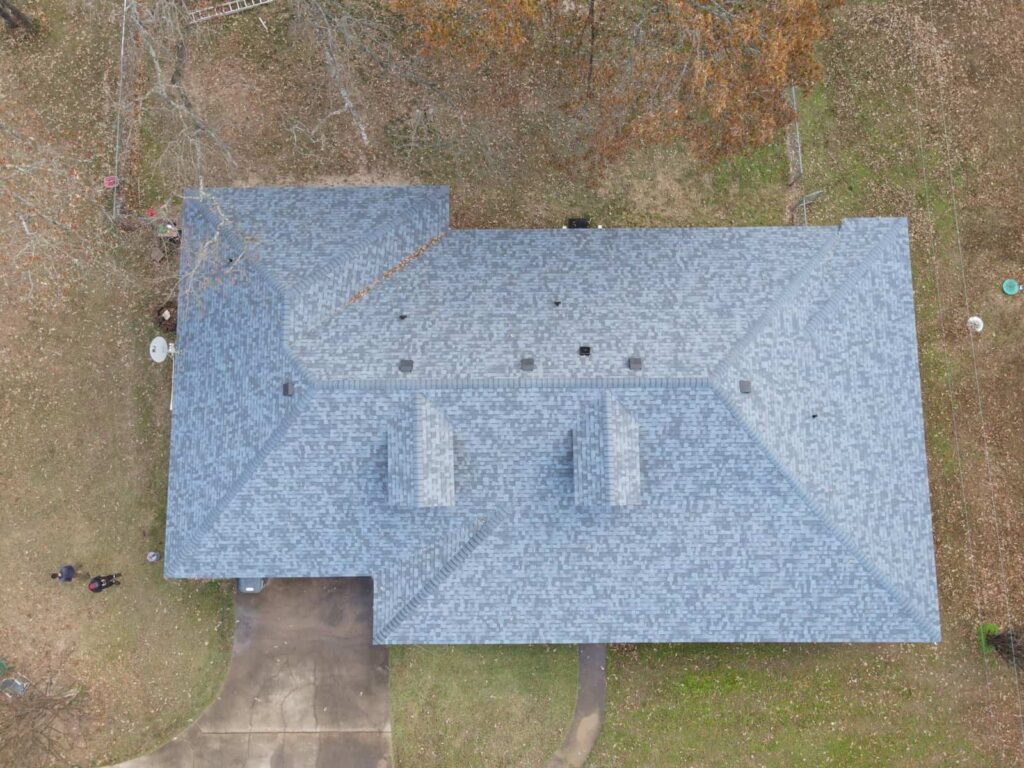
That gap between the damage and the symptom is the entire reason this page exists. Hail damage is a documentation problem more than a repair problem, and hail damage that was never recorded is very hard to argue about later, and documentation has a shelf life. Photographs taken a week after a storm are evidence; a description offered three years later is a memory. Getting somebody on the roof with a camera after a significant storm is free, takes an hour, and is the single most useful thing you can do for a roof in this county.
What hail damage actually does depends on what it hits. On asphalt shingle it bruises the mat, leaving a soft spot you can feel through the surface where the reinforcing has fractured, and it knocks granules off, exposing the asphalt beneath to UV. Neither shows from the ground. On soft metal like vents, flashing and gutters it dents, and those dents are often the clearest indicator that a storm was hard enough to matter. On metal roof panels it marks the surface without generally compromising the waterproofing.
Hail damage also falls extremely unevenly across a street. One side of a town can be stripped while the other side is untouched, and two houses on the same street can differ noticeably depending on wind direction and the angle of the roof planes. That is why what a neighbor was told about their roof tells you almost nothing about yours, and why we inspect rather than assume.
Size matters, though not as simply as people assume. Pea-sized hail rarely damages a roof at all. Quarter-sized and up begins to matter on asphalt shingle, and golf-ball and above will damage almost any conventional roof it hits squarely. But wind speed and angle matter as much as diameter, which is why a storm that sounded alarming can leave a roof largely intact while a storm nobody thought much about bruises a whole west-facing slope. That is another reason the answer comes from being on the roof rather than from the weather report.
On insurance our position is deliberately narrow, and we would rather be clear about it than promise something that is not ours to give. We are roofers. We inspect, we photograph, we write up what can be observed from the roof as factual scope information, and we stay reachable through the claim. Whether something is covered, and for how much, is your carrier’s decision and never ours.
Everything below is in the hail damage inspection we do for you
Free Post-Storm Inspection
On the roof within days where we can, with the whole roof and every detail photographed whether damaged or not.
Soft-Metal Assessment
Vents, flashings, valleys and gutters checked for impact marks, which are often the clearest evidence a storm was severe.
Test Squares Where Appropriate
Marked areas photographed to show strike density across different roof planes rather than a general impression.
Written Documentation
Contractor-observed damage set out factually with photographs, in a form an adjuster can work from.
Emergency Covering
If something is actually open, we can get it covered the same visit to stop further damage.
The Repair Itself
Once coverage is settled, the same local company does the work and warrants it in writing.
Start to finish, in order
Call After The Storm
Sooner is better. Fresh damage photographs well and the record is unambiguous.
Free Inspection
Roof, soft metal and attic, photographed systematically rather than selectively.
Written Report
What we observed and where, with the images attached. Yours to keep and to hand to your carrier.
Your Claim, Your Call
You decide whether to file. We can explain what we documented, and the decision stays with you.
Repair Or Replacement
Scheduled once things are settled, with the work photographed and the warranty in writing.
Four things we do on every single job
Photographs, Not Opinions
Every problem area is photographed and shown to you before anybody quotes a price. You keep the images whatever you decide.
In Writing
The estimate names the products going on your roof, so you can compare it against anybody else’s.
Cleaned Up Daily
Beds and shrubs covered before work starts, and a magnet over the yard and driveway at the end of every working day.
A Local Phone Number
Our shop is on Como St S in Sulphur Springs. The company that fits your roof is the one you call in year four.
“Within just one hour of my request, they had a drone in the air and a full estimate with photos in my inbox. The pricing was very reasonable, the work was finished exactly on time and to a high standard.”

What hail damage actually looks like
This is the part homeowners most want to be able to do themselves, and the honest answer is that most of it cannot be identified from the ground. It can be corroborated from the ground, and there are useful clues, but the damage that actually shortens a roof’s life is a texture you feel and photograph up close. Knowing what an inspector is looking for at least tells you whether the person on your roof is doing the job properly.
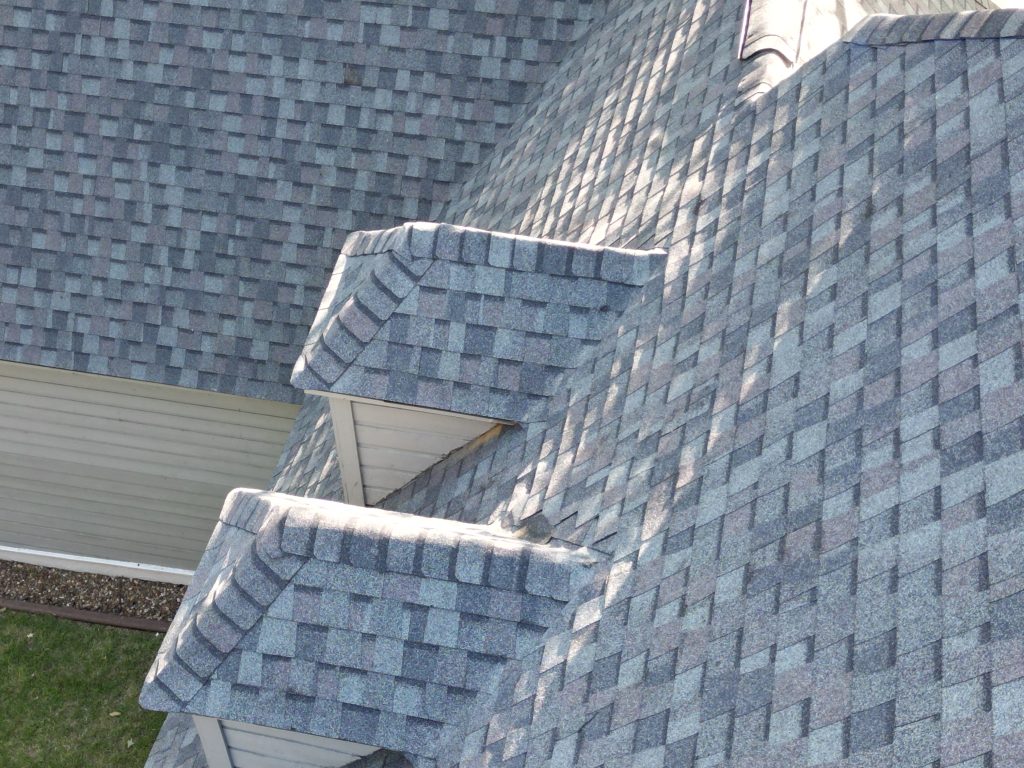
On asphalt shingle the giveaway for hail damage is bruising: a soft, slightly depressed spot where the mat has fractured under impact, often with granules missing at the center. You can frequently feel it through a boot before you can see it, and it does not photograph well without being marked, which is why test squares exist. An area is chalked out so strike density is visible and countable in an image rather than a matter of opinion.
Granule loss is the second indicator and the one you can check yourself from the ground. Granules are the roof’s sunscreen, and once they are gone the asphalt underneath ages rapidly. After a serious storm they collect in gutters, at downspout outlets and in the beds beneath the eaves. A handful of granules in the gutter is normal wear over years. A visible layer after one storm is not.
Soft metal is the most useful corroborating evidence, because it dents rather than hiding the impact. Vent caps, pipe collars, flashing, gutters and downspouts all record a hailstorm clearly, and their condition helps establish that hail of a damaging size actually fell on your property. That is why we photograph them specifically, even though nobody replaces a roof because of a dented vent cap.

After a storm, look for
Any one of these is worth a free look, and the inspection and the written findings cost nothing whatever the outcome.
Granules collecting in gutters, at downspout outlets, or in the beds under the eaves.
Dents or bruising on vent caps, flashing, gutters and downspouts.
Shingles that look pockmarked, or with dark patches where granules have gone.
Shingle fragments or lost ridge caps in the yard after the storm has passed.
Dented soft metal elsewhere on the property: mailboxes, air conditioner fins, vehicle panels.
Roofs being inspected along your street, which indicates the storm cell passed over you.
What happens after the inspection
There are four honest outcomes, and we will tell you plainly which one you are in. One of them is that your roof is fine.
No Significant Hail Damage
It happens often, and the report says so in writing. You have a dated record of your roof’s condition either way.
Localized Hail Damage
A repair rather than a replacement: a slope, a section of ridge, or specific details. We will say when that is the honest answer.
Widespread Hail Damage
Documented across planes with test squares and photographs, and written up factually for your carrier to assess.
Claim Support
We stay reachable through the process and can answer scope questions when asked. Coverage remains your insurer’s decision.

A dated written record showing your roof was sound after a storm is a genuinely useful document to own. It costs nothing, and it is the thing that answers the question properly if the roof starts giving trouble in three years.
Insurance: exactly what our role is
What we do is factual and bounded. We inspect at no cost, photograph the roof systematically, mark and document test squares where strike density matters, note the condition of soft metal, and write it up as contractor-observed damage with the images attached. If an adjuster asks us a question about scope, we answer it. That is the whole of our role, and it is genuinely valuable, because most claims that go badly go badly for want of documentation taken while the damage was fresh.
Coverage itself is decided by your insurer against your policy, so we do not predict outcomes. We also do not waive, absorb, discount or rebate any part of a deductible, because Texas law does not permit a contractor to do it. The deductible is your share of the claim and it belongs in your budget from the start.
The other thing worth knowing is the calendar. Policies have deadlines for reporting damage, and those deadlines run from the date of the storm rather than the date you noticed. Because hail frequently produces no symptom at all, that is exactly the kind of thing people discover too late. A free inspection after a storm costs nothing and starts the clock on your terms.
How to check who is going on your roof
These are worth asking of anybody, including us, and any legitimate contractor will answer all of them easily. They are also the questions that matter most in the weeks after a big storm, when roofing work in a county gets busy and decisions get made quickly.
Start with permanence. Is there a local address you can drive to, and has the phone number been the same for years? Ours is a yard on Como Street in Sulphur Springs and a number that has not changed. A workmanship warranty is a promise from a company, so the company being reachable in year four is what gives the paper its value.
Then look at the record. Local reviews going back further than the current storm season tell you how a company behaves over time rather than how it sells. Ours are on our BBB profile and on Google, from people in these towns.
Finally, look at the paperwork and the pace. A written estimate you can take away and think about is the normal way this works, and photographs of what is being claimed are better than a description of it. A roof is a large purchase, and if it genuinely needs doing it will still need doing next week after you have compared two quotes.
Straight answers, free of charge
The inspection, the photographs and the written estimate cost nothing and commit you to nothing. If the honest answer is that the work can wait, that is what the estimate will say.
What it costs to find out
The inspection is free. If your insurance company approves a hail damage claim, your share starts with the deductible your policy sets, and the carrier decides coverage and payment. Without a claim, most repairs run about $300 to $1,500, larger ones involving decking or several areas about $1,500 to $5,000 or more, and a full asphalt replacement on an average single-story home typically $6,000 to $14,000. These are typical Northeast Texas ranges, not a quote: the price for your roof is set after a free on-site inspection and a written estimate.
The Inspection Is Free
No charge and no obligation, whatever the outcome, including when the answer is that your roof is fine.
The Documentation Is Yours
Photographs and written findings stay with you regardless of whether you file, or who you hire.
No Pressure To Claim
Filing is your decision. We explain what we documented and leave the choice with you.
Storm Calls Get Priority
Fresh damage and active leaks go to the front of the queue, because both get worse waiting.
We Will Say When It Is Nothing
A dated report saying the roof is sound is a genuinely useful document to own.
Deductibles Stay With You
We do not waive, absorb or discount a deductible. Texas law does not allow a contractor to.
Four things worth avoiding after a hailstorm
Assuming No Leak Means No Hail Damage
The most expensive assumption in this trade. Hail damage shortens a roof’s life quietly and the bill arrives years later.
Waiting To See If It Gets Worse
It will not visibly get worse, and the reporting deadline runs from the storm date rather than from when you noticed.
Deciding Without A Written Estimate
A written estimate you can take away and compare is the normal way this works, and there is no reason to decide the same afternoon.
Budgeting Without The Deductible
It is your share of the claim and it stays yours. Planning for it from the start avoids an unwelcome surprise at the end.

Hail in Hopkins County and around it
Spring is the hail damage season here and it is a serious one. Northeast Texas sits where it does, and hail-producing storms come through most years, sometimes as narrow cells that hit one part of a town and miss the rest entirely. That unevenness is the thing to hold onto: a neighbor’s outcome tells you very little about your own roof.
The pattern we see repeatedly is a roof that took hail damage three or four years ago, nobody inspected it, and it is now failing early with no documentation of the cause. That is the avoidable case, and it is avoidable with one free hour on the roof and a set of photographs at the time.
One practical local habit worth adopting: note the date of any storm that puts hail on the ground at your property, even if nothing looks wrong. A date in a phone note costs nothing, and it is exactly the piece of information that turns out to matter later, because policy reporting deadlines run from the storm rather than from the day you noticed a problem. Paired with a free inspection in the following weeks, it is about as much protection as a homeowner can arrange for the price of a phone call.
Being an hour from all of it is the other practical advantage. We can get to a roof in these towns within days of a storm rather than weeks, while the damage is fresh and photographs well, and we are still here in year four when the workmanship warranty means something.
Questions about hail damage
Yes, and that is the usual situation. Hail bruises the shingle mat and knocks granules loose without opening a hole, so the roof keeps shedding water exactly as before. The cost shows up years later as a roof that fails early. That is precisely why an inspection after a storm is worth an hour even when nothing looks wrong.
That depends on your policy, but the deadline generally runs from the date of the storm rather than the date you noticed a problem. Because hail often produces no symptom, people routinely discover this too late. Noting storm dates and having a free inspection in the following weeks keeps the decision in your hands.
No, and anybody who does is promising something that is not theirs to give. Coverage is decided by your insurer against your policy. What we provide is a systematic set of photographs and a factual write-up of what can be observed from the roof, which is the part that most often decides how well a claim goes.
No. The deductible is your share of the claim, and Texas law does not permit a contractor to waive, absorb or rebate it. We will tell you the figure to expect up front so it is in your budget from the beginning rather than a surprise at the end.
Then the report says so in writing, and you keep it. A dated record showing the roof was sound after a particular storm is genuinely useful to own, and it costs you nothing. We would rather write that report than sell you a roof you do not need.
Other services
Flashing failures, lifted shingles and wind damage put right before water gets in.
Five and six inch seamless aluminum, fabricated on site to fit your roofline.
Let’s get somebody up there to look.
Fill out the form or pick up the phone. Either way you get straight answers about your roof and a written estimate you can keep.