Hail storm damage in Northeast Texas reached dangerous levels in April 2026 — marble-to-baseball-sized hail, wind gusts exceeding 70 mph, and tornado watches covering Hopkins, Hunt, Rains, Delta, Lamar, and Rockwall Counties. Communities from Sulphur Springs and Emory to Greenville, Mount Pleasant, Commerce, and Canton were directly in the path.
If you have not had your roof inspected since these storms, now is the time. Hail storm damage is not always visible from the ground — and waiting too long to file an insurance claim can leave you paying out of pocket for repairs that should be fully covered.
April 2026 Hail Storm Damage in Northeast Texas
The storm system moved through the region in two rounds. The first wave on April 19 brought marble-sized hail across multiple East Texas counties, with homeowners reporting damage to roofs, vehicles, and fences across the area. A second and more severe event followed on April 22, producing very large hail and triggering a tornado watch specifically covering Hopkins, Hunt, Rains, and Delta Counties — the heart of DJJ Roofing’s service area.
Rains County, where Emory is located, took a direct hit during the second event. Hopkins County — including Sulphur Springs — experienced back-to-back storm impacts within the same week. That kind of repeated stress on a roof system compounds damage in ways that a single event does not. A shingle weakened by the first storm can fail entirely under the second.
What Hail Damage Looks Like on a Northeast Texas Roof
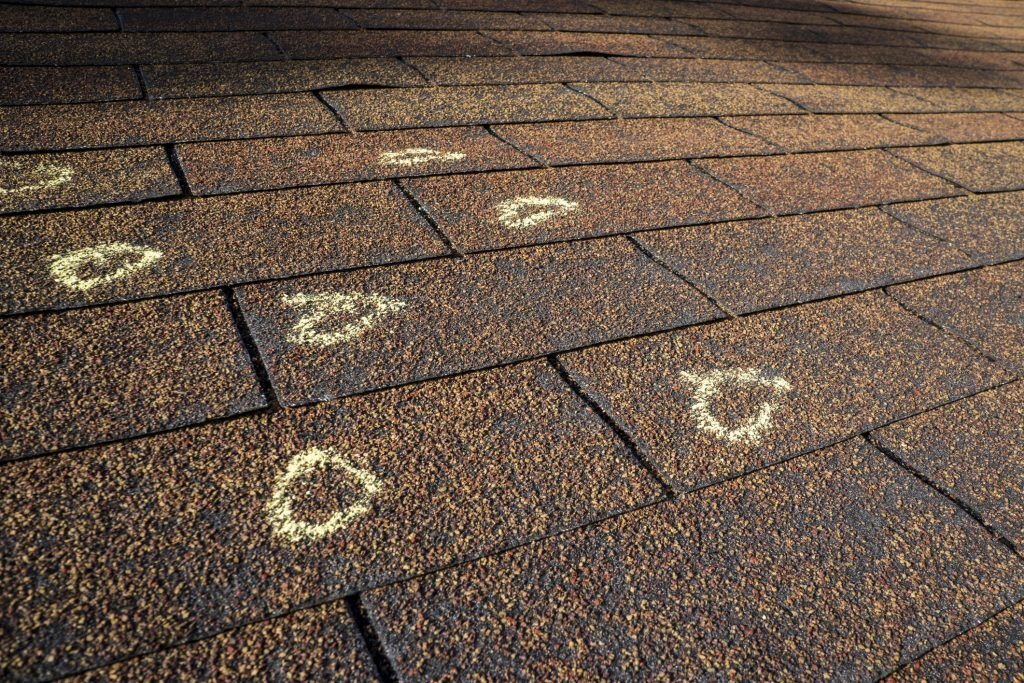
Most homeowners look from the ground after a storm and see nothing obvious. That is not a sign your roof is fine — it is a sign you need a trained eye on a ladder. Here is what hail damage actually looks like on an asphalt shingle roof:
- Granule loss — Hail knocks the protective granule coating off shingles, leaving dark circular spots or bald patches. Check your gutters — granule buildup after a storm is one of the most reliable indicators of shingle impact.
- Dents on metal components — Gutters, downspouts, flashing, ridge caps, and metal vents all show hail dents clearly. If your gutters are dented, your shingles absorbed the same impact.
- Bruised or cracked shingles — On older shingles, hail impact causes a soft, bruised feel or visible cracking. The structural integrity is compromised even if the shingle has not yet let water through.
- Damaged seals at penetrations — Skylights, plumbing vents, chimney flashing, and ridge caps are the highest-risk leak points after storm impact and are commonly overlooked in a casual visual check.
- Lifted or missing shingles — Wind gusts weaken the adhesive seal strips on shingles. A shingle that survived the storm may lift and fail on the next moderate rain.
Why You Should Not Wait on the Insurance Claim
Most Texas homeowners insurance policies allow storm damage claims within one to three years of the event. In practice, waiting hurts you. The longer the gap between the storm and the inspection, the easier it is for an insurance adjuster to attribute damage to normal wear and tear rather than the storm event — even when the storm clearly caused it.
Getting a professional inspection while the April 2026 storm is recent and well-documented by the National Weather Service gives you the strongest possible foundation for a claim. DJJ Roofing documents every inspection with photos, measurements, and a written assessment — exactly what your adjuster will ask for.
Storm Chasers Are Already in Northeast Texas — Know the Warning Signs
Within days of any significant storm, out-of-area roofing contractors follow the damage trail. They work door-to-door, offer a free inspection, and pressure homeowners to sign paperwork — sometimes an assignment of benefits — before any scope of work is agreed on. Once the insurance payout is secured, workmanship and accountability disappear with them.
This pattern repeats across Texas after every major hail event, and Northeast Texas homeowners have been warned about it repeatedly by local consumer advocates. The advice is consistent: do not sign anything at the door, do not allow an unknown contractor on your roof, and verify that any roofer you hire has a local address, a verifiable history in your community, and proper insurance.
DJJ Roofing has been headquartered in Sulphur Springs since 2015. We are not chasing this storm. We were here before it and will be here long after every claim is settled.
What to Do Right Now
- Do a safe ground-level walk-around — Check gutters for granule buildup, look for obvious missing or lifted shingles, inspect any skylights or vents you can see from ground level.
- Document what you find — Take photos with your phone, including the date stamp. Check your gutters for granule accumulation and photograph that too.
- Call your insurance company to open a claim — You do not need a contractor’s assessment first. Open the claim now to establish the date of report. The Texas Department of Insurance advises filing promptly — the longer you wait, the easier it is for adjusters to attribute damage to wear and tear rather than the storm.
- Schedule a professional roof inspection — Before your insurance adjuster arrives, have an independent contractor inspect so you know what to expect and can advocate for your claim.
- Do not sign anything from a door-to-door contractor — Get a written estimate, check references, and verify local standing before committing to any roofer.
Free Roof Inspections — Hopkins, Rains, Hunt, Delta, and Surrounding Counties
DJJ Roofing is scheduling free post-storm roof inspections for homeowners dealing with hail storm damage in Northeast Texas following the April 2026 storm events. We are fully insured, an Owens Corning Preferred Contractor, and have completed hundreds of storm damage assessments across the region since 2015.
We serve Sulphur Springs, Emory, Greenville, Mount Pleasant, Commerce, Winnsboro, Canton, Rockwall, Caddo Mills, Princeton, and all surrounding communities in Hopkins, Hunt, Rains, Delta, Franklin, and Wood Counties.
Call (903) 217-5431 or visit our Contact Us page to schedule your free inspection. If your neighbors are calling — there is a reason. Hail does not skip houses.
Frequently Asked Questions — Hail Storm Damage in Northeast Texas
How do I know if my roof has hail damage?
The most reliable signs are granule loss in your gutters, soft bruised spots on shingles when pressed, and visible dents on metal components like gutters, downspouts, and flashing. Because many of these signs are only visible up close, a professional inspection is the only way to get a definitive answer. DJJ Roofing offers free post-storm inspections across Northeast Texas — no obligation.
How long do I have to file a claim after hail storm damage in Northeast Texas?
Most Texas homeowners insurance policies allow you to file a claim within one to three years of the storm event. However, filing sooner is always better — the longer you wait, the more likely an adjuster will attribute damage to normal wear and tear rather than the storm. For the April 2026 events, file now while National Weather Service documentation and storm reports are current and readily available.
Will insurance cover a full roof replacement or just repairs?
It depends on your policy and the extent of the damage. If hail has caused widespread granule loss across multiple roof sections, most policies will cover full replacement rather than patchwork repairs — because a partially replaced roof creates matching and warranty issues. An independent contractor inspection before your adjuster visit ensures you have documentation to support the full scope of damage rather than accepting a minimum settlement.
Why choose a local roofer over a storm chaser after hail damage?
Storm chasers follow the damage trail across multiple states. They are not invested in Northeast Texas — they are invested in capturing your insurance payout before moving to the next storm market. A local contractor like DJJ Roofing has a permanent address, a verifiable history with local homeowners, and warranty obligations that actually mean something. If there is a problem six months after installation, we are still here.